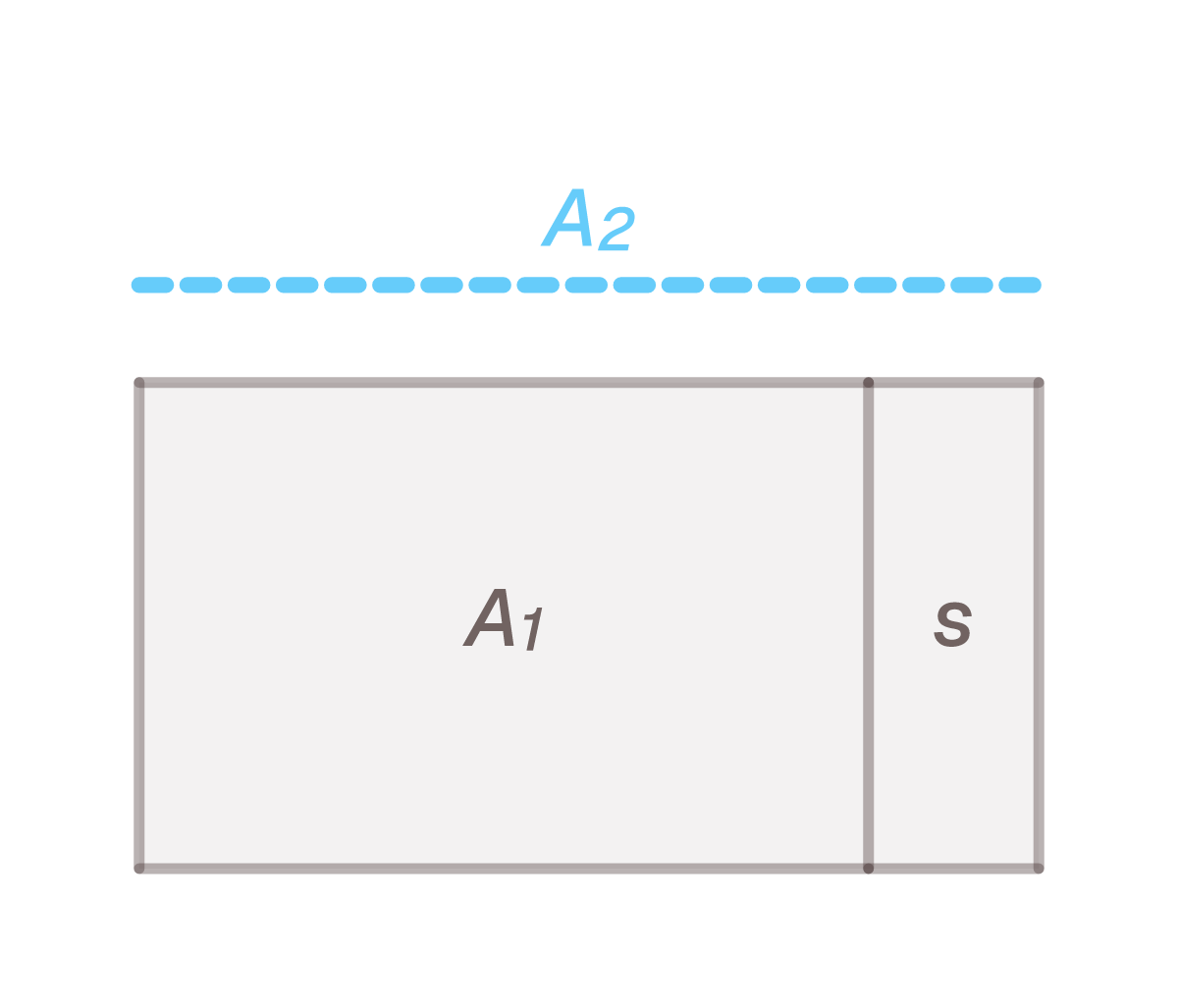
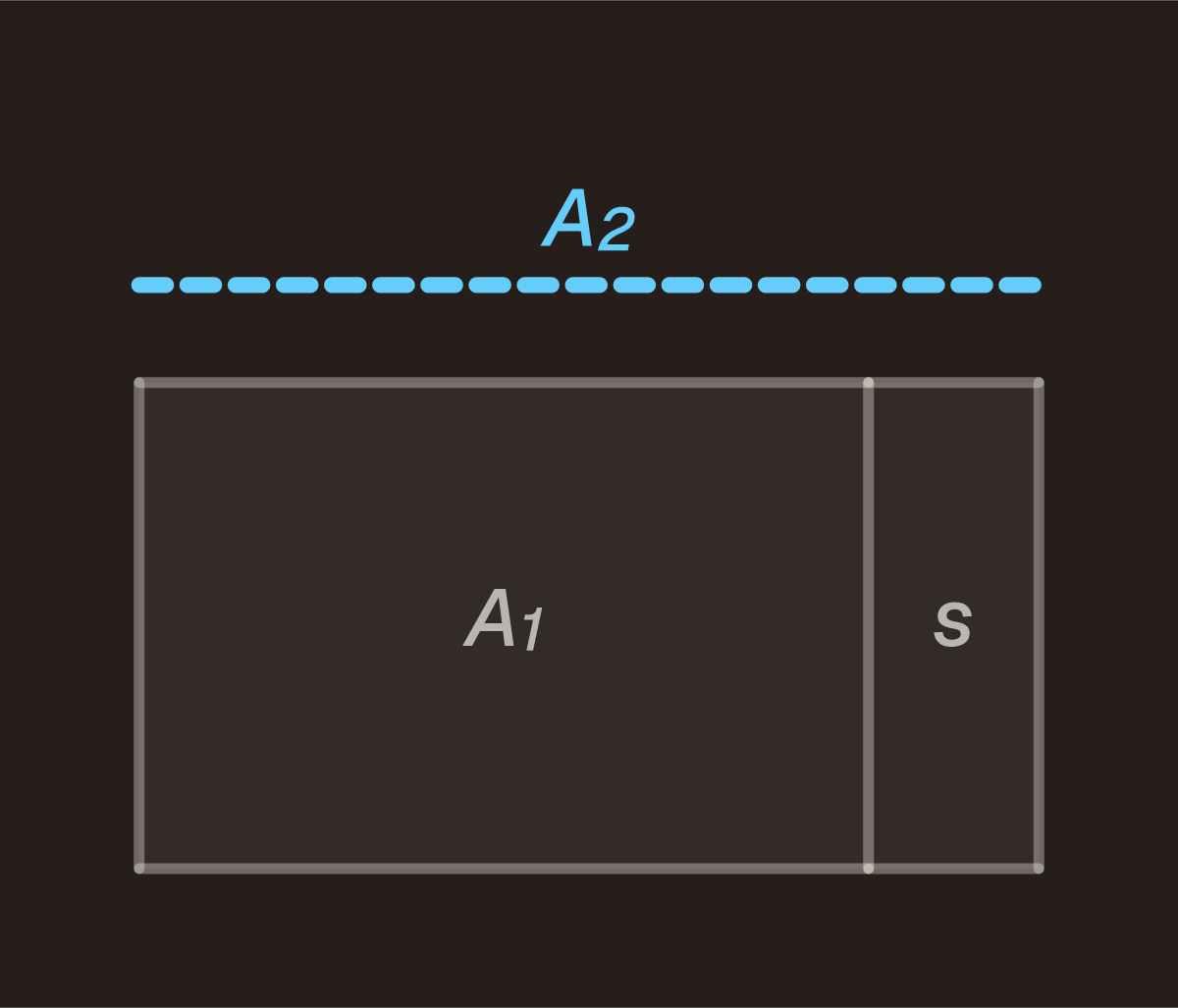
You need to buy more flooring than the room’s area. Every row ends against a wall, and the piece
cut off there rarely gets used again. That piece is waste, and it is counted in per cent.
A room of 24 m² with 10% waste needs 24 · 1.10 = 26.4 m² of flooring.
Adding ten per cent is multiplying by 1.10. A percentage becomes a factor by dividing it by 100 and
adding one.
How much waste?
Waste depends mainly on the layout:
| Layout |
Typical allowance |
| Straight rows in a rectangular room |
5% |
| Rooms with angles, alcoves or columns |
10% |
| Diagonal laying |
15% |
| Herringbone or a pattern |
15% and up |
These are trade rules of thumb, not a guarantee. A small room with many corners can waste more than a
large one with few.
The pack decides the final number
Flooring is sold in whole packs. If the answer is 26.4 m² and a pack covers 2.2 m², you need
26.4 / 2.2 = 12 packs — and if it comes to 11.6 packs, you buy twelve.
Buy one pack too many rather than one too few. A spare pack lets you replace a damaged board later, and
new packs from another batch can differ in shade.
Worked examples
A living room. 30 m² with 5% waste: 30 · 1.05 = 31.5 m².
Diagonal. The same room laid diagonally, 15%: 30 · 1.15 = 34.5 m².
Backwards. You have 40 m² of flooring and allow 8% waste. It covers
40 / 1.08 ≈ 37 m² of floor.
What was the waste? You bought 33 m² for a 30 m² room: 100 · (33/30 − 1) = 10%.
Common mistakes
- Taking the percentage of the amount bought. The allowance goes on the room’s area, not on what you
have already added.
- Deducting the kitchen island. Small fixtures rarely give you whole boards back — only deduct large
areas.
- Forgetting the direction. Boards run along the length of the room usually waste less than boards
run across it.
- Counting packs too early. Work out the area first, round to packs last.
Common questions
How much waste should I allow?
Five per cent for straight rows in a rectangular room, ten in a room with angles, and fifteen for
diagonal laying or a pattern.
Does this apply to tiles as well?
Yes. Cut tiles can rarely be reused, and diagonal setting wastes more than straight.
Do I measure the room or each row?
The room’s area is enough. The formula exists so you do not have to count row by row.