What the theorem says
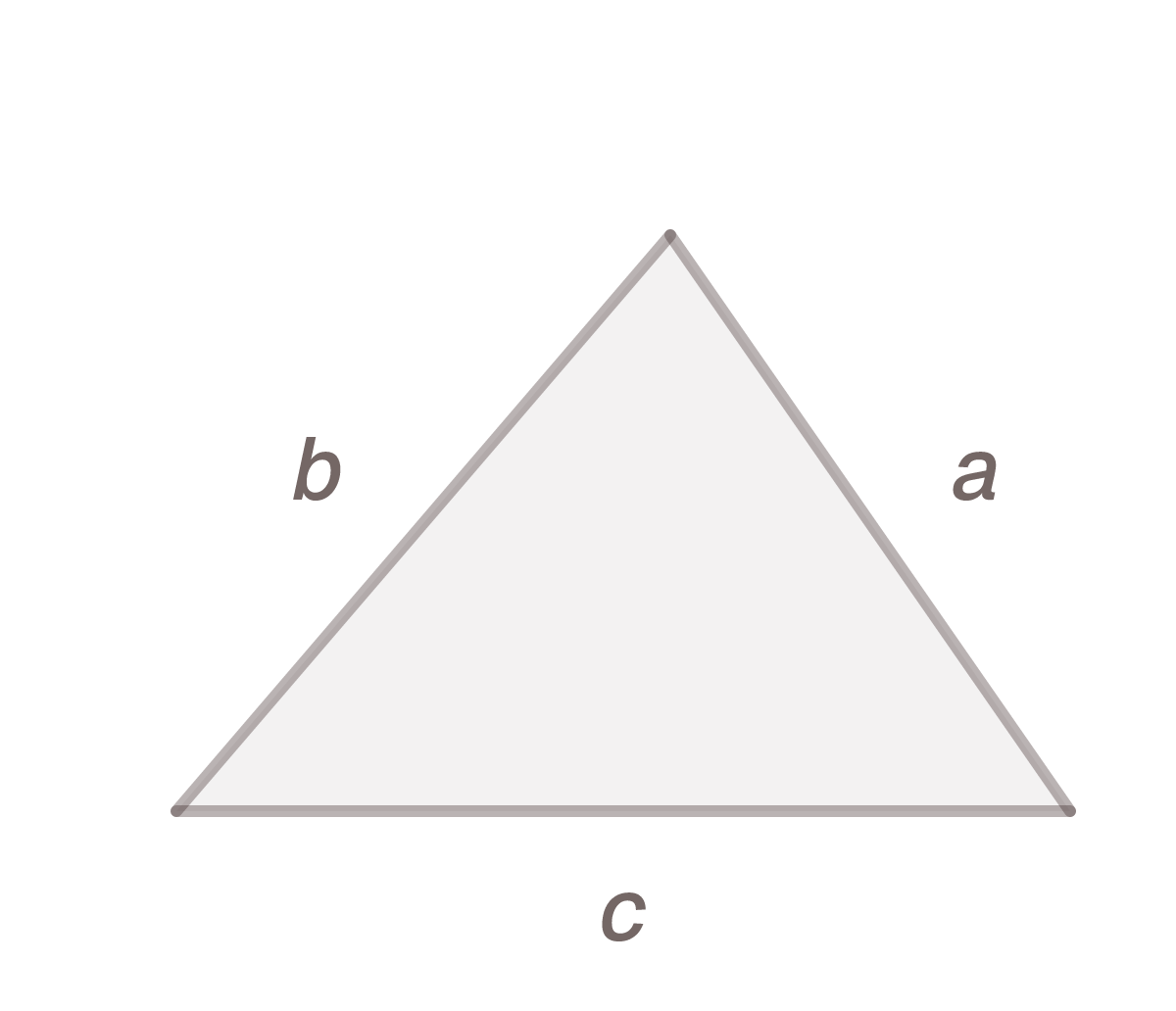
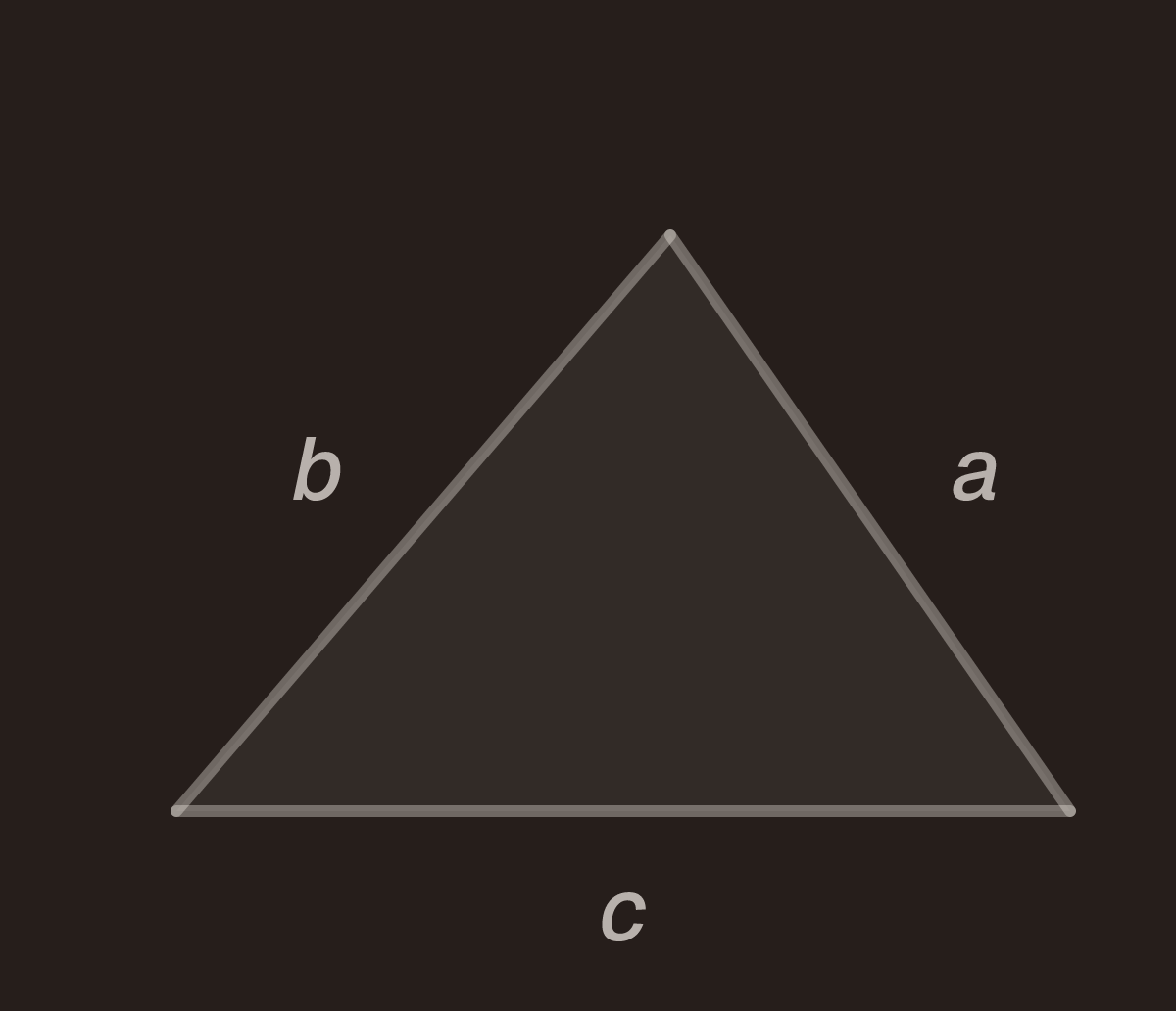
- a² + b² = c² ⟺ the triangle is right-angled
The Pythagorean theorem says that in a right triangle the squares on the legs add up to the square on the hypotenuse. The converse says the thing that is not obvious: if the equation holds for three sides, then the triangle is right-angled. Three measured lengths are enough to know whether a corner is square. The theorem and its converse together are an equivalence, hence the arrow ⟺ above.
Sides 5, 12 and 13: 25 + 144 = 169 = 13². Right-angled, with the right angle opposite the longest side.
How to run the test
- Find the longest side. That is the candidate hypotenuse; the other two are the legs.
- Square all three.
- Compare. The sum of the two smaller squares against the largest.
The outcome says more than yes or no:
| Outcome | The triangle is |
|---|---|
| a² + b² = c² | right-angled |
| a² + b² > c² | acute |
| a² + b² < c² | obtuse |
The last two lines are the same theorem in extended form, and they follow from the law of cosines.
Pythagorean triples
Three whole numbers satisfying the equation are called a Pythagorean triple. A few are worth recognising:
- 3, 4, 5 — and all its multiples: 6, 8, 10 and 9, 12, 15
- 5, 12, 13
- 8, 15, 17
- 7, 24, 25
The builder’s 3-4-5 method is exactly this theorem at work: measure 3 m along one line, 4 m along another, and adjust until the distance between the ends is exactly 5 m — then the corner is square.
Worked examples
Right-angled. 9, 40, 41: 81 + 1600 = 1681 = 41². Yes.
Obtuse. 4, 5, 8: 16 + 25 = 41 < 64. The largest angle is obtuse.
Acute. 6, 7, 8: 36 + 49 = 85 > 64. Every angle is acute.
Close, but no. 8, 15, 18: 64 + 225 = 289, but 18² = 324. Not right-angled, however near it looks — 8, 15, 17 would have been.
Common mistakes
- Picking the wrong side as the hypotenuse. The test has to be run with the longest side alone on the right.
- Comparing the sides instead of the squares. 3 + 4 ≠ 5, but 9 + 16 = 25.
- Rounding measurements and then trusting the equality. With decimals it is almost never exactly equal; the test is for whole numbers and for reasoning.
- Assuming a converse comes for free. A true theorem does not make its converse true. Here it is true, but that takes a proof of its own.
Common questions
Why is a converse needed at all?
Because direction matters. “Every square is a rectangle” is true, but its converse is false. That the
Pythagorean converse holds is a result in itself.
How is it proved?
With an auxiliary triangle: construct a right triangle on the same two legs. Its hypotenuse is c by the
Pythagorean theorem, so the two triangles have three equal sides and are therefore congruent.
Can I use it to check a room?
Yes, that is the 3-4-5 method. Measure along two walls and check the diagonal — but measure carefully,
since a corner of 89° looks square.