Pick the unit your lengths are in. Areas are then labelled in square units and volumes in cubic units; nothing is converted.
Take a tin can and cut the label straight down the side. Lay it flat. What you are holding is a
rectangle:
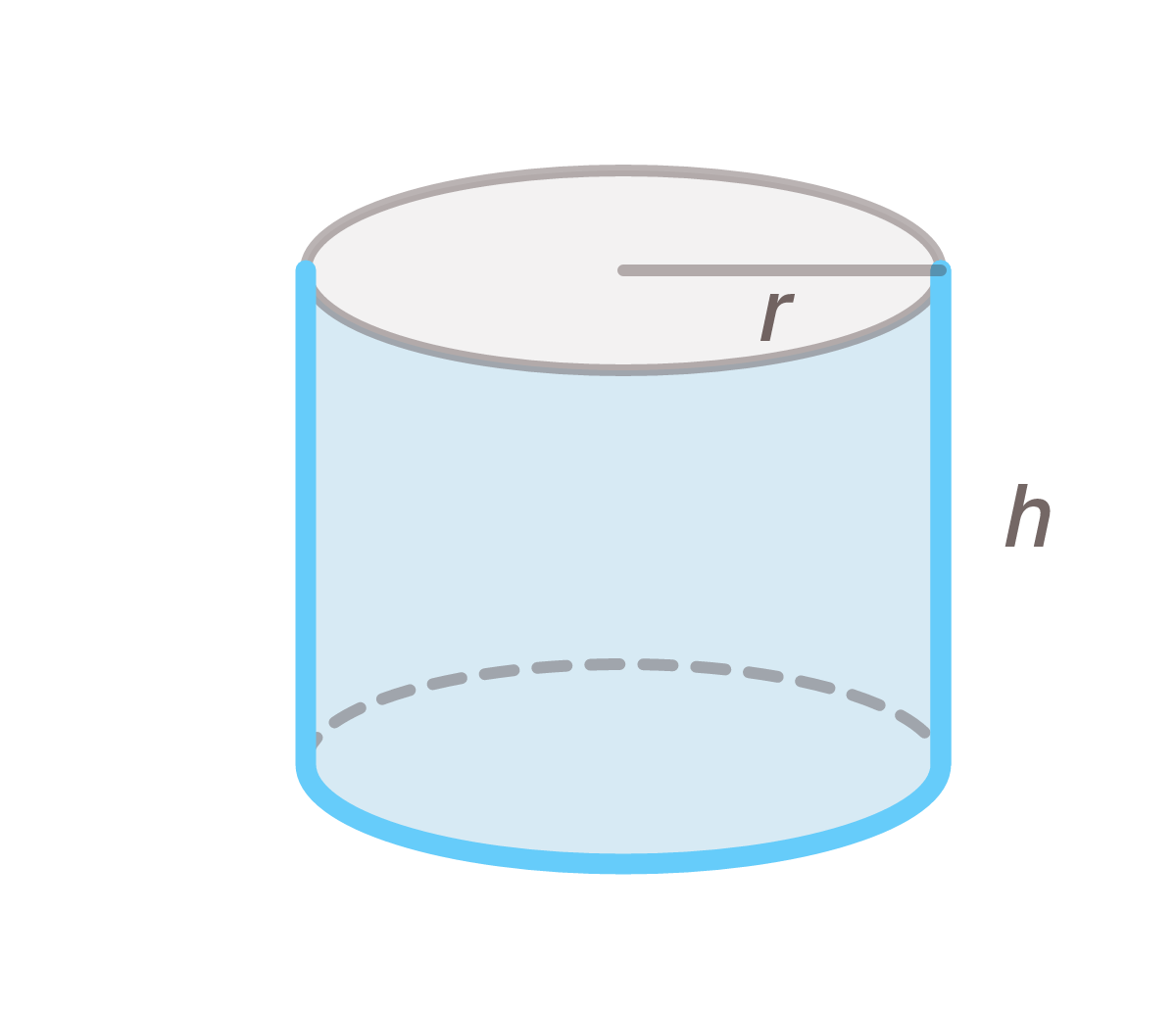
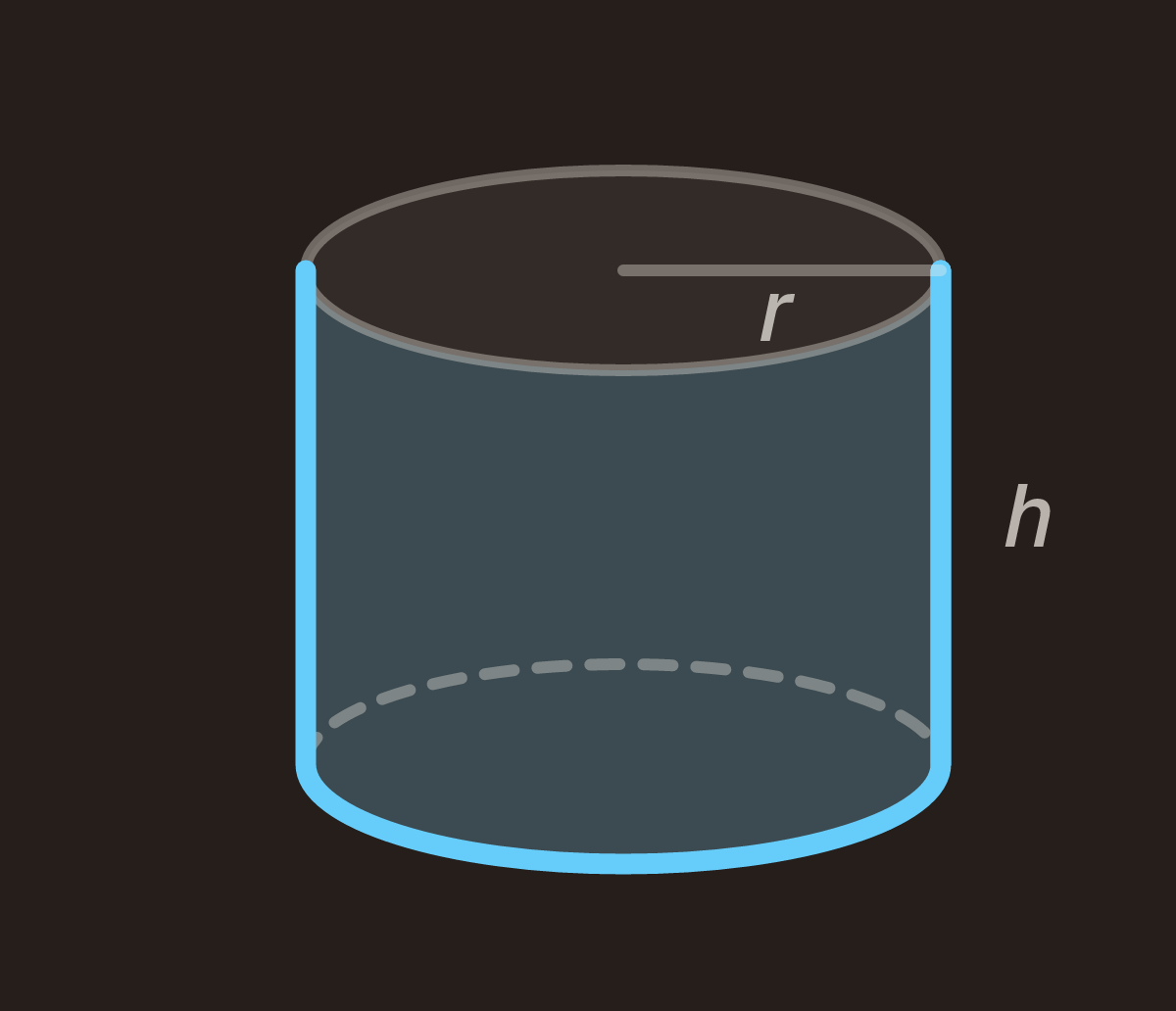
- The rectangle’s height is the cylinder’s height h. Unrolling makes the label neither shorter nor
taller.
- The rectangle’s width is the way round the tin, which is the base circle’s
circumference 2πr.
The area of a rectangle is its width times its height:
A = 2πr · h
The lid and the base are not included. The label is not on them.
Swedish has a separate word, begränsningsarea, for the surface area including the lid and base, and calls this one mantelarea.
How it differs from the surface area
The surface area adds the two circles:
A = 2πr² + 2πrh. The difference is 2πr², and which you want depends on what is actually being covered:
| Situation |
What to work out |
| A label around a tin |
Lateral area |
| Paint on a closed tank |
Surface area |
| Insulation around a pipe |
Lateral area |
| Sheet metal for a bucket with no lid |
Lateral area plus one base |
Worked examples
A cylinder with a radius of 3 cm and a height of 10 cm. The lateral area is 2π · 3 · 10 = 60π ≈
188.5 cm². As always where π is involved: keep it symbolic all the way and round once, at the end.
Working backwards. A cylinder has a lateral area of 60π cm² and a radius of 3 cm. The height is
60π / (2π · 3) = 60π / 6π = 10 cm — the π cancels, so the answer is exact.
A pipe 10 cm across and 2 m long is to be insulated. The radius is 5 cm = 0.05 m, so the lateral area
is 2π · 0.05 · 2 = 0.2π ≈ 0.63 m². The diameter is halved first, because it is the radius that
appears in the formula.
Common mistakes
- Substituting the diameter for the radius. The answer comes out twice as large. If you are given the
diameter, halve it first.
- Including the lid and the base. They belong to the surface area.
- Rounding π along the way. Rounding errors along the way add up. Keep π as a symbol and round the
answer once.
- Confusing it with the volume. The volume
is πr²h in cubic units; the wall is 2πrh in square units. The radius is squared in one and not in the other.
Common questions
Why does the side become a rectangle rather than something curved?
Because the cylinder is right: every upright line on the side is the same length. Unrolled, those lines
become the rectangle’s vertical sides, and they keep their length.
Is it the same formula as for a prism?
Yes, at bottom. A prism’s lateral area is
p · h, the base perimeter times the height. A cylinder’s base is a circle, so p is 2πr.
How much bigger is the surface area?
By 2πr², the two circles’ area. For a tall thin cylinder that is a small part of the answer; for a short
wide one it is the larger part.