Perimeter of a rectangle
The relation
P
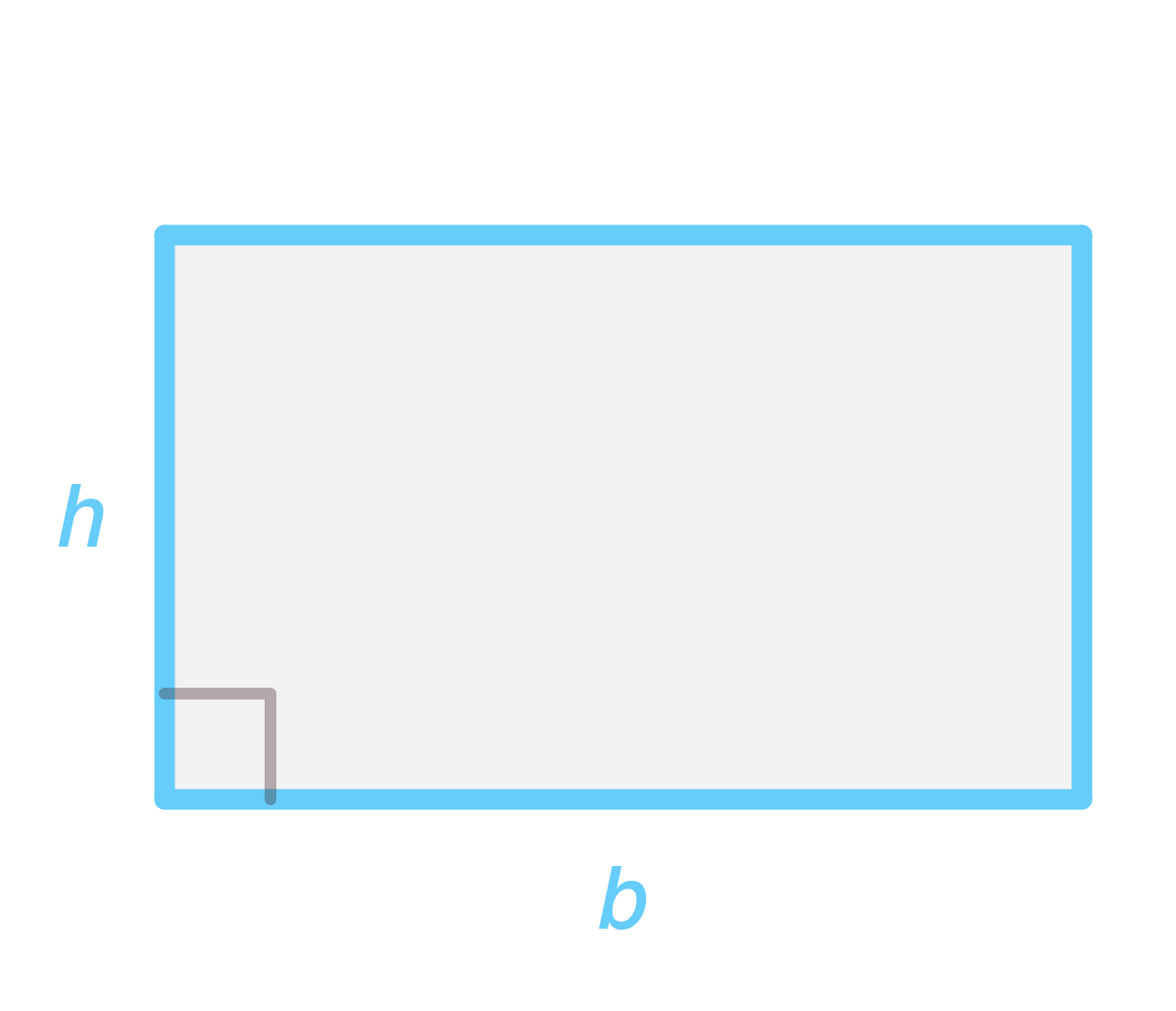
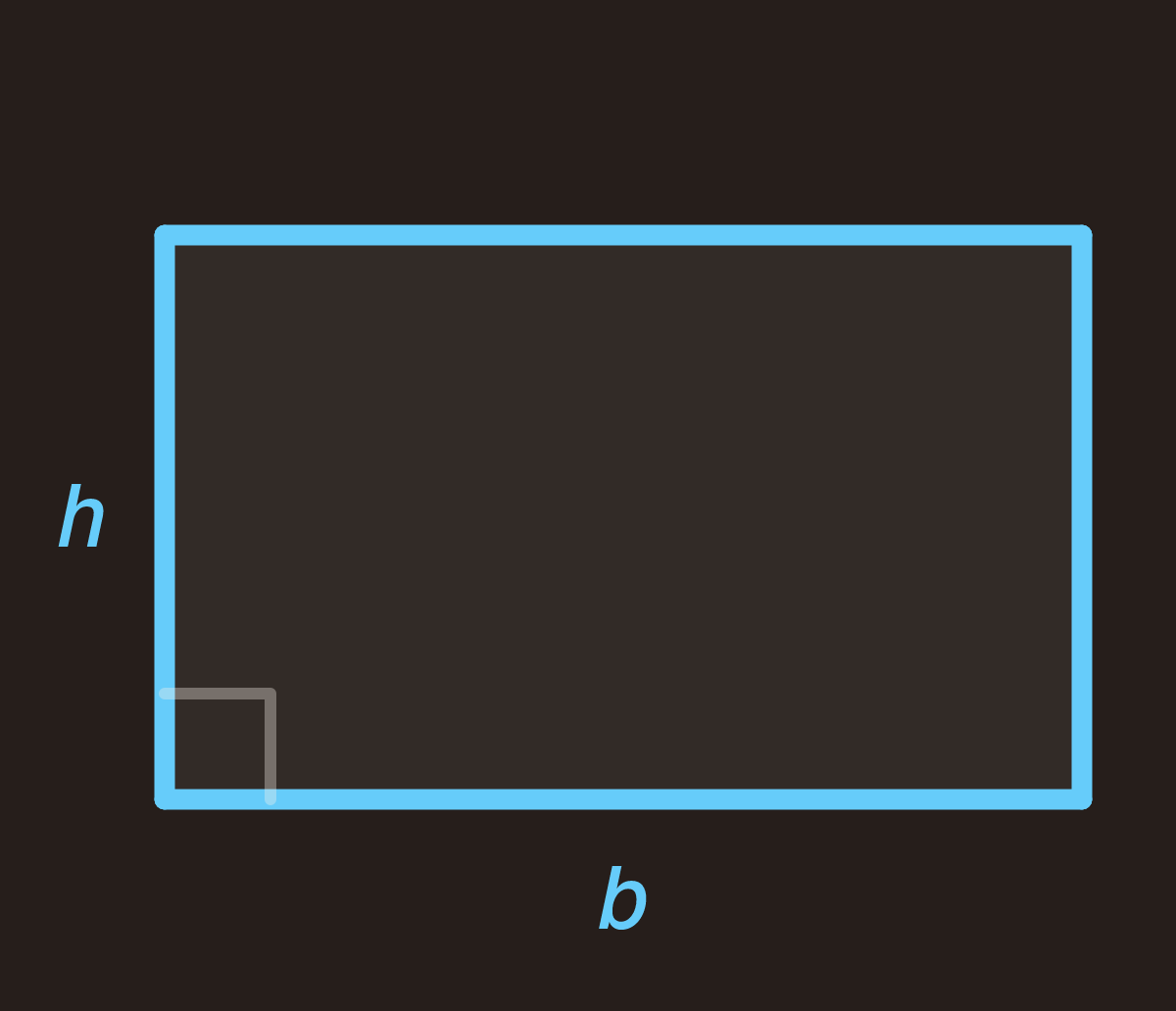
The distance around it: two bases and two heights.
Solve for
P=26cm
P equals 2 times (8 plus 5), equals 2 times 13, equals 26 cm
Den här sidan finns på svenska. Byt till svenska
Theorem — what does that mean?
The distance around: two bases and two heights, written as a bracket times two.
In Swedish: Rektangelns omkrets
P
The distance around it: two bases and two heights.
P=26cm
P equals 2 times (8 plus 5), equals 2 times 13, equals 26 cm
You are given
P = 22 cm
Pick the unit your lengths are in. Areas are then labelled in square units and volumes in cubic units; nothing is converted.
Questions that start in another formula and end in this one.
A rectangle has a known side and a known diagonal. How long is the other side, and what is the perimeter?
You are given
Carry a rounded answer into the next step if you like. That is marked right too.
Opens when step 1 is answered.
The perimeter is the sides laid end to end. A rectangle has four of them, equal in pairs:
All three lines say the same thing. The last is the one usually written down, because it shows what is happening: you go once around, and half a lap is one base plus one height.
This is why the formula is filed as a theorem rather than a definition. That the perimeter is the distance around the figure is the definition; that this particular distance can be written as 2 · (b + h) is something you work out, even if the working is short.
A fence. The plot is 8 m wide and 5 m deep. The fence is 2 · (8 + 5) = 2 · 13 = 26 m.
Backwards. You have 26 m of fence and want the depth to be 5 m. Half the perimeter is 13 m, so the width is 13 − 5 = 8 m.
Two rectangles with the same perimeter can have very different areas.
| Rectangle | Perimeter | Area |
|---|---|---|
| 8 × 5 | 26 m | 40 m² |
| 12 × 1 | 26 m | 12 m² |
The same amount of fence, more than three times the land. Of all rectangles with a given perimeter, the square holds the largest area — 6.5 × 6.5 gets 42.25 m² out of the same 26 metres.
What is it called for a circle?
The circumference, which is the same idea under another name. The formula differs because there are no
sides to add up — see the circumference of a circle.
Why is the answer in metres rather than square metres?
Because you are adding lengths instead of multiplying them. A perimeter is a distance, just as each side
is.
| Solve for | Rearranged | With the numbers | Comes to |
|---|---|---|---|
| b | P2 | 262 | 8 cm |
| h | P2 | 262 | 5 cm |
| P | 2(b | 2(8 | 26 cm |
Table
| Unit | In metres |
|---|---|
| mm | 0.001 |
| cm | 0.01 |
| in | 0.0254 |
| dm | 0.1 |
| ft | 0.3048 |
| yd | 0.9144 |
| m | 1 |
| km | 1,000 |
| mi | 1,609.344 |
| nmi | 1,852 |
| mil | 10,000 |
Last reviewed October 6, 2026 ·How pages are reviewed
Sheets that ask this formula, with their answer keys. Open one to see the questions or print it.
Sixteen questions on the perimeter of rectangles, squares, triangles and regular polygons. Sometimes a side is asked for when the perimeter is given.
The same drawing, measured in the other ways it can be measured.
Copy the code into your page where the formula card should appear. It loads from lovetocalc.com, so it stays current on its own — all we ask is that the credit line comes with it.