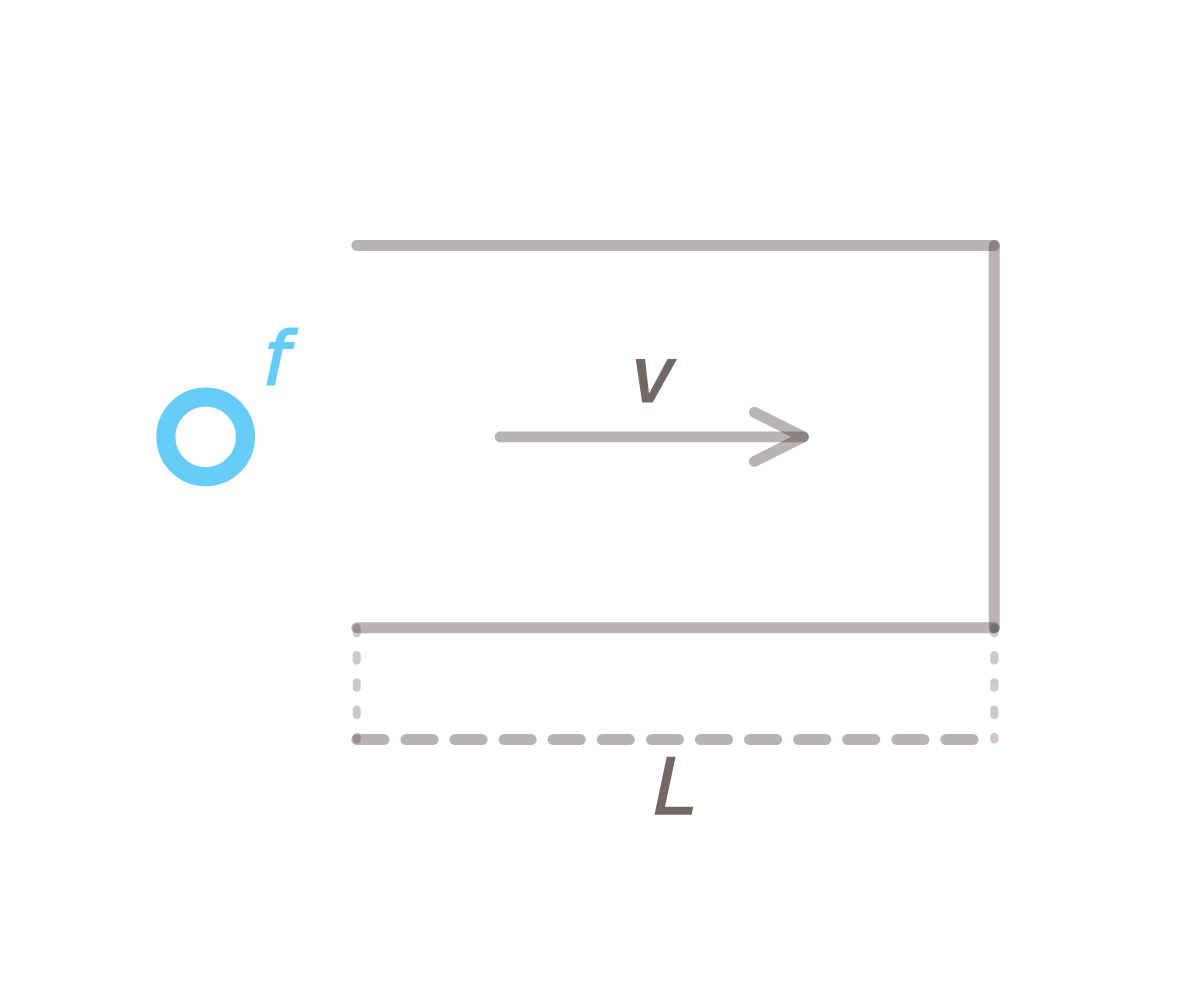
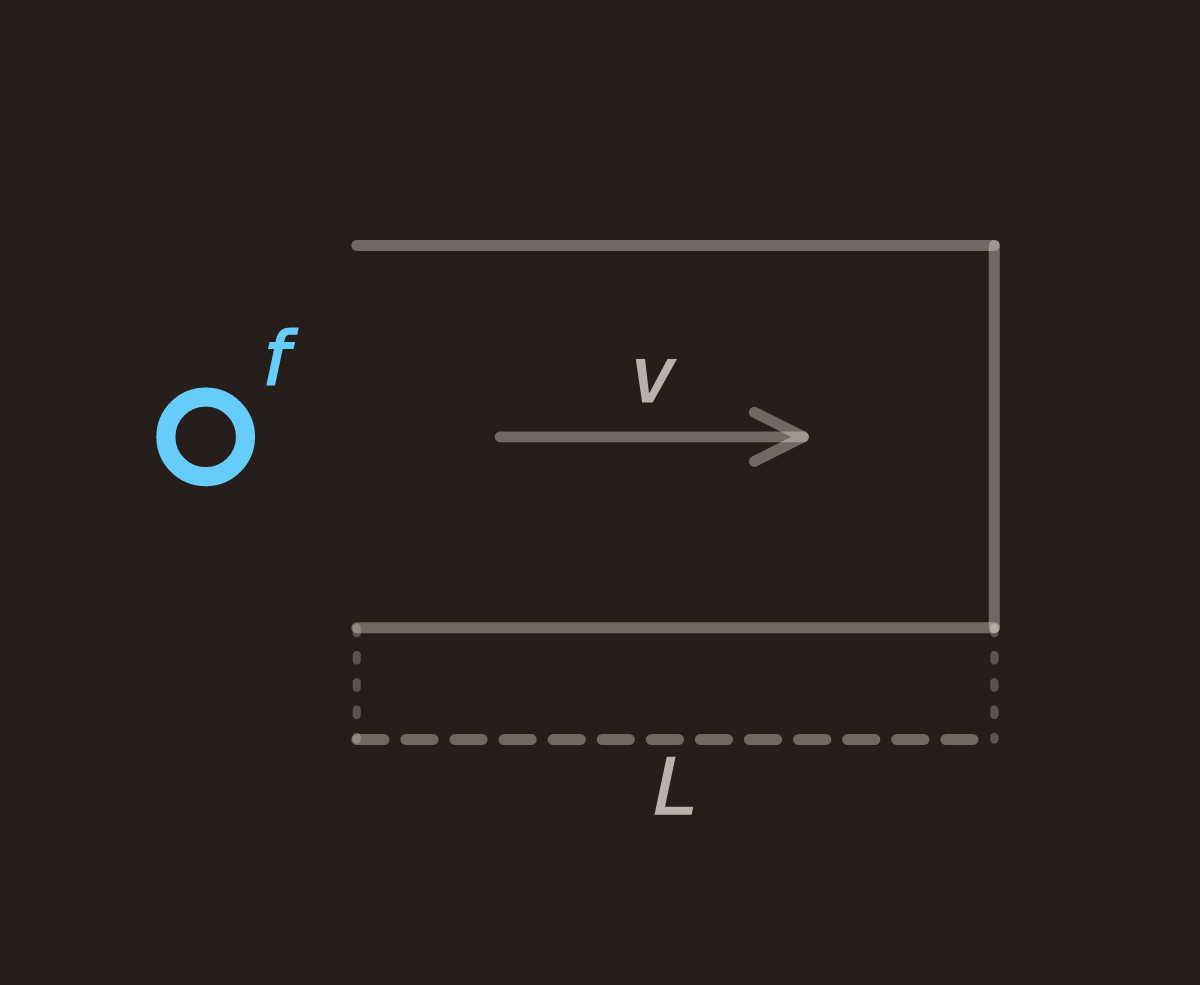
n counts the resonances (1, 2, 3 …), v is the speed of sound (343 m/s at 20 °C), L the length of
the pipe in metres and f the frequency in hertz.
Holds for a narrow, straight tube closed at one end, with a small correction for the air beyond the opening.
A 0.5 m pipe closed at one end has its fundamental at f = 1 · 343 / (4 · 0.5) = 171.5 Hz — an octave
below an open pipe of the same length.
n is not the harmonic number
At the closed end the air cannot move; at the open end it moves freely. A quarter wavelength fits, then
three quarters, five quarters — odd numbers only. So resonance number n is harmonic 2n − 1:
| n |
Harmonic |
f (L = 0.5 m) |
| 1 |
1st (fundamental) |
171.5 Hz |
| 2 |
3rd |
514.5 Hz |
| 3 |
5th |
857.5 Hz |
A problem asking for “the third harmonic” means n = 2, which is 514.5 Hz. Put in n = 3 and you get the
fifth, 857.5 Hz.
A second example: blowing across a test tube
The air column in a test tube is 20 cm. Fundamental: f = 343 / (4 · 0.20) ≈ 429 Hz. Pour in water
until the column is 10 cm, and the pitch doubles to 858 Hz.
A bottle with a narrow neck does not follow the formula. There the air in the neck bounces against the
air in the bottle, and the pitch is set by the bottle’s volume and the size of the neck.
Where next
Common mistakes
- n as the harmonic number. The third harmonic is n = 2.
- 2L instead of 4L. That is the open-pipe formula; the answer comes out twice as large.
- Looking for even harmonics. The second and fourth do not exist in a closed pipe.
- Length in centimetres. L goes in metres.
Common questions
Why does a clarinet sound different from a flute?
A clarinet is closed at the mouthpiece and, in its low register, has weak even harmonics, which gives it
its hollow tone.
How do you measure the speed of sound with a closed pipe?
Hold a tuning fork over a tube standing in water and raise the tube until it sounds loudly. Then L is a
quarter wavelength, and v = 4 · L · f.