Constructive interference
The relation
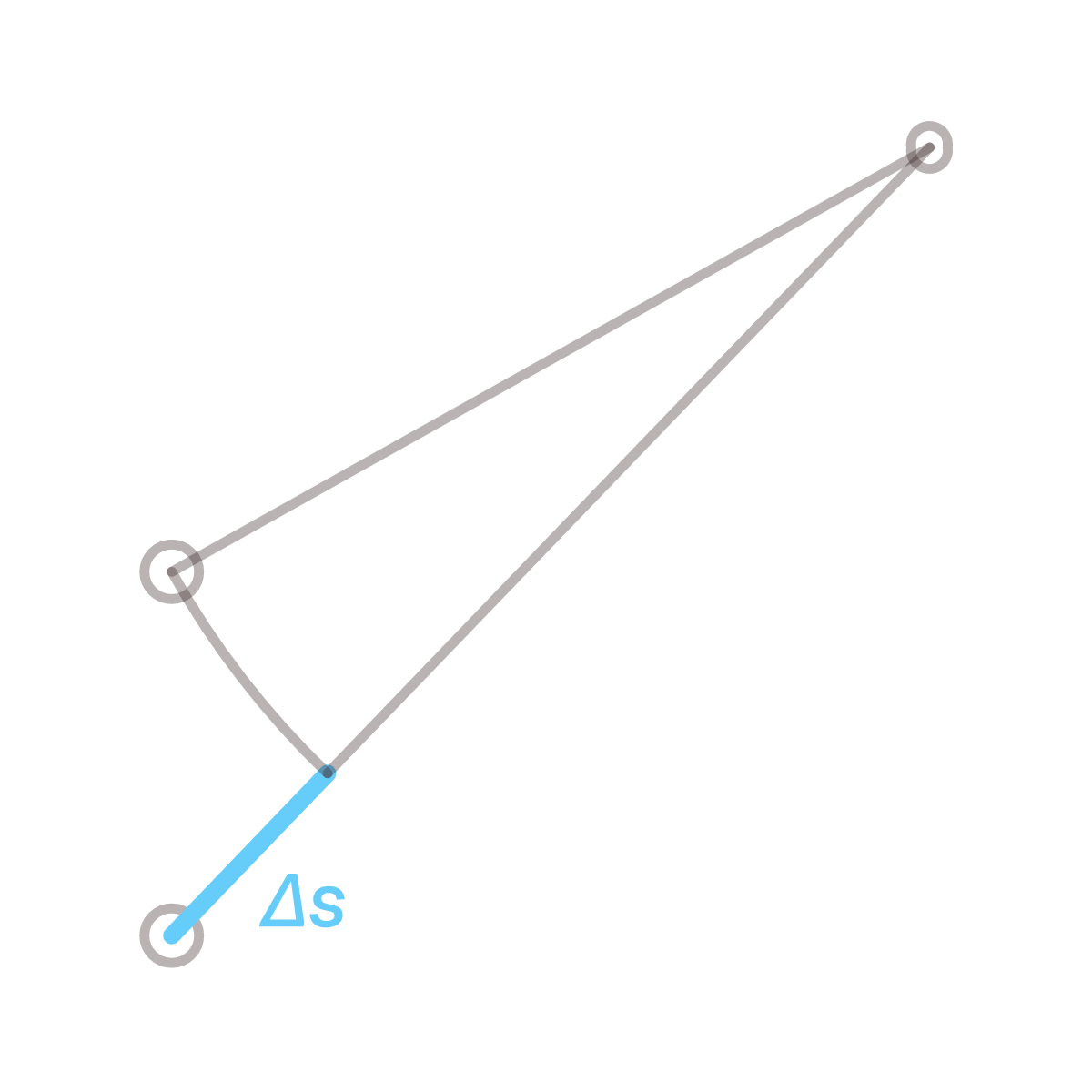
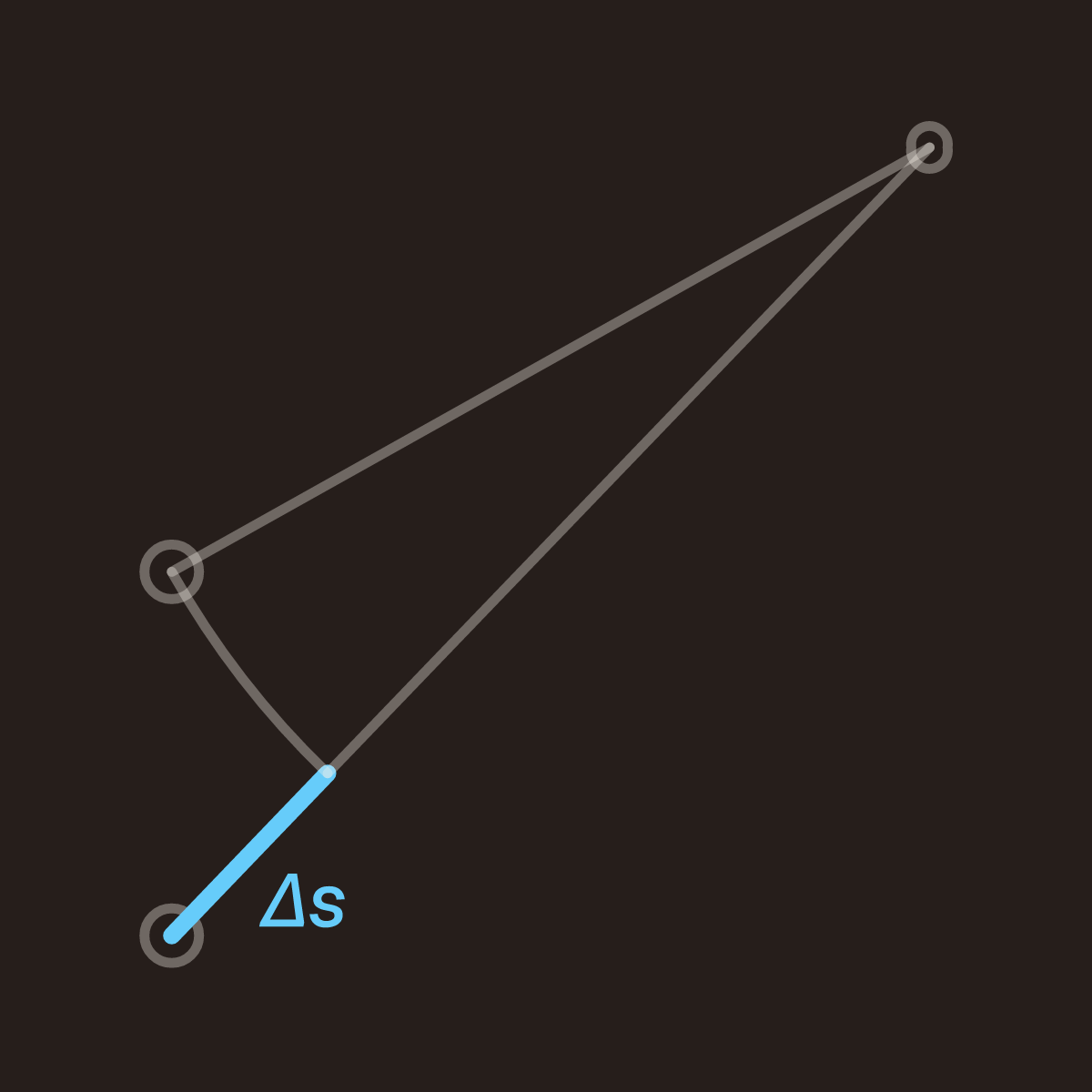
Δs
Two waves from sources in phase reinforce each other where their path difference is a whole number of wavelengths: Δs = kλ, with k = 0, 1, 2, …
Solve for
Δs=1m
Δs equals 2 times 0.5, equals 1 m
Den här sidan finns på svenska. Byt till svenska
Definition — what does that mean?
Where the two waves arrive crest on crest, they add up. That happens when the paths differ by a whole number of wavelengths.
In Swedish: Konstruktiv interferens
Δs
Two waves from sources in phase reinforce each other where their path difference is a whole number of wavelengths: Δs = kλ, with k = 0, 1, 2, …
Δs=1m
Δs equals 2 times 0.5, equals 1 m
Δs is the path difference, how much further one wave travels than the other, λ the wavelength (both in metres) and
k the order: 0, 1, 2, …
Holds when the two sources oscillate in phase and the waves have the same wavelength. At such a point the waves reinforce each other and give a maximum.
Two loudspeakers emit 680 Hz in air, where the speed of sound is 340 m/s, so λ = 340/680 = 0.50 m.
Is it loud? A listener is 1.5 m further from one speaker than from the other. k = Δs/λ = 1.5/0.50 = 3, a whole number, so the sound is reinforced.
Find the wavelength. Third-order maxima (k = 3) occur at Δs = 2.4 m. Then λ = 2.4/3 = 0.80 m.
What if the sources are not in phase?
Then the rule shifts by the phase difference between the sources. This page assumes they are in phase.
| Solve for | Rearranged | With the numbers | Comes to |
|---|---|---|---|
| k | Δsλ | 10.5 | 2 |
| λ | Δsk | 12 | 0.5 m |
| Δs | kλ | 2·0.5 | 1 m |
Last reviewed October 13, 2026 ·How pages are reviewed
Copy the code into your page where the formula card should appear. It loads from lovetocalc.com, so it stays current on its own — all we ask is that the credit line comes with it.