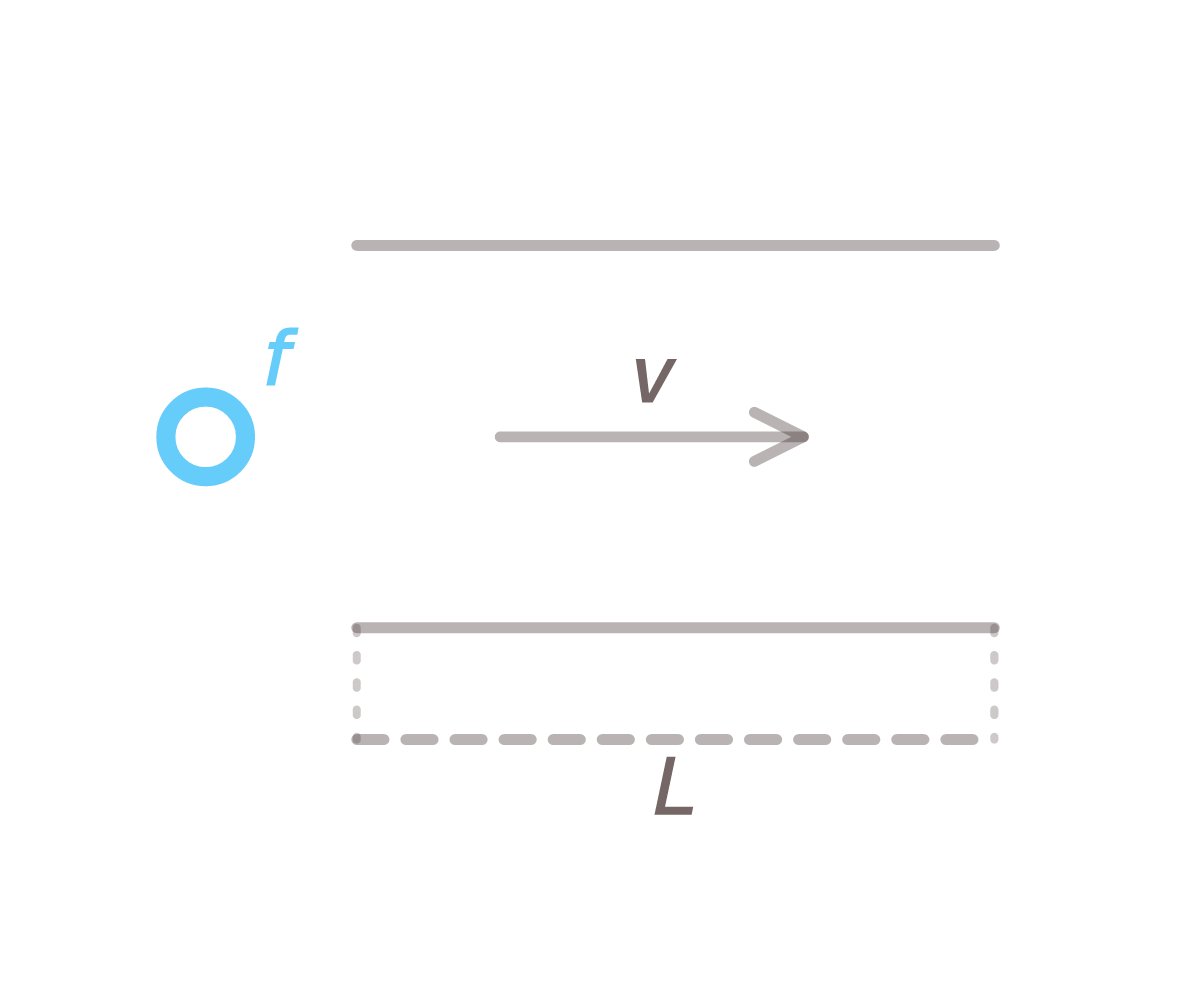
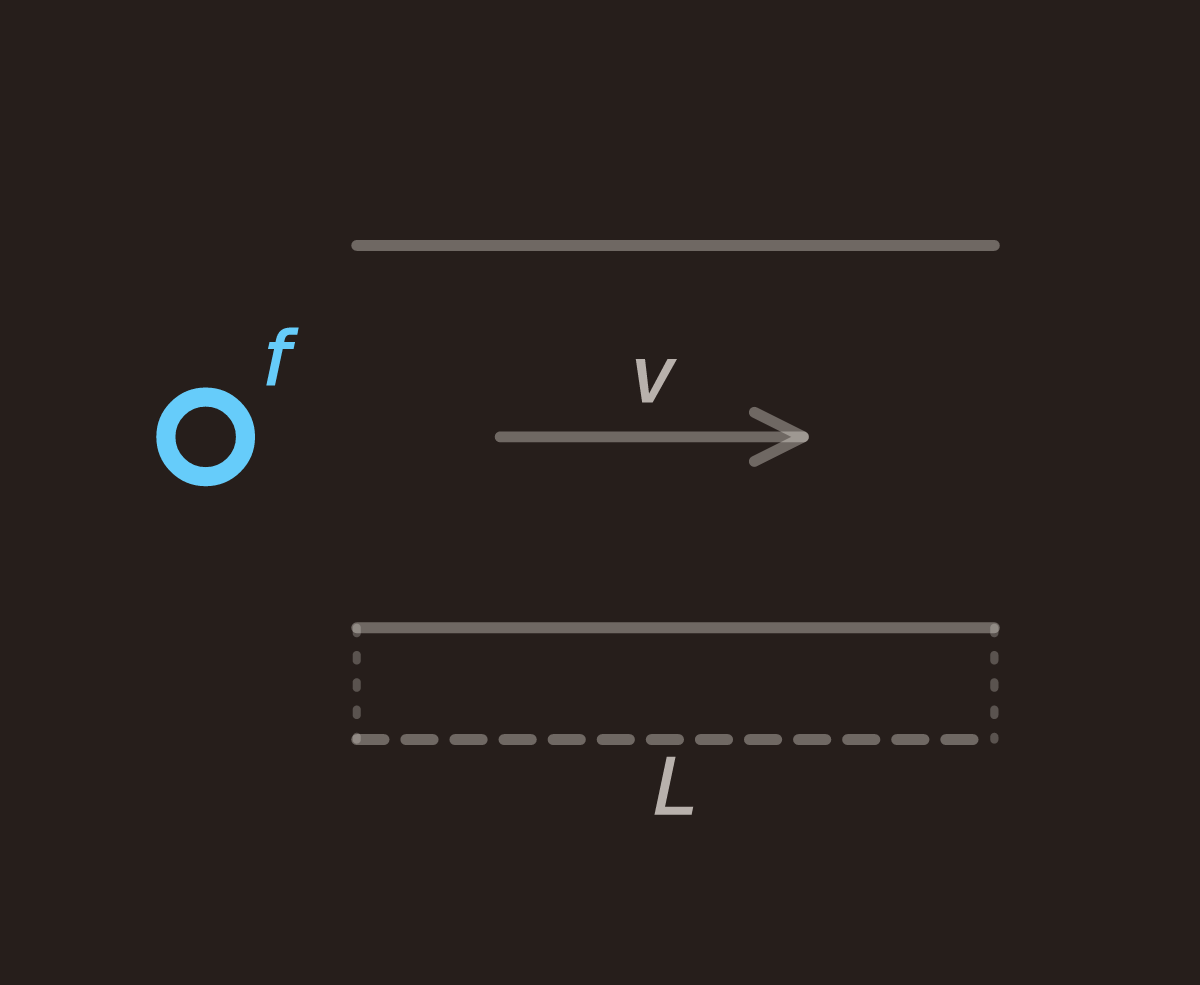
n is the harmonic number (1, 2, 3 …), v the speed of sound in air (343 m/s at 20 °C), L the length
of the pipe in metres and f the frequency in hertz.
Holds for a narrow pipe open at both ends, with a small correction for the air beyond the openings.
A 0.5 m pipe open at both ends has its fundamental at f₁ = 1 · 343 / (2 · 0.5) = 343 Hz.
Every harmonic
Both ends are open, so the air moves freely there: an antinode at each end. Half a wavelength fits, then
two halves, three halves and on.
| n |
Wavelength |
f (L = 0.5 m) |
| 1 |
2L = 1.0 m |
343 Hz |
| 2 |
L = 0.5 m |
686 Hz |
| 3 |
2L/3 ≈ 0.33 m |
1,029 Hz |
Use 4L, as for a closed pipe, and the answer is half the right one — a plausible note, but wrong.
A second example: how long should the pipe be?
An open pipe is to sound middle C, 262 Hz. L = n · v / (2f) = 343 / (2 · 262) ≈ 0.65 m.
Where next
Common mistakes
- 4L instead of 2L. That is the closed-pipe formula; the answer comes out half as large.
- The speed of sound. 343 m/s holds at 20 °C; in cold air it is lower and the pitch drops.
- Length in centimetres. With L in cm the frequency is a hundred times too small.
- n = 0. There is no zeroth harmonic; the fundamental is n = 1.
Common questions
Which instruments are open pipes?
The flute and an organ’s open flue pipes. A clarinet, by contrast, behaves like a closed pipe.
Is the formula exact?
Nearly. The air oscillates a little beyond each open end, so a real pipe sounds as if it were slightly
longer. That is the end correction.