Skip to content
LoveToCalc

Definition — what does that mean?

Spring oscillator frequency

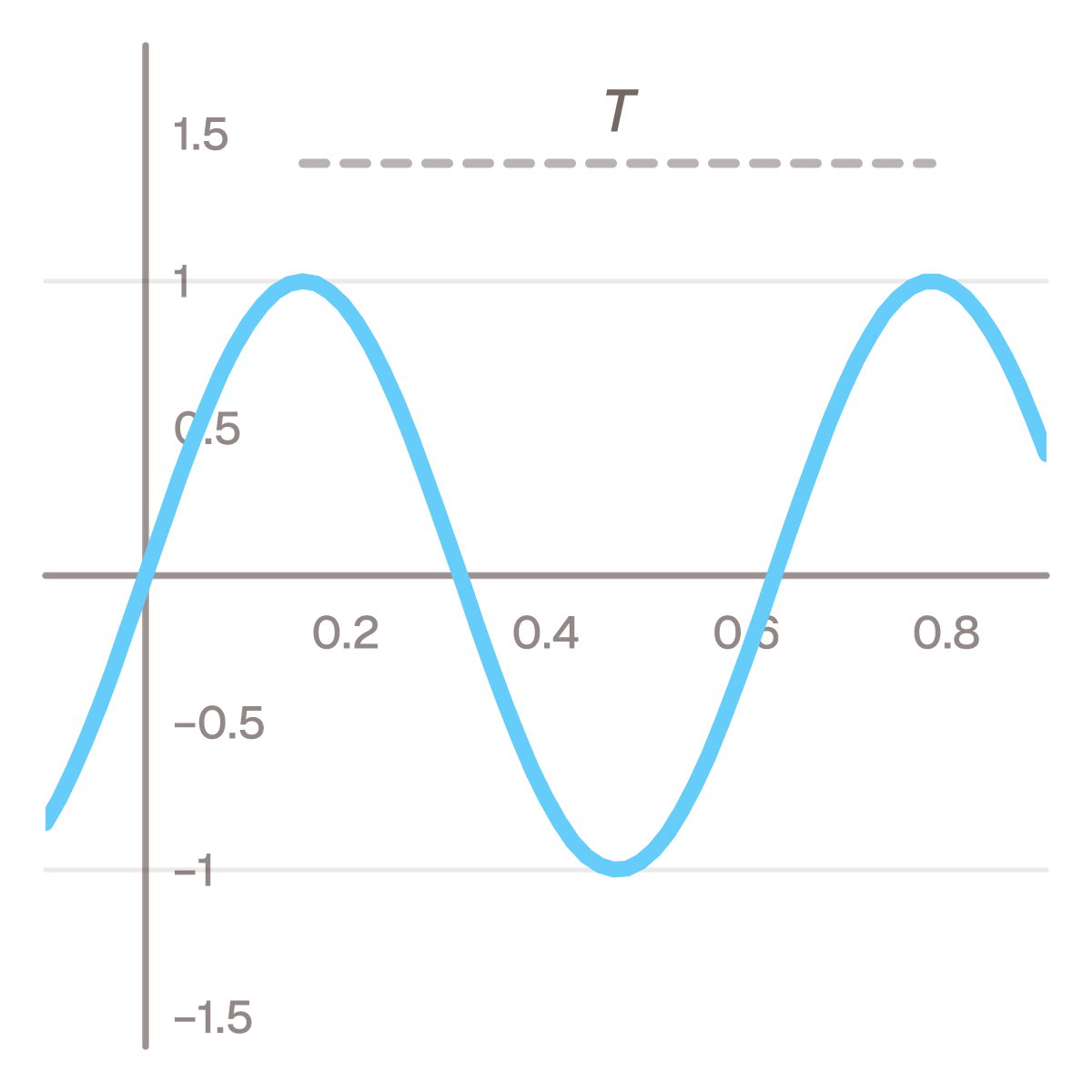
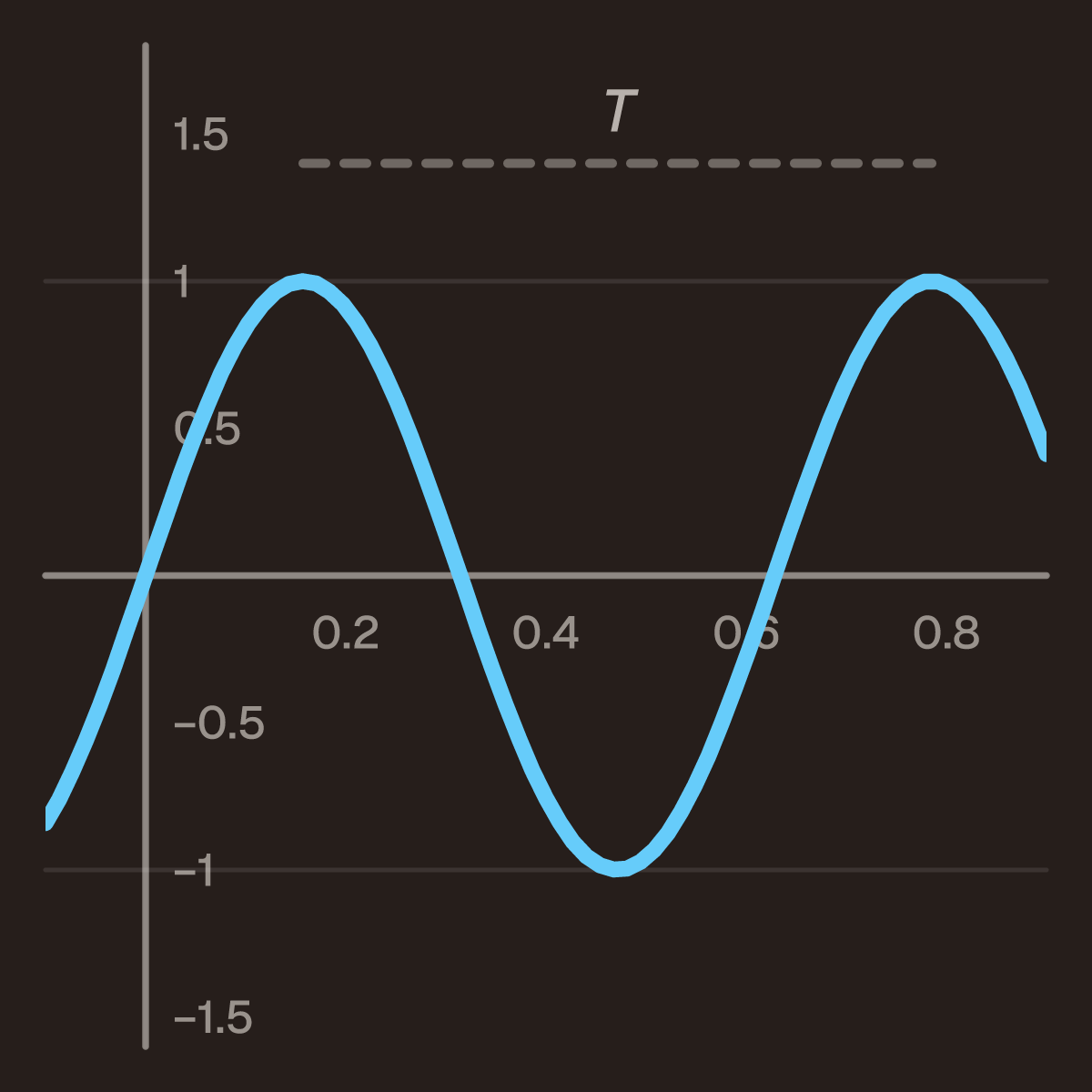
How many swings per second a mass on a spring makes. It is the angular frequency divided by 2π.

In Swedish: Fjäderpendelns frekvens

Spring oscillator frequency

The relation

f=12πkm

How many swings per second a mass on a spring makes: f = (1/2π)·√(k/m). It is the reciprocal of the period, written out in the spring constant and the mass.
Solve for

f≈1.5915Hz

f equals (1 divided by (2 times π)) times the square root of (100 divided by 1), is approximately (1 divided by 6.2832) times the square root of (100), is approximately 0.1592 times 10, is approximately 1.5915 Hz

Working4 steps

The formula

k is the spring constant in N/m, m the mass in kg and f the frequency in hertz, swings per second. It is the same oscillator as T = 2π · √(m/k), with f = 1/T.

Holds for a mass on an ideal spring, with no friction and a spring force proportional to the stretch.

Worked examples

Find f. k = 250 N/m and m = 0.40 kg: √(250/0.40) = 25, so f = 25 / 6.283 ≈ 3.98 Hz, a period of 0.251 s.

Find the spring constant. A 0.20 kg mass should oscillate at 2.0 Hz. k = m · (2πf)² = 0.20 · (12.57)² = 0.20 · 157.9 ≈ 31.6 N/m.

Common mistakes

Where next

Common questions

Does the amplitude change the frequency? Not for an ideal spring. A bigger swing is faster on average but covers more distance, and the time per swing is the same.

Looking for another letter? The formula solved for each one
Solved for each letter
Solve forRearrangedWith the numbersComes to
km(2πf)²1(2π·1.5915)²100 N/m
mk(2πf)²100(2π·1.5915)²1 kg
f12πkm12π10011.5915 Hz

Last reviewed October 13, 2026 ·How pages are reviewed

Waves and opticsAll formulas

Put this formula on your site

Copy the code into your page where the formula card should appear. It loads from lovetocalc.com, so it stays current on its own — all we ask is that the credit line comes with it.