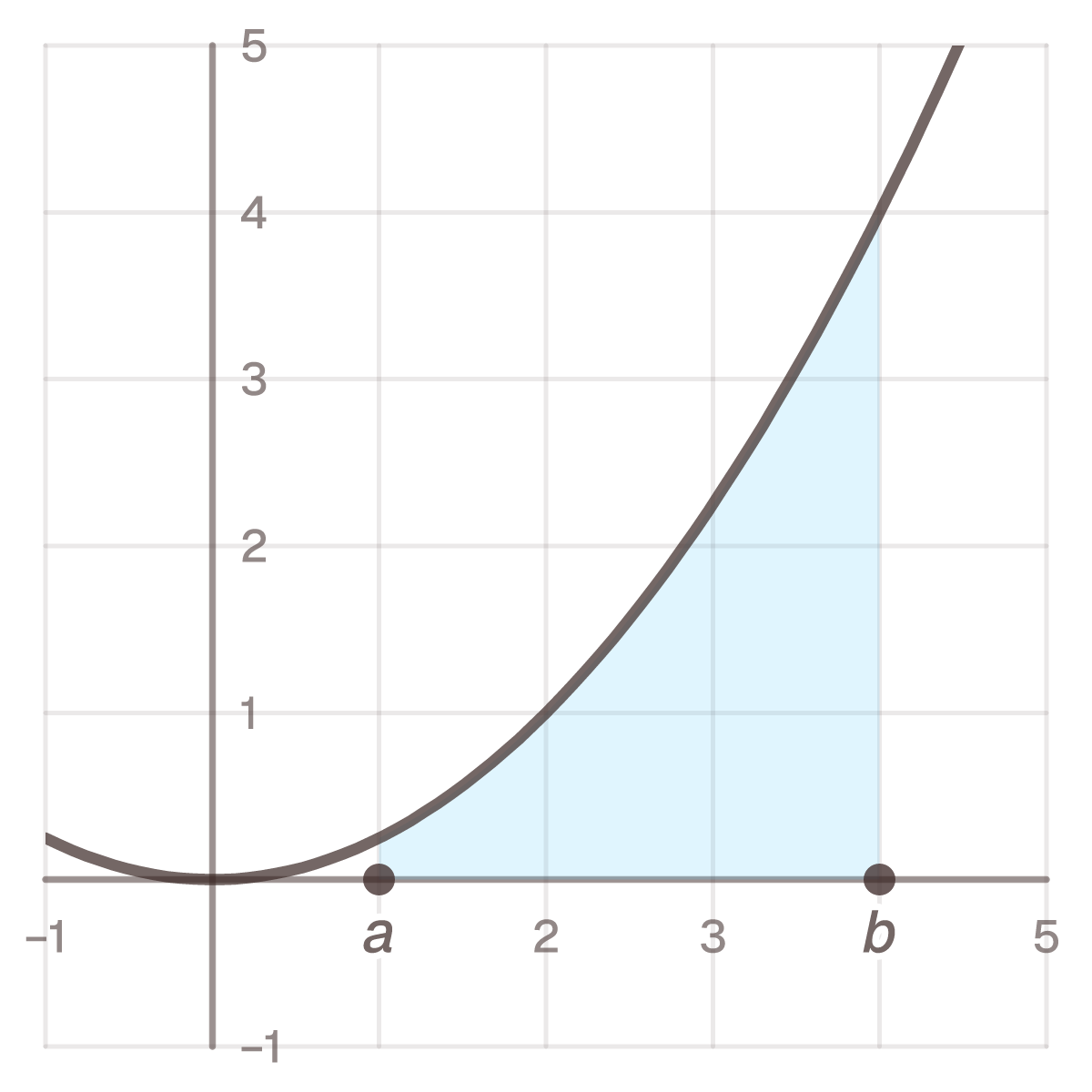
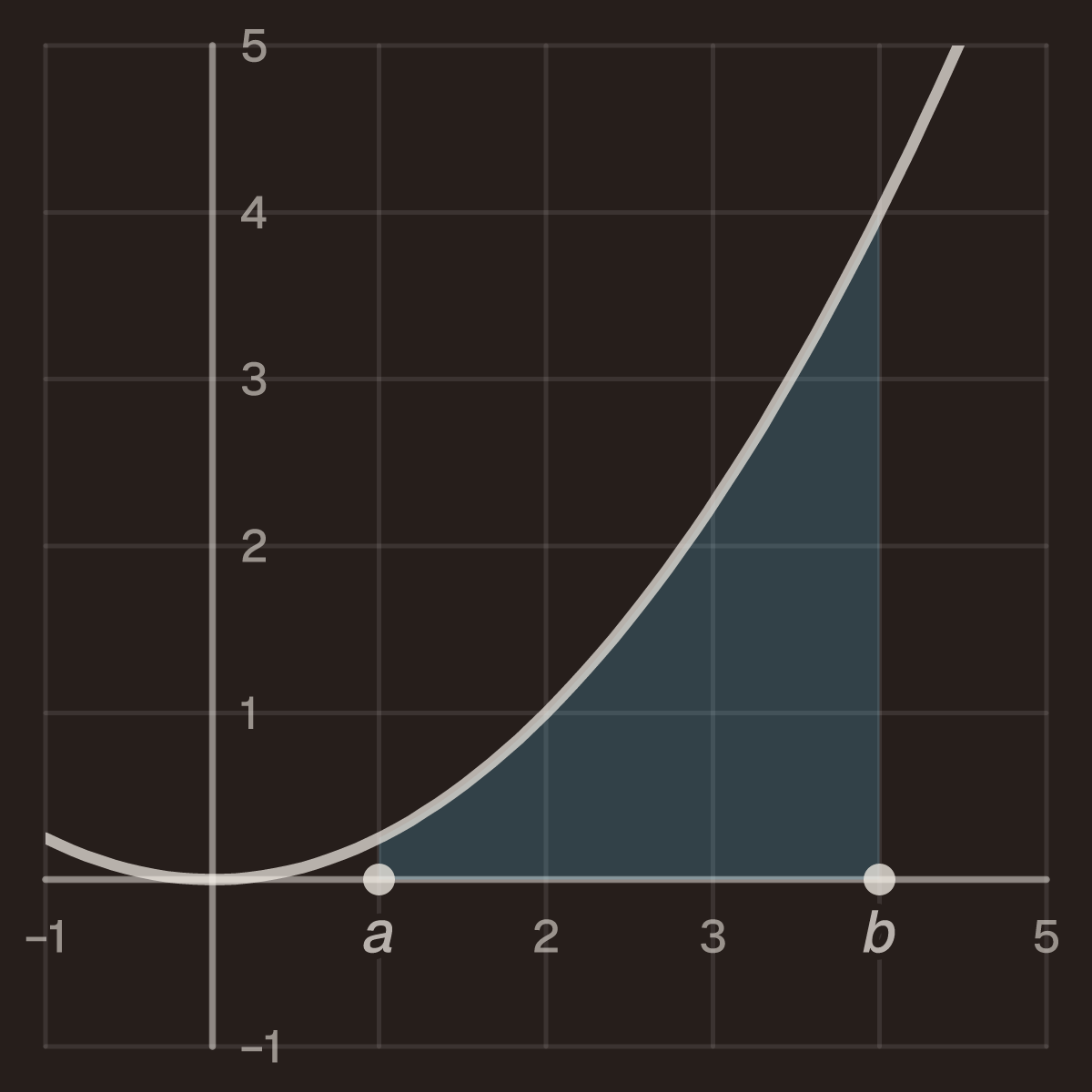
The rule
∫ₐᵇ f(x) dx = −∫ᵇₐ f(x) dx
Holds when f is integrable between a and b, whichever of the two is larger. It is what gives meaning to an integral whose upper limit is smaller than the lower.
Worked examples
∫₃¹ x² dx. Swap the limits: −∫₁³ x² dx = −26/3 ≈ −8.667.
∫₂⁰ 3 dx = −∫₀² 3 dx = −6.
A check with F. ∫₁³ x² dx = F(3) − F(1) = 9 − 1/3 = 26/3 with F(x) = x³/3, and ∫₃¹ x² dx = F(1) − F(3) = −26/3.
Why it holds
By the definite integral, ∫ₐᵇ f = F(b) − F(a), while ∫ᵇₐ f = F(a) − F(b). Those two differ only by a sign. The rule also keeps splitting an integral valid when the middle point lies outside [a, c].
Common mistakes
- Expecting a positive area. A negative value here is not an error; the direction of travel is reversed.
- Changing the sign twice. Swapping the limits and also negating the integrand brings back the original.
- Mixing up which limit goes on top. The upper limit is the one written at the top, not the larger one.
Common questions
Why is this a convention that makes sense?
It makes the integral from a to b plus the integral from b to a equal to the integral from a to a, which
is 0 by equal limits.