The rule
∫ₐᵃ f(x) dx = 0
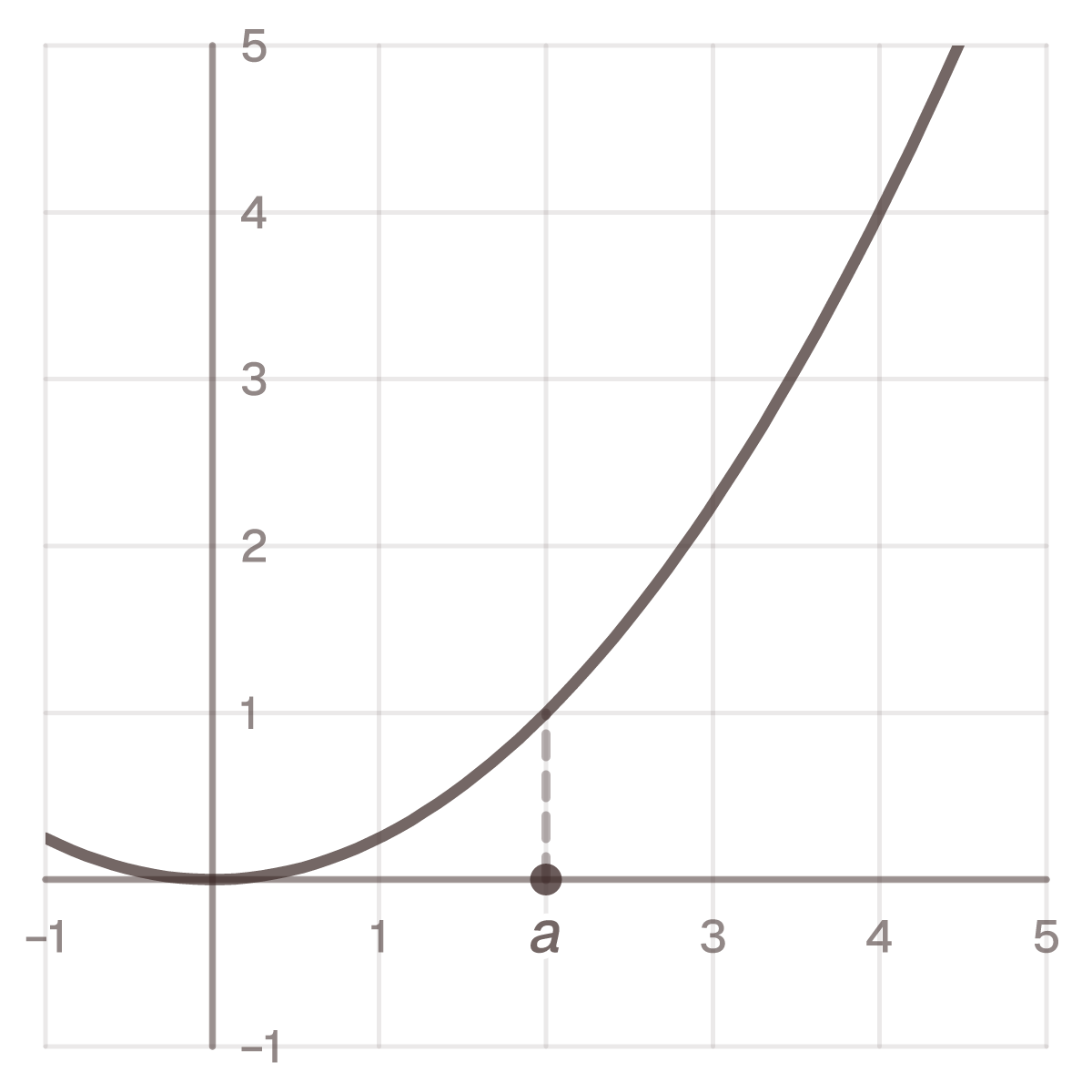
The interval from a to a has width zero, so there is no area under the curve. It holds for any f that has a value at a.
Worked examples
∫₅⁵ x³ dx. With F(x) = x⁴/4: F(5) − F(5) = 0.
∫₂² (x² + 1) dx = 0, whatever the integrand is, even though x² + 1 is 5 at x = 2.
In a calculation. ∫₀³ f dx − ∫₀³ f dx can be written as ∫₃³ f dx, which is 0. Splitting at a point as on splitting an integral with b = a gives the same result.
How it follows
With an antiderivative F, the definite integral is F(a) − F(a) = 0. The rule is also what makes swapping the limits consistent: swapping equal limits leaves the value at 0 = −0.
Common mistakes
- Answering f(a). The integrand’s value at a is a height, not an area. The width is what is 0.
- Thinking the integral is undefined. It is defined and equal to 0.
Common questions
Does the curve have to be defined at a?
For the rule as written, yes. With a hole or a jump at a the statement is about a single point, which has no
width in either case, but the integrand should still be defined near it.