What the formula says
∫ xⁿ dx = xⁿ⁺¹ / (n + 1) + C, n ≠ −1
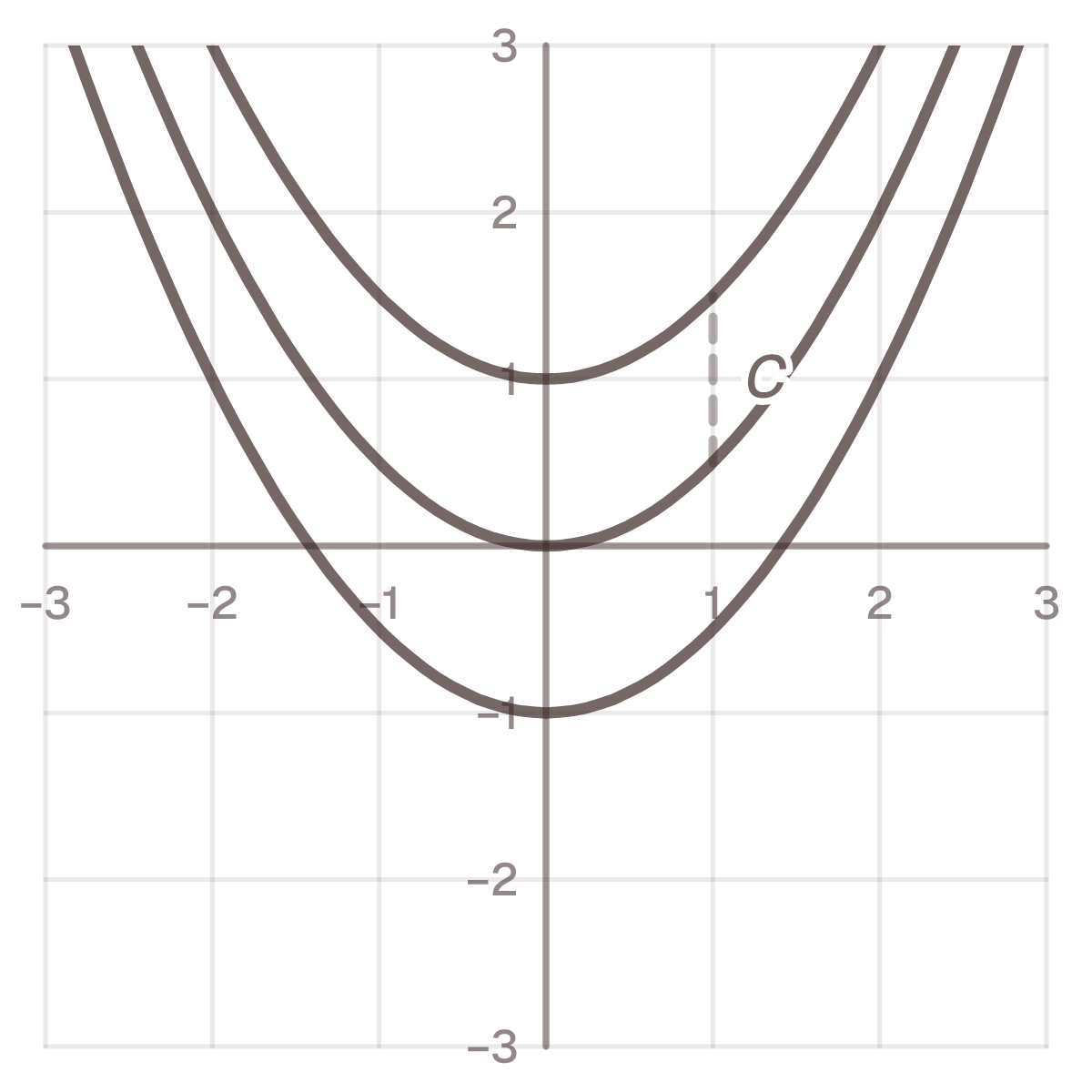
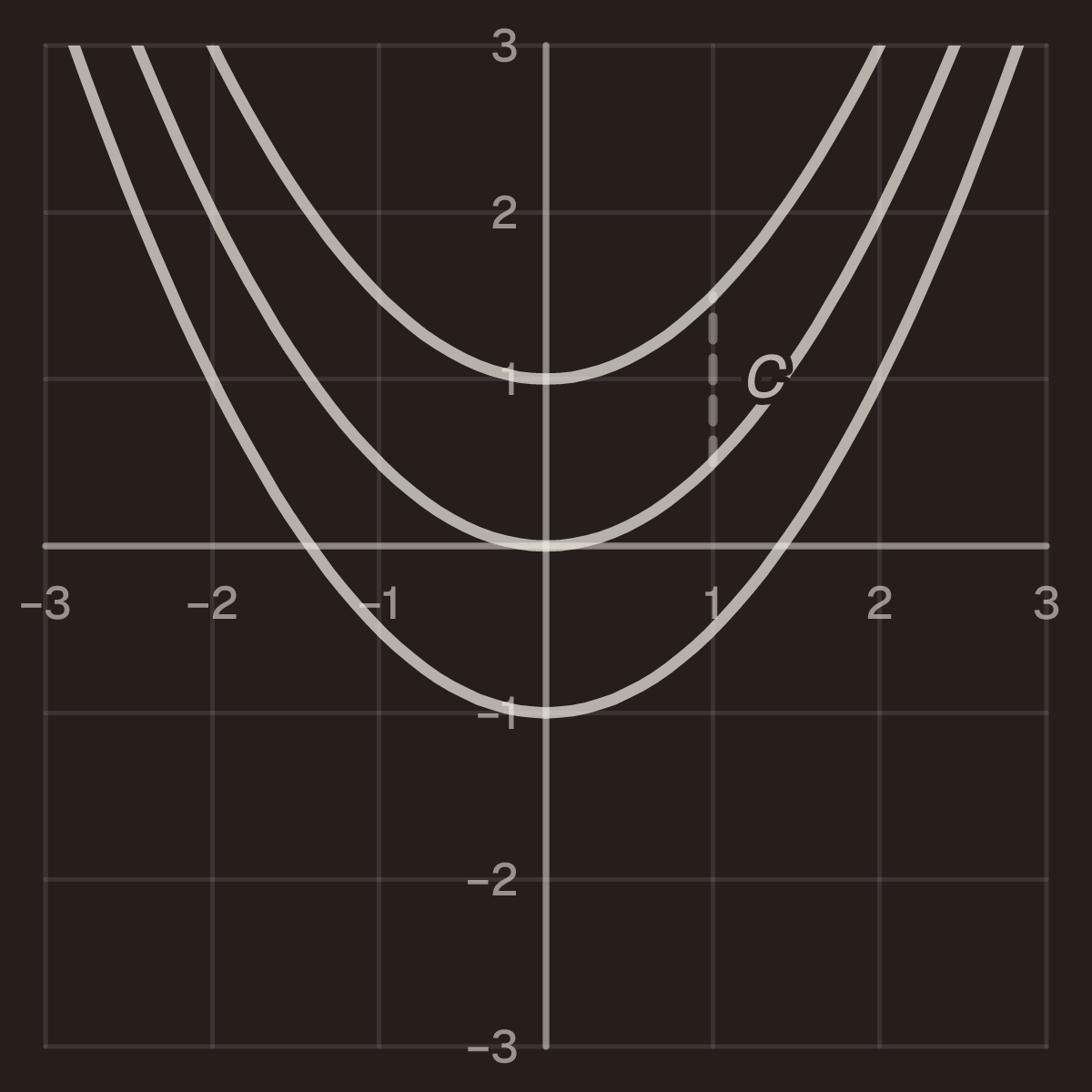
An antiderivative of f is a function whose derivative is f. This rule gives the antiderivative of a power
xⁿ: add one to the exponent and divide by the new exponent. C is an arbitrary constant. The rule is a
theorem, and it is the power rule for derivatives run backwards.
It holds for every exponent except −1, where the new exponent is 0 and you would divide by zero. There the answer is ln|x| + C instead, because the derivative of ln x is 1/x.
Worked examples
A whole-number exponent. ∫ x³ dx: the exponent becomes 4, and you divide by 4. The answer is x⁴/4 + C.
A root. √x is x^(1/2). The exponent becomes 3/2, and dividing by 3/2 is multiplying by 2/3: ∫ √x dx = (2/3)x^(3/2) + C.
A negative exponent. 1/x² is x⁻². The exponent becomes −1: ∫ x⁻² dx = x⁻¹/(−1) + C = −1/x + C.
The exception. 1/x is x⁻¹, and the rule does not hold there. ∫ x⁻¹ dx = ln|x| + C.
The check. Differentiate the answer and see the integrand come back: (x⁴/4)′ = 4x³/4 = x³.
Common mistakes
- Dividing by the old exponent. ∫ x³ dx is x⁴/4, not x⁴/3. You divide by the exponent you just wrote.
- Using the rule for n = −1. It gives x⁰/0, which means nothing. 1/x has its own antiderivative, ln|x|.
- Forgetting + C. Without the constant you have an antiderivative, but not all of them.
- Writing ln x without the absolute value. 1/x exists for negative x too, but ln x does not. ln|x| covers both sides.
Common questions
Why does the rule not hold for n = −1?
Because the new exponent is 0 and the formula divides by it. No power of x has the derivative 1/x; only
the logarithm does. That is why ∫ 1/x dx = ln|x| + C is a case of its own.
What is the constant of integration C?
A constant has derivative zero, so x⁴/4, x⁴/4 + 7 and x⁴/4 − 2 all have the derivative x³. C stands for
all of them at once. In a definite integral it cancels and is not needed.
How do I check an antiderivative?
Differentiate it. If you get back what you integrated, the answer is right. It is quicker than working it
again, and it catches a common mistake: dividing by the wrong exponent.