What the formula says
∫ sin x dx = −cos x + C
An antiderivative of sin x is −cos x, and C is the constant of integration. The rule is a theorem:
it is the derivative of cosine read
backwards. x is in radians.
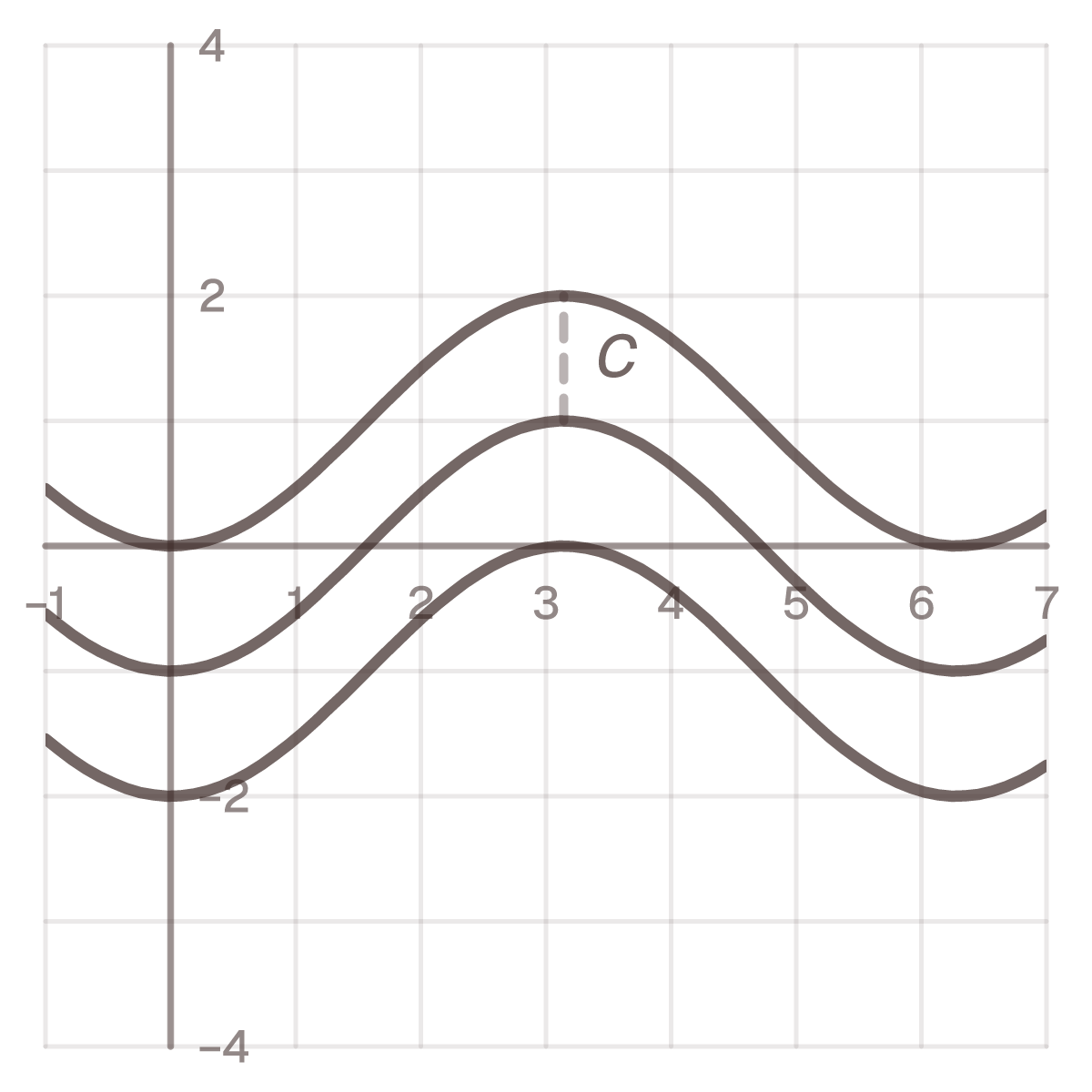
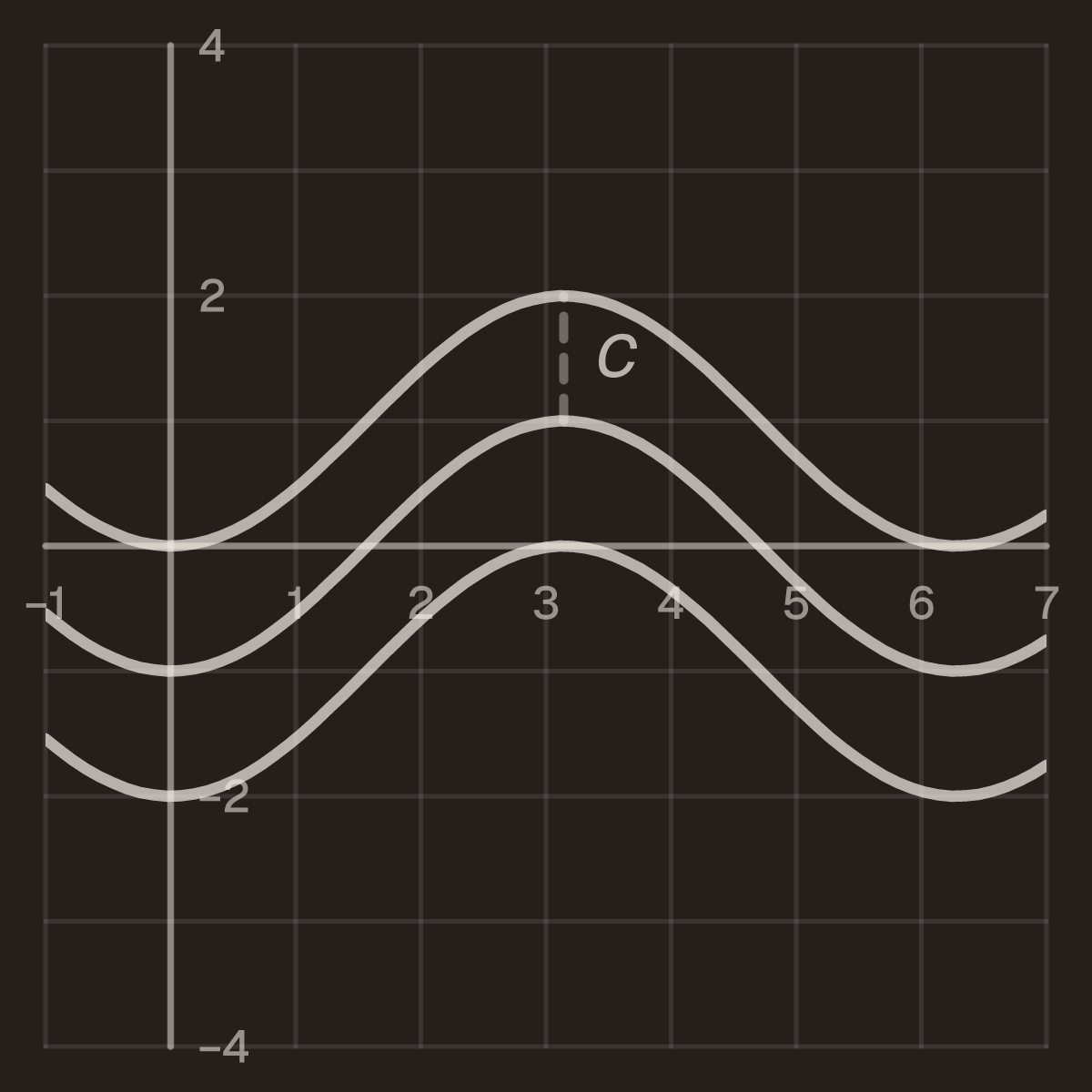
Example. The area under one arch of the sine curve, from 0 to π:
∫₀^π sin x dx = [−cos x]₀^π = −cos π − (−cos 0) = 1 + 1 = 2
The minus sign, and how to check it
It is easy to get the sign wrong here, and the wrong answer, cos x + C, looks as plausible. Do not memorise the sign. Check it: differentiate your answer and see whether sin x comes back.
- (−cos x)′ = −(−sin x) = sin x. Right.
- (cos x)′ = −sin x. Wrong sign — so cos x is not the antiderivative.
On a definite integral the wrong sign shows as a negative area: with cos x instead of −cos x, the arch above gives cos π − cos 0 = −2, for a region that lies entirely above the axis.
A second example: a whole period
∫₀^2π sin x dx = −cos 2π + cos 0 = −1 + 1 = 0. The second arch lies below the axis and cancels the first. The integral is 0, but the area between the curve and the axis is 2 + 2 = 4 — see area under a curve for why the two differ.
With something inside: ∫ sin(2x) dx = −cos(2x)/2 + C. Dividing by the inner factor undoes the factor 2 that the chain rule would bring out. Check: (−cos(2x)/2)′ = sin(2x) · 2/2 = sin(2x).
Sine and cosine side by side
| f(x) | f′(x) | ∫ f(x) dx |
|---|---|---|
| sin x | cos x | −cos x + C |
| cos x | −sin x | sin x + C |
The minus sign sits on the derivative of cos and on the integral of sin — never on the other two.
Common mistakes
- cos x + C. The sign is wrong. Differentiate and you get −sin x.
- Degrees. ∫ sin x dx = −cos x + C holds only in radians.
- Multiplying instead of dividing by the inner factor. ∫ sin(3x) dx is −cos(3x)/3 + C, not −3cos(3x) + C.
- Forgetting + C. Without it you have one antiderivative, not all of them.
Common questions
How do I remember the sign?
Remember the derivative instead, since you need it anyway: cos x differentiates to −sin x. So to get
+sin x out, you have to differentiate −cos x.
Why is ∫₀^2π sin x dx zero?
Because the integral counts area below the axis as negative, and over a whole period the parts above
and below are equal.