The definition
- ∂f/∂x = limh→0 (f(x + h, y) − f(x, y))/h
Only x moves in the quotient, and y keeps its value. It is the definition of the derivative applied to the function x ↦ f(x, y), so every rule for one variable works unchanged, with y treated as a constant. ∂f/∂y is defined the same way, with the step in y. Other ways of writing ∂f/∂x are fx, f1 and D1f.
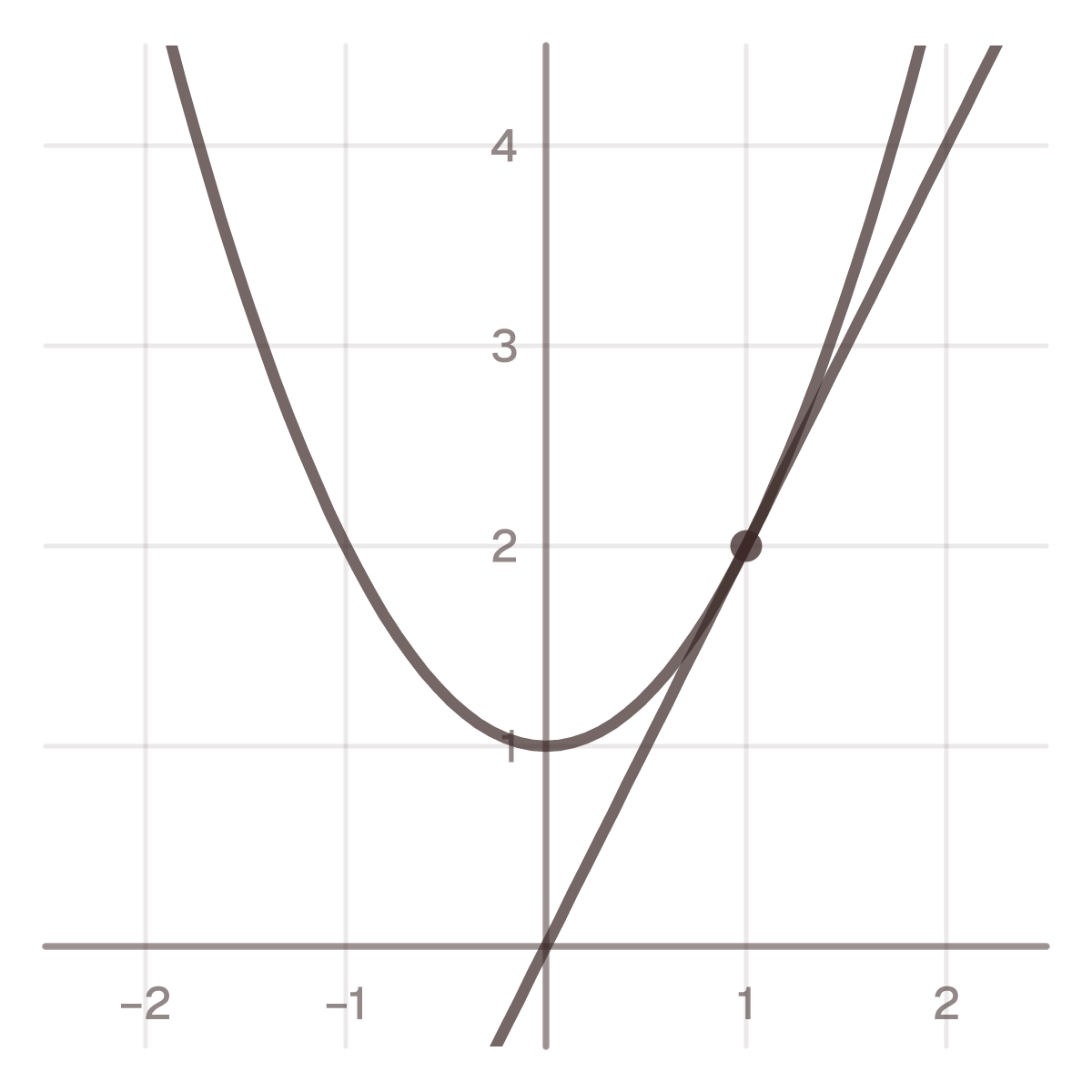
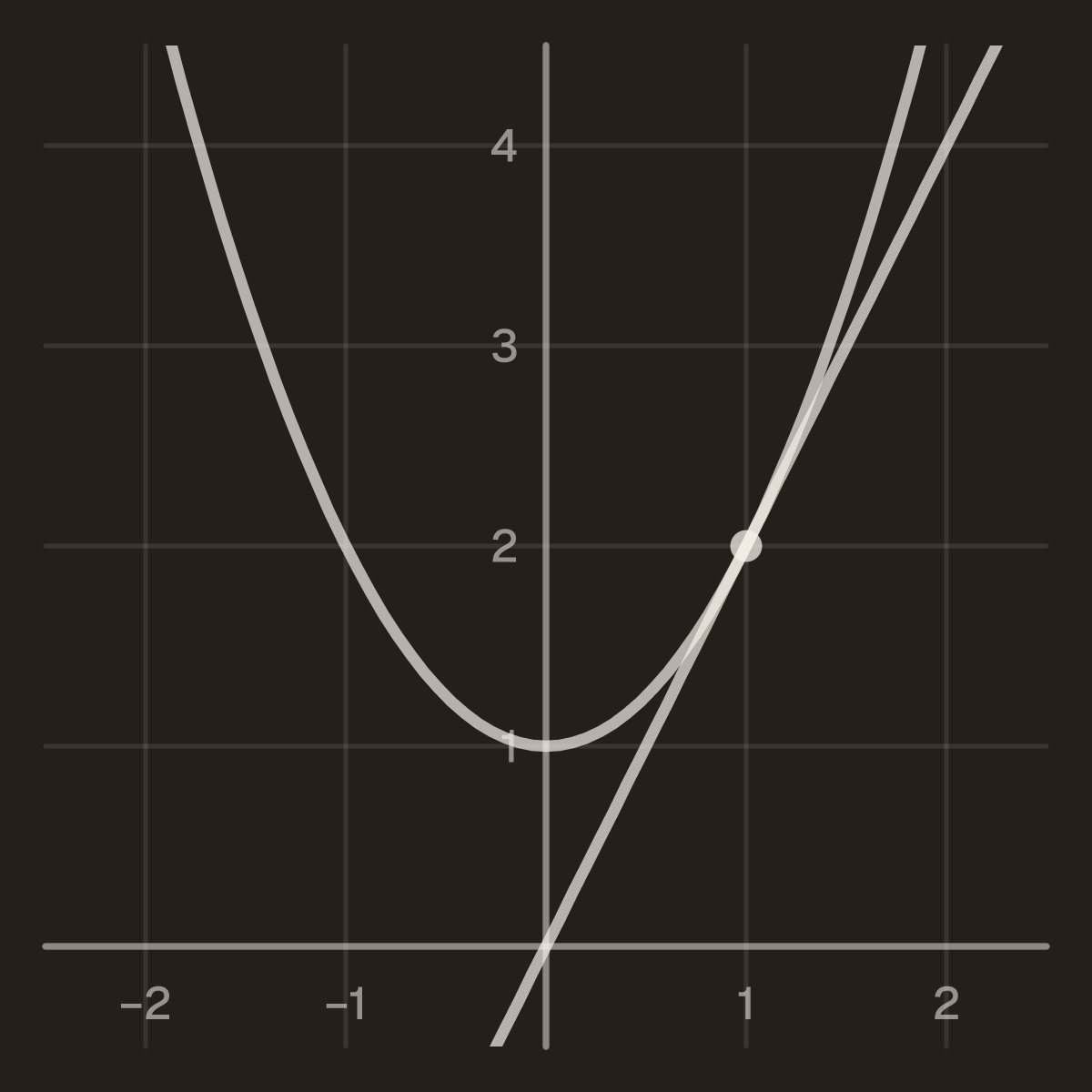
Geometrically, fixing y = b cuts the surface z = f(x, y) along a curve, and ∂f/∂x at (a, b) is the slope of that curve at x = a. The figure shows the cut y = 1 through z = x² + y².
Worked example: x²y³
- ∂f/∂x = 2xy³: y³ is a constant factor, and x² gives 2x.
- ∂f/∂y = 3x²y²: now x² is the constant factor.
- At (2, 3): ∂f/∂x = 2 · 2 · 27 = 108 and ∂f/∂y = 3 · 4 · 9 = 108.
The two are equal at this point by coincidence. At (1, 3) they are 54 and 27.
A second example: sin(xy)
∂/∂x sin(xy) = y cos(xy), by the chain rule with y as the constant in the inner derivative. In y it is x cos(xy).
Common mistakes
- Differentiating the held variable. In ∂/∂x (x²y³), y³ is a constant factor and stays; 3y² does not appear.
- Keeping a term in y alone. ∂/∂x (x² + y²) = 2x. The y² is a constant, and its derivative is 0.
Related pages
The two partials together make the gradient. Taken twice in two orders, they meet in the equality of mixed partials.