Electric power
The relation
P
Power is voltage times current. It is what the label on an appliance states, and what the kilowatt hours on the bill are counted from.
Solve for
P=1,380W
P equals 230 times 6, equals 1,380 W
Den här sidan finns på svenska. Byt till svenska
Definition — what does that mean?
Watts are volts times amperes — the number on the rating plate, and what kilowatt hours are counted from.
In Swedish: Elektrisk effekt
P
Power is voltage times current. It is what the label on an appliance states, and what the kilowatt hours on the bill are counted from.
P=1,380W
P equals 230 times 6, equals 1,380 W
You are given
Round to 2 decimals.
Questions that start in another formula and end in this one.
A current flows through a resistor. What is the voltage across it, and what power is dissipated in it?
You are given
Carry a rounded answer into the next step if you like. That is marked right too.
Round to 2 decimals.
Opens when step 1 is answered.
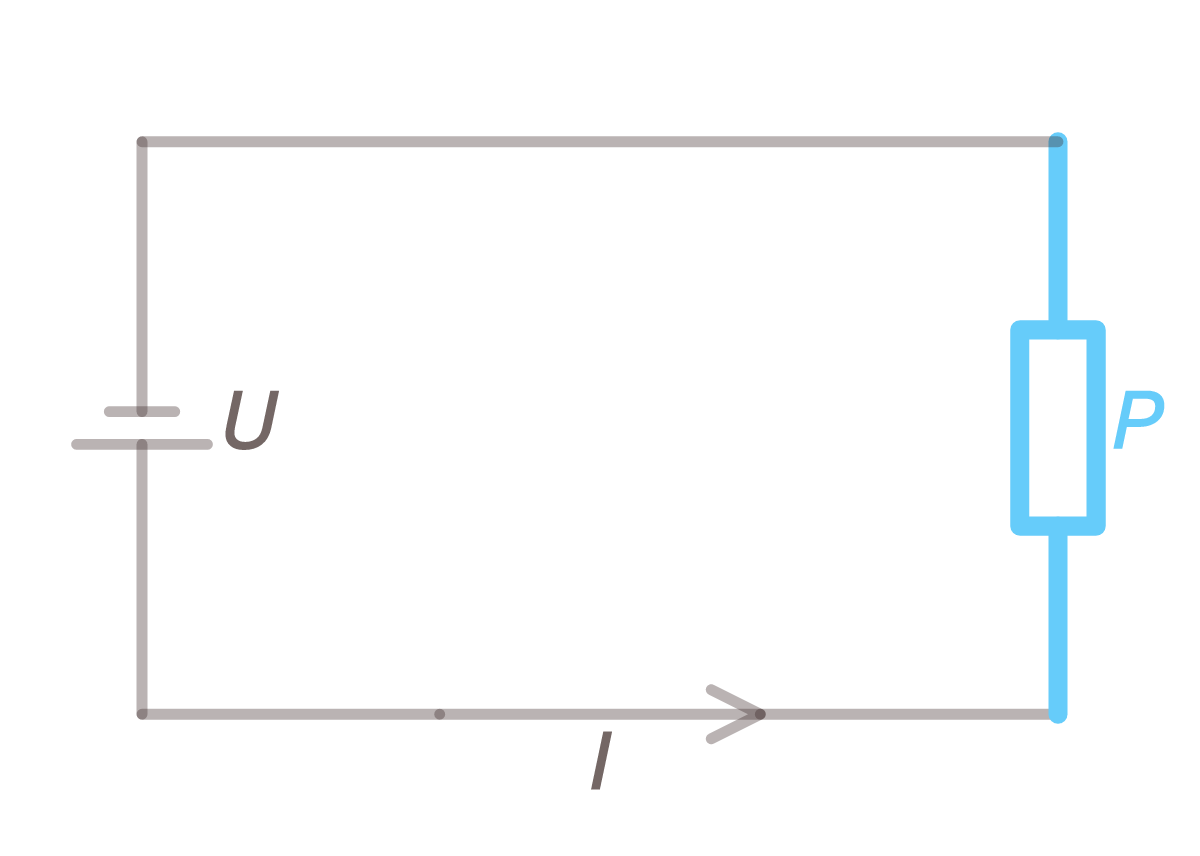
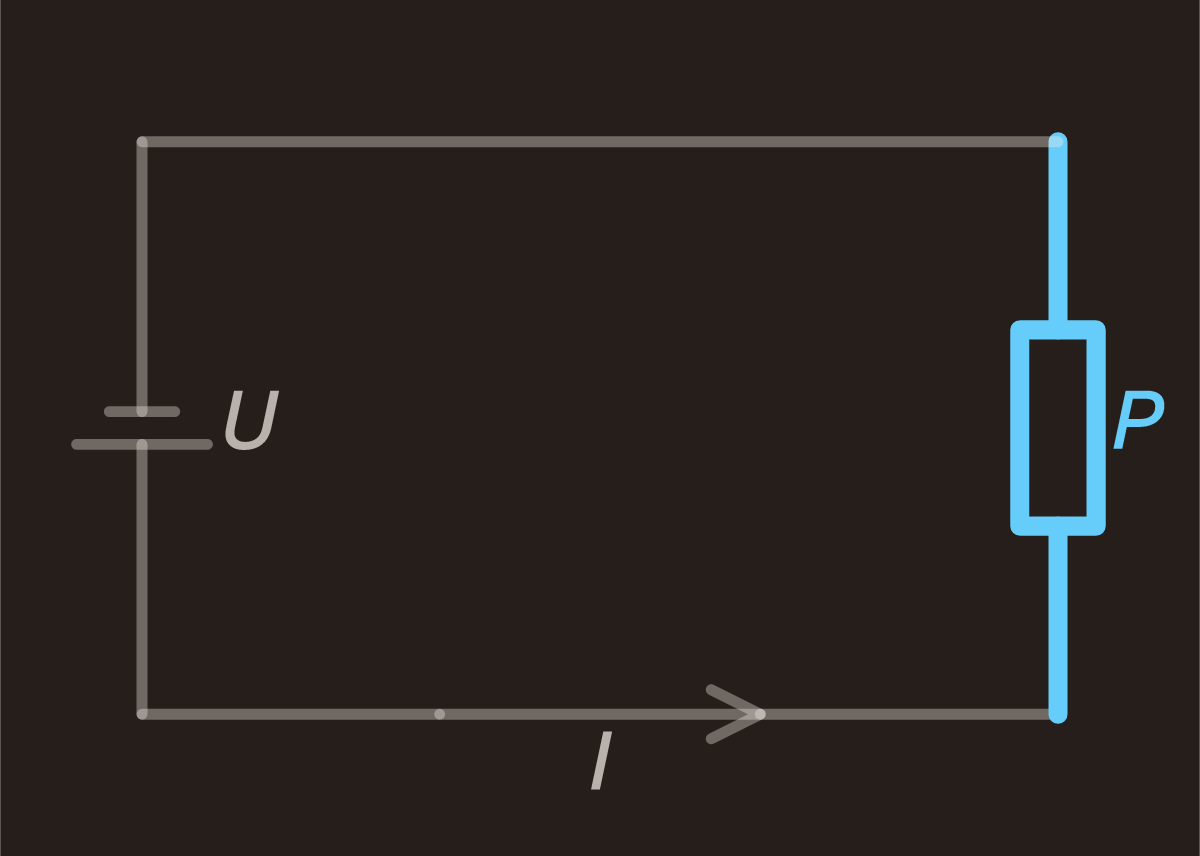
P is the power in watts, U the voltage in volts and I the current in amperes. An appliance drawing
6 A at 230 V has a power of 230 · 6 = 1,380 W.
Holds for direct current and, with RMS values, for alternating current in pure resistances. With motors and fluorescent lights the power factor comes in.
Rearranged as I = P / U it says what fuse an appliance needs.
Power and energy are two different quantities:
A 2,000 W tumble dryer draws twice as fast as a 1,000 W one, but if the slower one ran twice as long they have used the same amount. The rating plate states power; the electricity bill charges for energy. How to get from one to the other is on the page about electric energy in kWh.
Combining P = U · I with Ohm’s law gives two more forms, and which one you use depends on what you know:
The card above uses the first. The other two come from substituting Ohm’s law for U or I.
What fuse is needed? A cooker rated 7,400 W at 230 V draws 7,400 / 230 ≈ 32 A. That is why a cooker sits on its own circuit with a heavier fuse than the wall sockets.
A charger. A USB charger supplying 5 V at 2 A delivers 5 · 2 = 10 W. That figure is what decides how fast the phone charges, not the voltage alone.
Two appliances on one circuit. A 10 A fuse at 230 V handles 230 · 10 = 2,300 W. A 2,000 W kettle and an 800 W toaster come to 2,800 W together — and the fuse blows.
Why do some appliances state both W and VA?
VA, volt-amperes, is voltage times current as it stands. W is the power actually converted. For a pure
resistance they are equal; for a motor the W figure is lower, and the ratio between them is the power
factor.
What does it cost to run the appliance?
Power times time gives energy, and energy times the price per kilowatt hour gives the cost. Both steps
are on the pages about electric energy and
the cost of electricity.
Why is high voltage better for transmission?
Because the losses are R · I². At the same power, ten times the voltage means a tenth of the current,
and then the losses are a hundredth. That is the main reason power lines run at hundreds of thousands
of volts.
| Solve for | Rearranged | With the numbers | Comes to |
|---|---|---|---|
| U | PI | 1,3806 | 230 V |
| I | PU | 1,380230 | 6 A |
| P | UI | 230·6 | 1,380 W |
Last reviewed October 6, 2026 ·How pages are reviewed
Sheets that ask this formula, with their answer keys. Open one to see the questions or print it.
Eight questions on Ohm's law, six on power and four on energy. Voltage, current, resistance and power take turns being asked for. Calculator allowed.
Six questions on what electricity costs, five on power and five on energy. The units change in every question. Calculator allowed.
Copy the code into your page where the formula card should appear. It loads from lovetocalc.com, so it stays current on its own — all we ask is that the credit line comes with it.