Cost of electricity
The relation
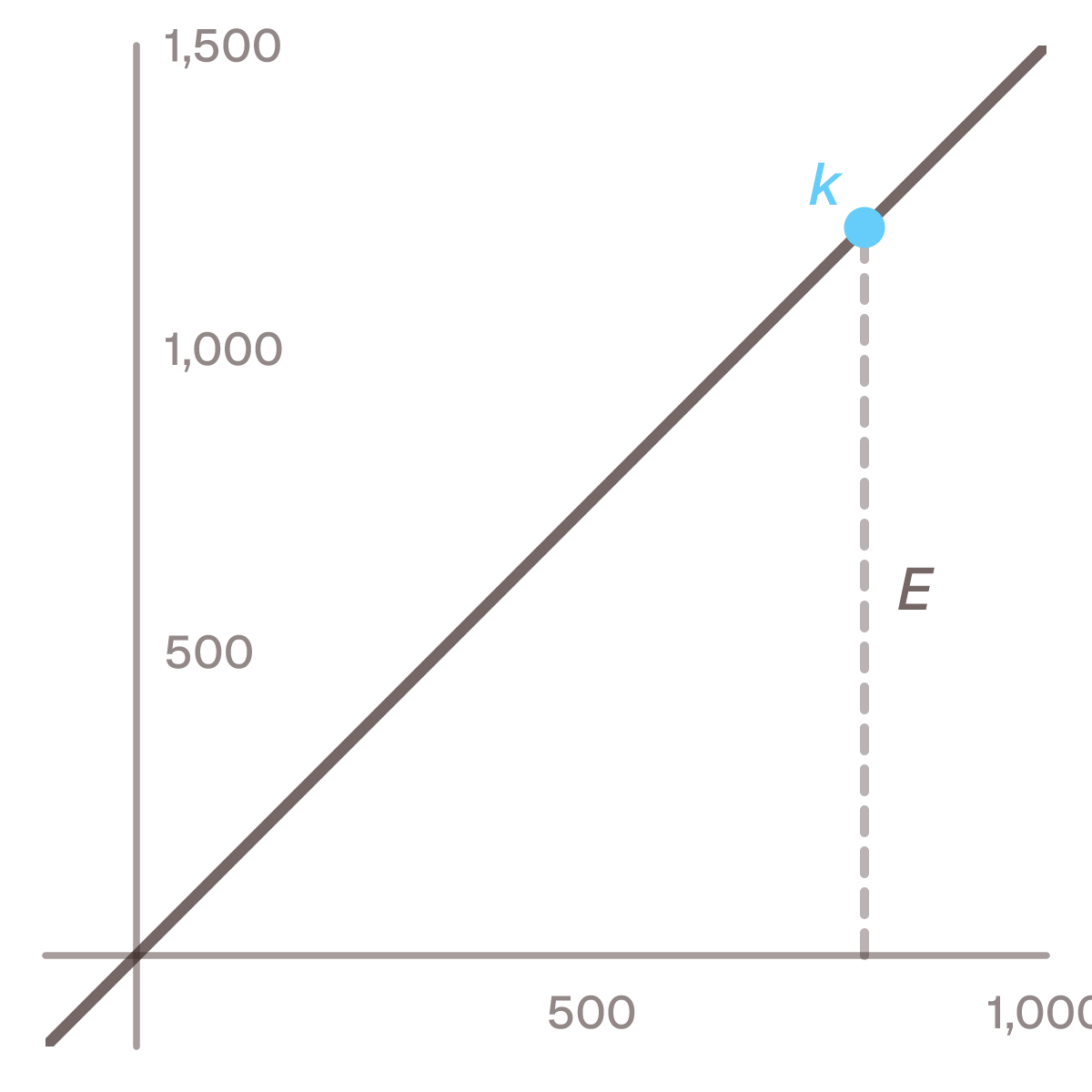
k
Kilowatt hours times the price per kilowatt hour. The arithmetic is one multiplication; the work is knowing which price on the bill to use.
Solve for
k=1,200
k equals 800 times 1.5, equals 1,200
Den här sidan finns på svenska. Byt till svenska
Definition — what does that mean?
One multiplication — and a price per kilowatt hour that only your own bill can give you.
In Swedish: Elkostnad
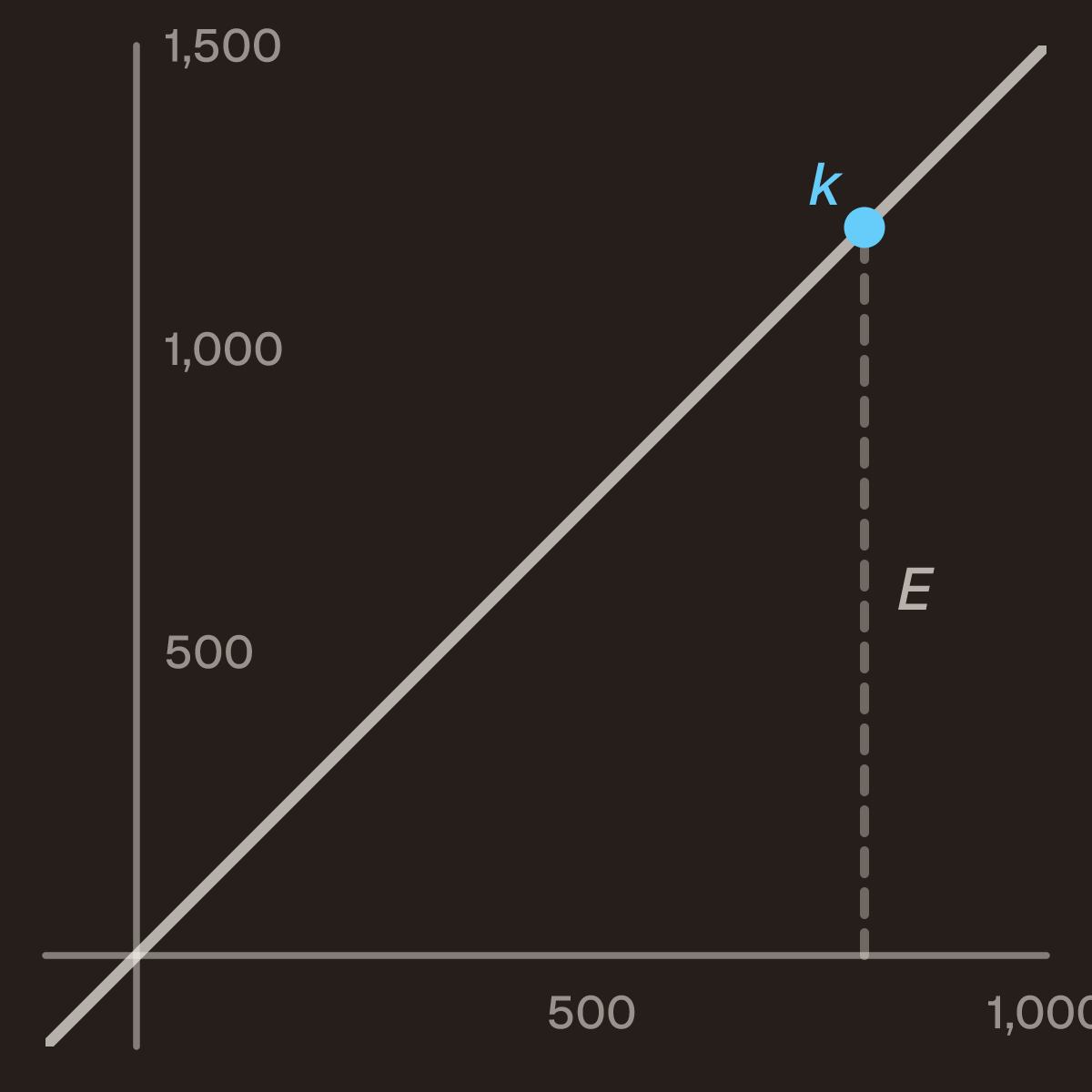
k
Kilowatt hours times the price per kilowatt hour. The arithmetic is one multiplication; the work is knowing which price on the bill to use.
k=1,200
k equals 800 times 1.5, equals 1,200
You are given
Round to 2 decimals.
The cost is the consumption times the price:
where E is the number of kilowatt hours, p the price per kilowatt hour and k the cost. 800 kWh at
1.50 per kWh costs 800 · 1.50 = 1,200.
The arithmetic is the easy part. The hard part is p.
Not the one in the supplier’s advert. That price is one of two bills. What you actually pay per kilowatt hour is made of several items, and they vary by grid area, contract, season and country:
| The item | Who charges it |
|---|---|
| Energy price (spot or fixed) | Your supplier |
| Distribution per kWh | The grid operator, whom you cannot switch |
| Energy tax | The state |
| VAT | The state, on top of all of the above |
We do not print any of them as a number here, because a number would be wrong for many readers and soon out of date for the rest. Work out your own rate from your bill instead — the formula does it for you.
Take your electricity cost for a period, less any fixed monthly fee, and divide it by the kilowatt hours for the same period. Both numbers are on the bill.
If you paid 3,100 for 1,550 kWh, your real rate is 3,100 / 1,550 = 2.00 per kWh. That is the figure that makes an offer comparable with what you already have, and it is almost always higher than the advertised price.
Set the card above to solve for Price per kWh, fill in the cost and the consumption, and it works it out.
An appliance is rated in watts. Kilowatt hours are power times time, so divide the wattage by 1,000 and multiply by the hours:
A tumble dryer rated 2,000 W running for 1.5 hours uses 2,000 · 1.5 / 1,000 = 3 kWh. At 2 per kWh the load costs 6. Three times a week all year is 3 · 52 · 6 = 936.
An 8 W bulb lit for 5 hours a day uses 8 · 5 / 1,000 = 0.04 kWh a day, so 14.6 kWh in a year — about 29 at the same rate.
The contrast is the point: what tends to cost money is what heats or cools, not what lights or sits on standby. Power decides, and a dryer is 250 light bulbs.
Why is my calculated rate higher than my contract says?
Because the contract prices one of four items. Distribution, energy tax and VAT are added on, and the
VAT goes on the sum of the other three. The calculated rate is the true one, and it is what you should
compare offers against.
How do I find my consumption without a bill?
The meter reads in kWh. Read it twice, a week apart, subtract, and you have a week’s consumption.
Multiply by 52 for a rough year — rough, because heating makes winter far more expensive than summer.
Is it cheaper to run things at night?
Only if you have a contract priced hour by hour, or a distribution charge that varies by time of day.
On a flat price per kilowatt hour, night costs exactly the same as day — the formula above has no
variable for the clock.
| Solve for | Rearranged | With the numbers | Comes to |
|---|---|---|---|
| E | kp | 1,2001.5 | 800 |
| p | kE | 1,200800 | 1.5 |
| k | Ep | 800·1.5 | 1,200 |
Last reviewed October 6, 2026 ·How pages are reviewed
Sheets that ask this formula, with their answer keys. Open one to see the questions or print it.
Six questions on what electricity costs, five on power and five on energy. The units change in every question. Calculator allowed.
Copy the code into your page where the formula card should appear. It loads from lovetocalc.com, so it stays current on its own — all we ask is that the credit line comes with it.