The number that makes two houses comparable
Cost of electricity answers what a known
consumption costs. That question can only be asked once you already live in the house. Before then
there is no consumption to work with — only a floor area and a building.
What is used instead is the energy use per square metre: how many kilowatt hours the house needs
per square metre per year. It is the figure printed on an energy performance certificate, and it is the
figure that makes two houses of different sizes comparable. A well insulated 150 m² house can
be cheaper to heat than a poorly insulated 100 m² one.
The cost is the area times that figure times the price per kilowatt hour:
What each factor is
The floor area (A) is the heated area in square metres. A certificate measures the heated floor
area, which usually includes a heated basement or a converted loft that an estate agent’s listing
leaves out — so the certificate’s area is often the larger of the two. Use the one that belongs with
the energy figure you have.
The energy use (e) is kWh per square metre per year, printed on the certificate alongside the
energy band, and it differs sharply between a new build and an older house that has never been
upgraded.
The price (p) is what you actually pay per kilowatt hour, including network charges, levies and
VAT — that is, the bill less its fixed standing charges, divided by the kilowatt hours, not the wholesale
rate. No price is
printed here: it changes every month and differs between regions.
Worked examples
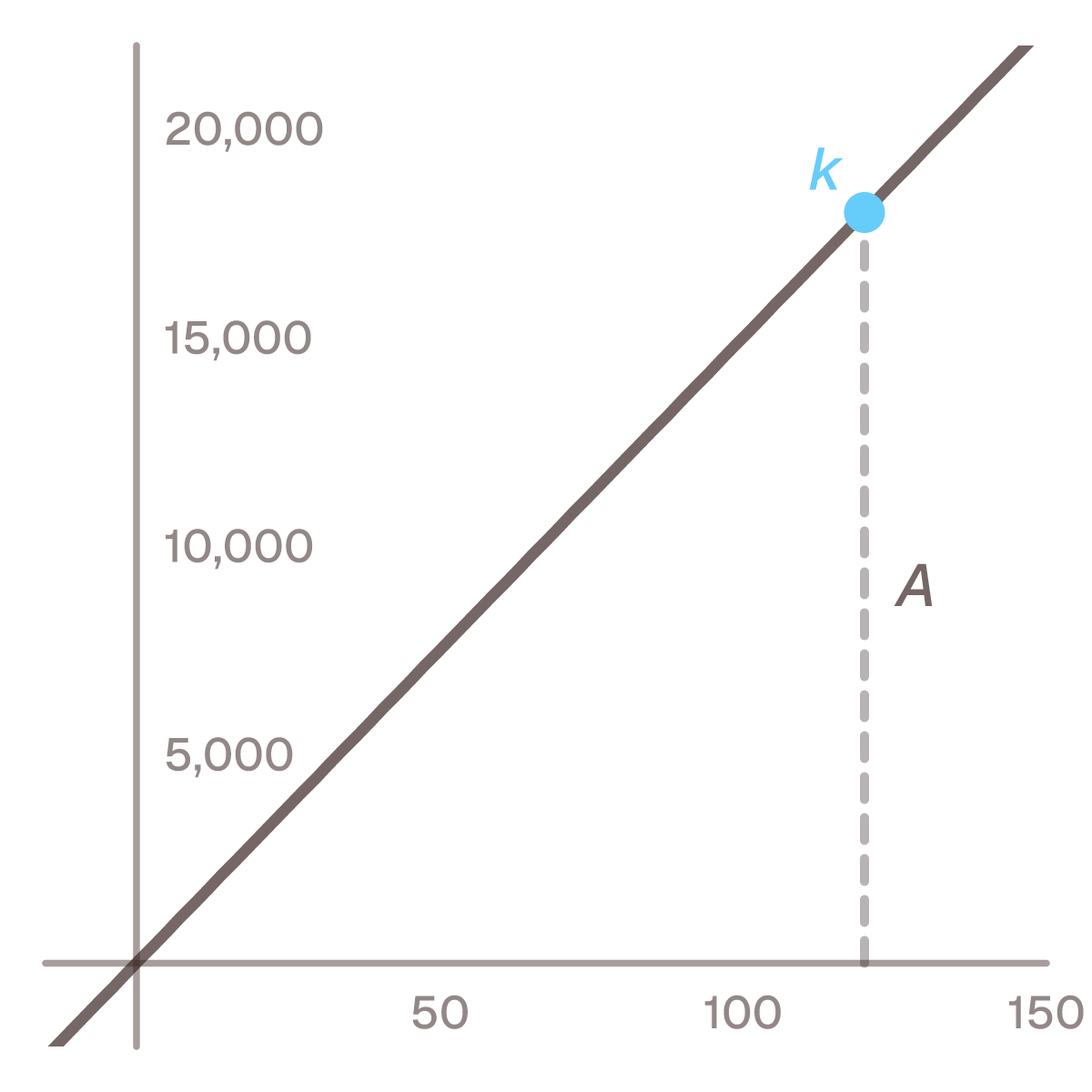
A house you are thinking of buying. The house is 120 m², the certificate says 100 kWh/m² per year,
and your electricity works out at 1.50 per kWh.
- k = 120 · 100 · 1.50
- k = 12,000 · 1.50 = 18,000 per year
Two houses against each other. House A is 100 m² at 150 kWh/m². House B is 140 m² at 90 kWh/m².
Which costs more to heat, at the same price of 1.50 per kWh?
- House A: 100 · 150 · 1.50 = 22,500
- House B: 140 · 90 · 1.50 = 18,900
The larger house is the cheaper one. The difference is 3,600 a year, every year, and it belongs in the
housing budget next to the mortgage.
What insulation is allowed to cost. You pay 27,000 a year to heat a 120 m² house, and the work
would bring its energy use down from 150 to 110 kWh/m². At 1.50 per kWh:
- Before: 120 · 150 · 1.50 = 27,000
- After: 120 · 110 · 1.50 = 19,800
You save 7,200 a year. Work costing 100,000 has paid for itself in a little under fourteen years — at
today’s price.
Common mistakes
- Comparing bills instead of kWh/m². A large house has a larger bill without being any worse built.
The per-square-metre figure is the one that says something about the building.
- Using the wholesale rate. Network charges, levies and VAT are a large part of what you pay. Use the
bill less its fixed charges, divided by the consumption.
- Mixing two floor areas. Running the certificate’s kWh/m² against a listing’s smaller floor area
gives a cost that is too low, because the certificate has already counted more square metres.
- Assuming the figure holds every year. A certificate is corrected to a normal year — it describes
an average. A cold winter costs more than the formula says.
Frequently asked questions
Does this work for district heating and heat pumps?
Yes, as long as the energy figure and the price refer to the same thing. A certificate states
purchased energy, so for a heat pump the kilowatt hours are already the ones you pay for, not the heat
the pump delivers. For district heating, put the district heating price per kWh in place of the
electricity price.
Where do I find the energy certificate?
It should be part of the particulars when a property is sold and available to see at a viewing; many
countries keep a public register of the certificates that have been issued. If there is none at all,
that is itself a piece of information about the house.
How much does one degree lower indoor temperature save?
A widely quoted rule of thumb is around five per cent per degree. It is a rule of thumb, not a formula: it depends
on how the house is built and how cold it is outside. To put a number on it, run the formula again
with the energy use five per cent lower and compare.