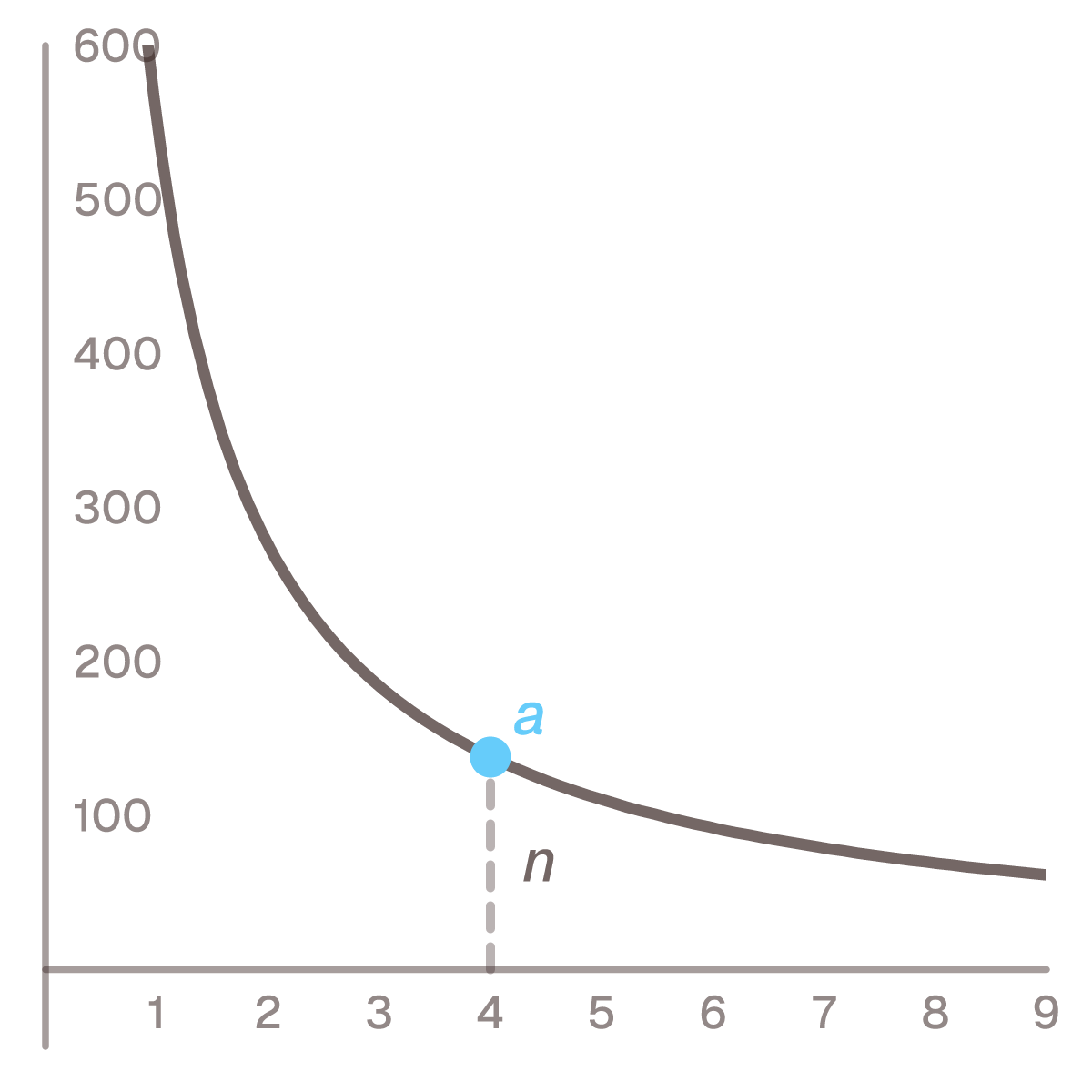
The tip goes on the bill first, then the sum is divided by the number of people. 480 with a tip of 72
between four is (480 + 72) / 4 = 138 each.
It sounds obvious, and yet the order is what often goes wrong: a table that splits the food and
adds the tip afterwards ends up arguing about who is paying it.
The formula runs backwards too. You each put in 138 and the bill with the tip was 552 — so there were
552 / 138 = 4 of you. That is the direction that settles a table where somebody may not have paid.
The order of tipping and splitting
The two operations commute as long as everybody adds the same percentage. Splitting first and adding your own tip
gives:
- Right order: (480 + 72) / 4 = 138 each.
- Each on their own: 480 / 4 = 120, plus 15% = 138 each.
Here they agree. They stop agreeing the moment somebody leaves a different percentage — which is
why the formula puts the tip on the whole bill before dividing.
When people did not eat the same
An even split is a choice, not a mathematical necessity. If the table wants to divide by what each person
ordered, this is not the formula — it is a
share of a ratio: each pays their part of the
bill, and the tip is split in the same ratio.
A middle course that works well in practice: whoever had something clearly dearer covers the difference on
their own dish, and the rest is split evenly.
Worked examples
Forwards. 600 and a tip of 90 between six: (600 + 90) / 6 = 115 each.
Forwards. 320 and a tip of 80 between eight: 50 each.
Backwards, the number of people. Each put in 150 and the bill with the tip was 900. There were 6.
Backwards, the tip. Four people put in 150 each on a bill of 540. The tip came to
4 · 150 − 540 = 60.
Common mistakes
- Splitting the bill before the tip is on it. It then stays open who is paying it.
- Counting the wrong number of people. The one who arrived late and had a coffee is a case of their
own, not a quarter.
- Rounding everybody up. Four roundings up can come to fifty too much, which is a different tip from
the one the table agreed.
- Skipping the check. What everybody puts in has to add back to the bill plus the tip.
Common questions
How much tip should we add?
The table decides. The arithmetic is on the page about tipping,
which also shows how to do ten, fifteen and twenty percent in your head.
What if it does not divide evenly?
Work the share out exactly and let somebody take the remainder — or round everybody to the nearest ten
and put the difference on the tip, which is a common solution.
Does the formula handle unequal shares?
No, it splits evenly. For a split that follows what each person ordered, use
share of a ratio instead.