Unit price
The relation
j
The price divided by the amount you get. It is the only honest way to compare two packet sizes, and the large packet is not always the cheaper one.
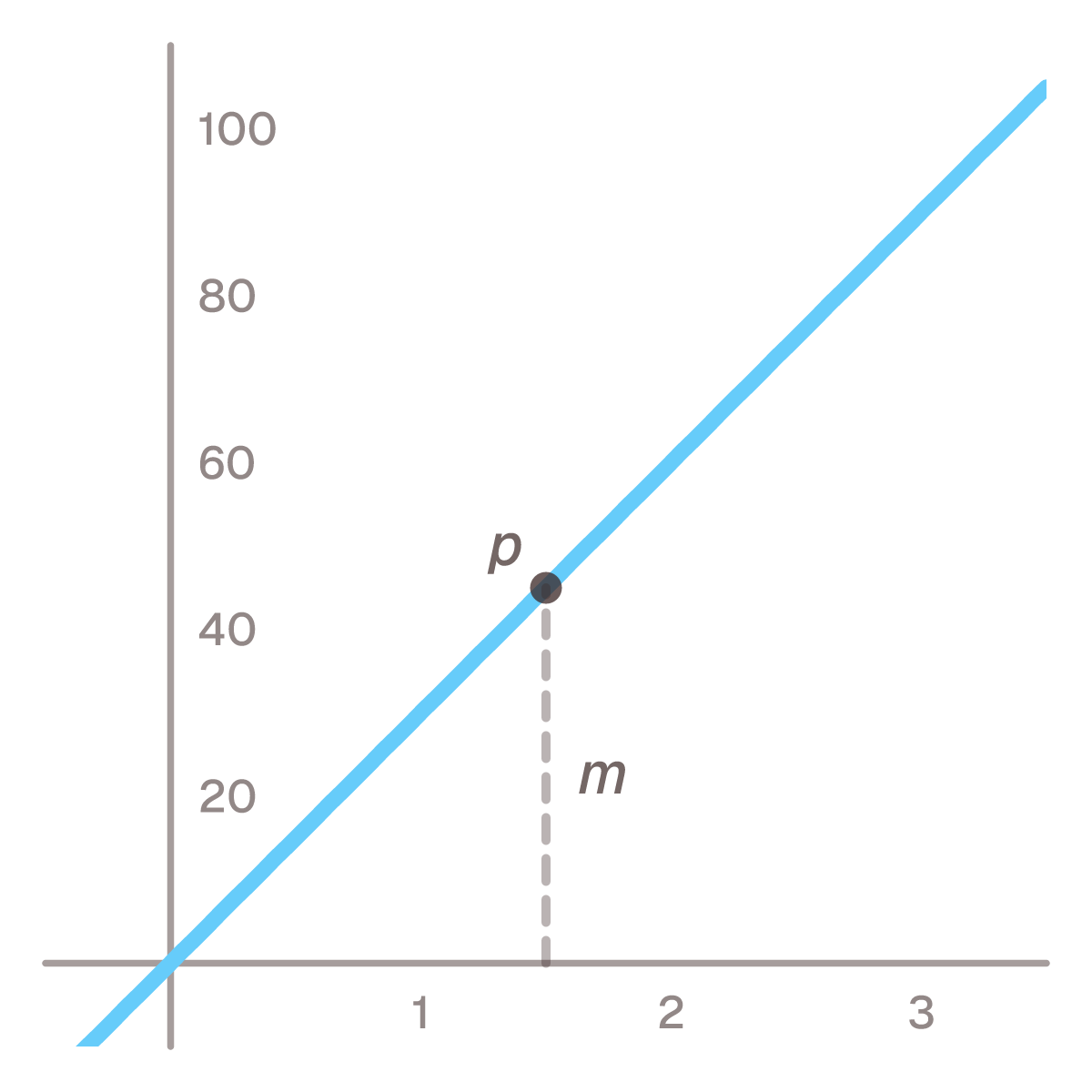
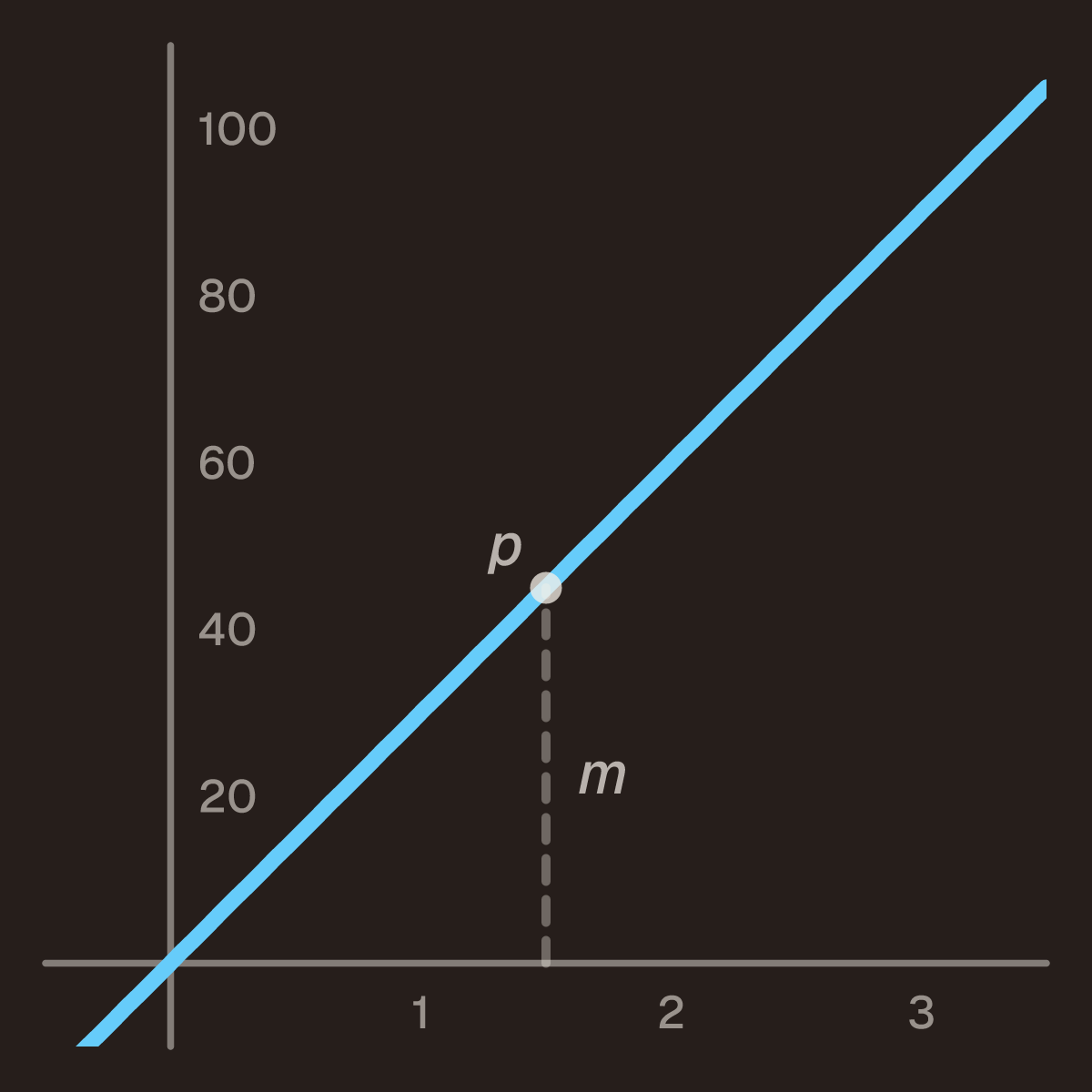
Solve for
j=30
j equals 45 divided by 1.5, equals 30
Den här sidan finns på svenska. Byt till svenska
Definition — what does that mean?
The price divided by the amount. That is the formula, and it makes two packets comparable.
In Swedish: Jämförpris
j
The price divided by the amount you get. It is the only honest way to compare two packet sizes, and the large packet is not always the cheaper one.
j=30
j equals 45 divided by 1.5, equals 30
You are given
The price divided by the amount gives what one unit costs — a kilo, a litre, one item. It is the number in small print on the shelf label, and it is the number that says which packet is actually cheaper.
45 for 1.5 kg gives 45 / 1.5 = 30 per kg.
The formula works three ways. Knowing the unit price and the amount gives the price; knowing the price and the unit price gives the amount. That last one is what exposes a packet: “what am I getting for 49, if the price per kilo is 98?”
A unit price is only comparable when both packets are counted in the same unit. 400 g for 18 and 1.2 kg for 48 cannot be compared until the grams have become kilos:
The big one is cheaper here — but that was not obvious before the division, which is exactly why the label exists.
In a shop the unit is also chosen for you, and not always the same way: cheese tends to be priced per kilo, jam per kilo, soft drinks per litre and eggs each. Two products priced in different units are not comparable at all.
That the larger packet has the lower unit price is a habit, not a rule. Offers, small packets on promotion and “3 for 2” often reverse it, and the only check is the division.
There is also a cost the formula cannot count: what you throw away. A packet twice the size that half goes off has not halved the price per kilo — it has kept it.
Forwards. 60 for 2.5 litres gives 60 / 2.5 = 24 per litre.
Backwards, the price. The price per kilo is 12 and the packet weighs 0.75 kg. It costs 12 · 0.75 = 9.
Backwards, the amount. A tub costs 27.50 and the price per kilo is 11. The tub holds 27.5 / 11 = 2.5 kg.
A comparison. 9 for 0.75 kg is 12 per kg; 5 for 0.25 kg is 20 per kg. The small one is dearer per kilo, even though it costs less at the till.
What is the unit price called on a label?
“Unit price” or “price/kg”. Shelf labels in many countries show it, but which unit is used varies
between product groups.
Can two goods priced in different units be compared?
Only if you convert one of them. Price per litre and price per kilo are the same number only once you
know the density, and for most foods that is not a calculation you want to do in an aisle.
What do I do with “3 for 2”?
Work on what you actually carry out: three packets at the price of two is the total amount against the
total cost, which is two thirds of the ordinary unit price.
| Solve for | Rearranged | With the numbers | Comes to |
|---|---|---|---|
| p | jm | 30·1.5 | 45 |
| m | pj | 4530 | 1.5 |
| j | pm | 451.5 | 30 |
Last reviewed October 6, 2026 ·How pages are reviewed
Copy the code into your page where the formula card should appear. It loads from lovetocalc.com, so it stays current on its own — all we ask is that the credit line comes with it.