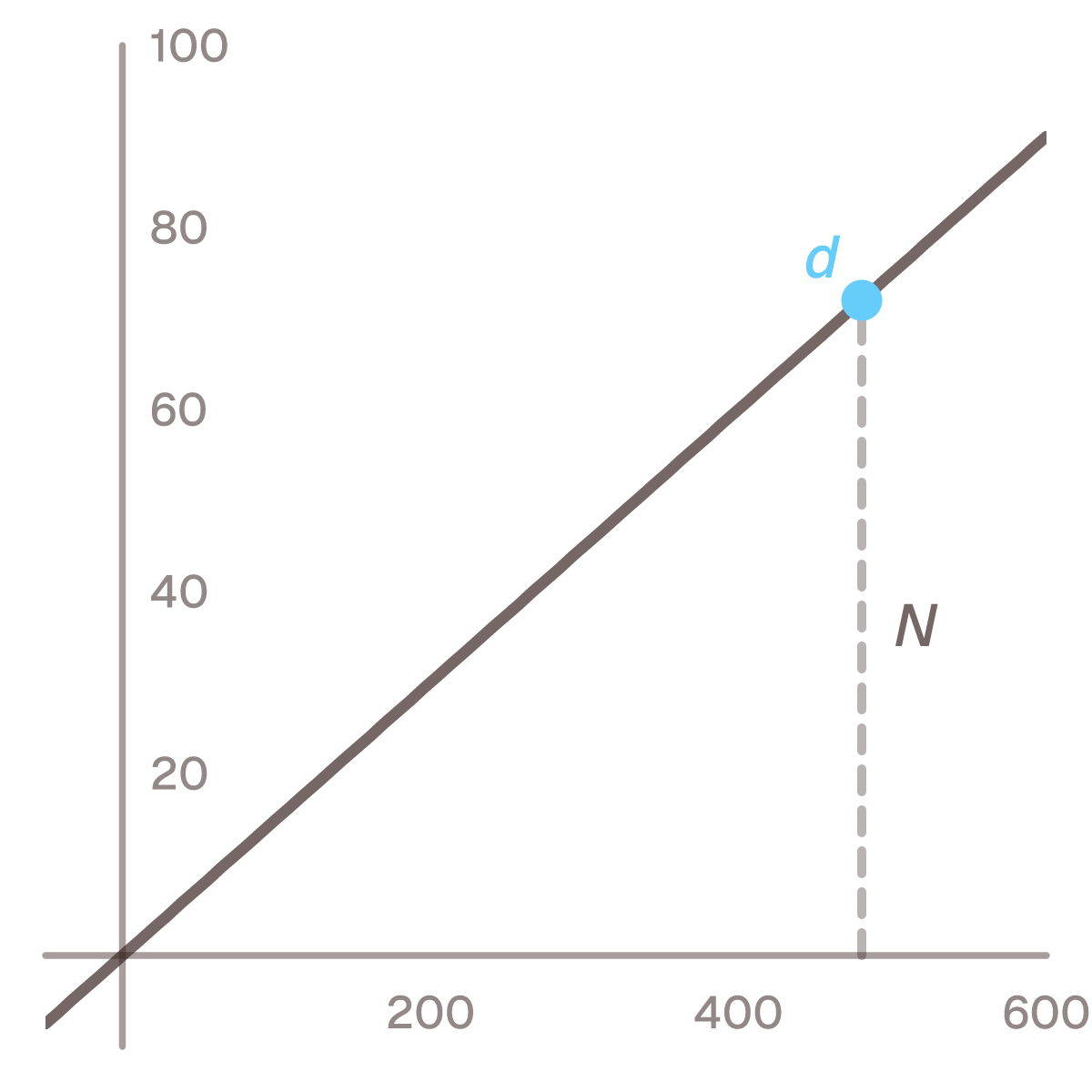
A tip is a percentage of the bill, no more
and no less. 15% on 480 is 480 · 15 / 100 = 72, and the bill with the tip comes to 552.
A tip is also called a gratuity.
The same relation runs backwards. If you left 60 on a bill of 400, that was 100 · 60 / 400 = 15% —
and that direction is often the one needed, afterwards, when the statement arrives.
Doing it in your head
Ten percent is moving the decimal point one step: 480 becomes 48. From there the rest is addition:
- 10% → 48
- 15% → 48 + 24 = 72 (ten plus half of ten)
- 20% → 48 · 2 = 96
- 12.5% → 48 + 12 = 60 (ten plus a quarter of ten)
The rounding comes last
Few people leave 72. They leave 75, or 80, or round the bill to 550. That is reasonable — but work
out the percentage first and round afterwards, not the other way round. Rounding the bill and then taking
a percentage of the rounded figure is arithmetic on a number that does not exist.
Going backwards after rounding is fair game: 80 on 480 is 100 · 80 / 480 ≈ 16.7%.
Worked examples
Forwards. 10% on 640 is 64.
Forwards. 20% on 1240 is 248.
Backwards, the percentage. A tip of 90 on a bill of 600 is 100 · 90 / 600 = 15%.
Backwards, the bill. You left 15% and it came to 105. The bill was 100 · 105 / 15 = 700.
Common mistakes
- Taking the percentage of the total including the tip. The tip is a percentage of the bill, not of
the bill plus the tip.
- Rounding first and calculating after. The percentage applies to the figure printed on the bill.
- Confusing percent with percentage points. Going from a 10% tip to a 15% one is five
percentage points, but fifty percent more
money.
- Splitting the bill before the tip is on it. Then one person pays the tip alone — see
splitting a bill.
Common questions
How much is a normal tip?
That is a custom, not a calculation, and it differs sharply between countries. This page works with
whatever percentage you choose and takes no view on which one is right.
Is the tip worked out before or after tax?
On the figure printed on the bill, which in most of Europe includes VAT. If you want a different base,
that base is what goes into the formula.
How do I tip on a split bill?
Add the tip to the whole bill first and then divide. The other order gives the same number as long as
everyone adds the same percentage.