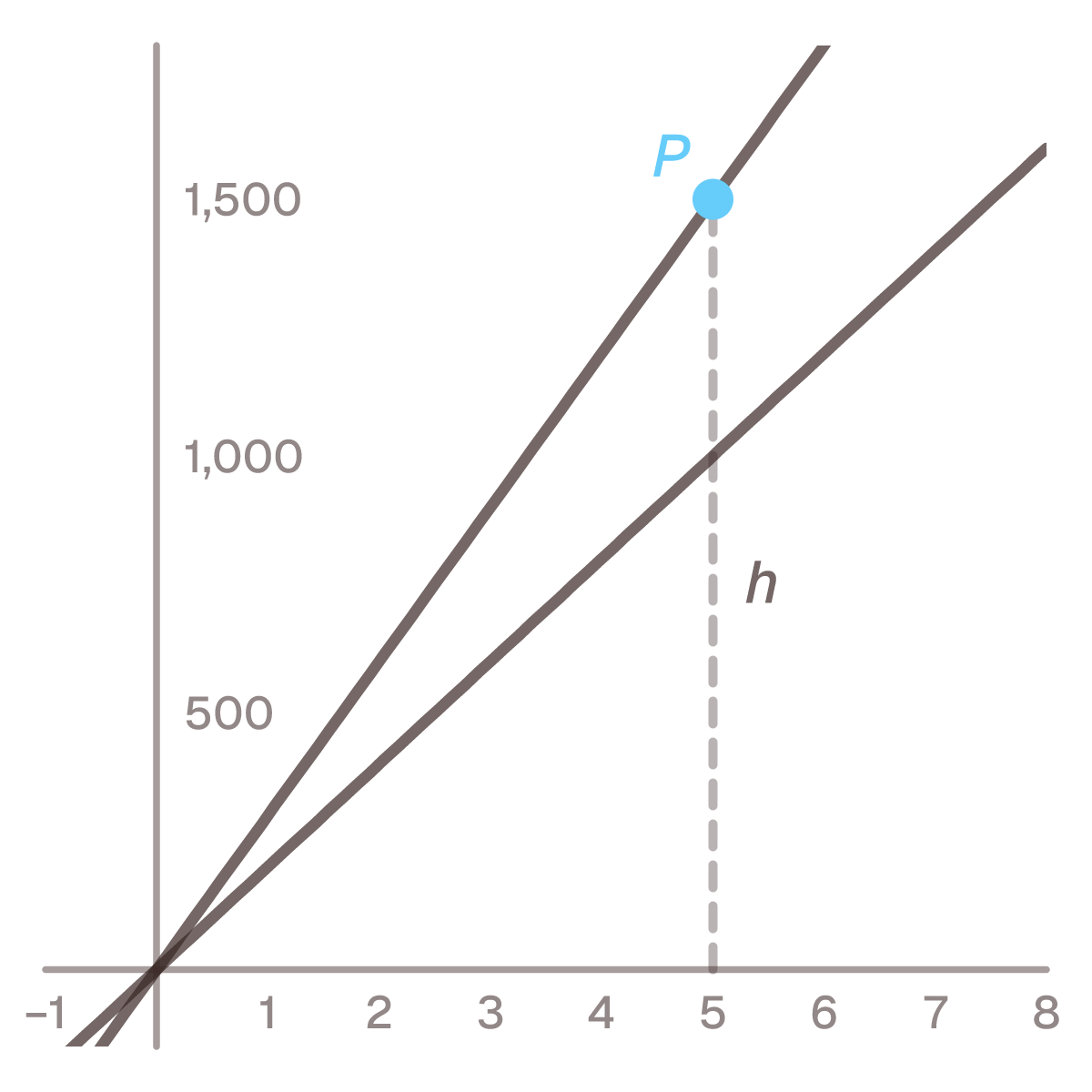
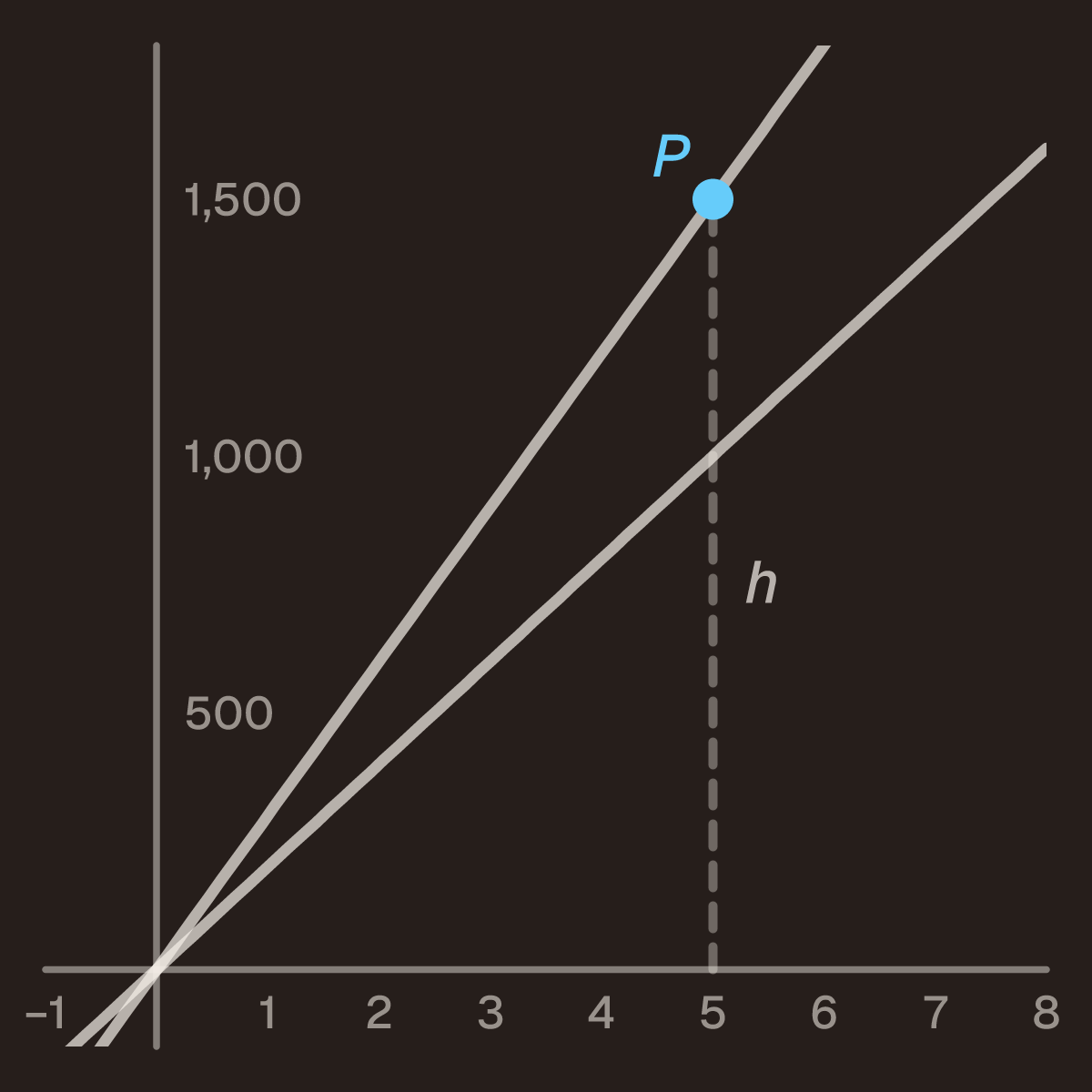
The hourly wage times the hours worked, increased by whatever surcharge applies — a 50 % surcharge, for example, is the factor 1.5. The surcharge itself comes from an agreement, not from this page; type in the one that is yours.
P equals (200 times 5) times (1 plus (50 divided by 100)), equals 1,000 times (1 plus 0.5), equals 1,000 times 1.5, equals 1,500
Working4 steps
P
=
200·5(1+50100)
=
1,000(1+0.5)
=
1,000·1.5
=
1,500
Practice questions
You are given
P=1120
w=80
h=8
What the formula says
P = w · h · (1 + s / 100)
where w is the hourly wage, h the overtime hours, s the surcharge as a percentage and P the pay
for those hours.
The bracket is a change factor. A 50% surcharge makes it 1.5, and a 100% surcharge
doubles the hourly wage.
Which surcharge applies?
This page does not say, on purpose. How much extra an overtime hour pays is set by your employment
contract, collective agreement or the law where you work, and it varies between countries, industries,
times of day and days of the week. Find the figure that applies to you and enter it. The formula is the
same whatever it is.
Worked example
An hourly wage of 20, five hours of overtime and a 50% surcharge. The surcharge is an example, not a
statement about any contract or law.
20 · 5 = 100 for the hours at the ordinary rate
100 · 1.5 = 150 with the surcharge
At a 100% surcharge the same five hours pay 200.
Common mistakes
Adding the percentage as money. 50% more is times 1.5, not 50 extra.
Taking the pay for the surcharge. The formula gives the whole pay for the hours. For the surcharge
alone, work out w · h · s / 100: 50 in the example.
Using the wrong hourly wage. Some contracts derive the overtime hourly rate from a monthly salary
with a divisor of their own. That rate is the one to enter, not one you work out yourself.
Frequently asked questions
What overtime surcharge am I entitled to?
It is in your contract, your collective agreement or the employment law where you work. Ask your
employer or union if you cannot find it. The page states no figure, because no single one applies to
everybody.
Is overtime the same as a shift premium?
No. A shift premium pays for working at unsocial hours, overtime for working beyond your ordinary hours.
Your contract says whether both can apply at once. The formula works for any surcharge, whatever it is
called.
Looking for another letter? The formula solved for each one
Copy the code into your page where the formula card should appear. It loads from lovetocalc.com, so it stays current on its own — all we ask is that the credit line comes with it.