Percentage of a number
The relation
a
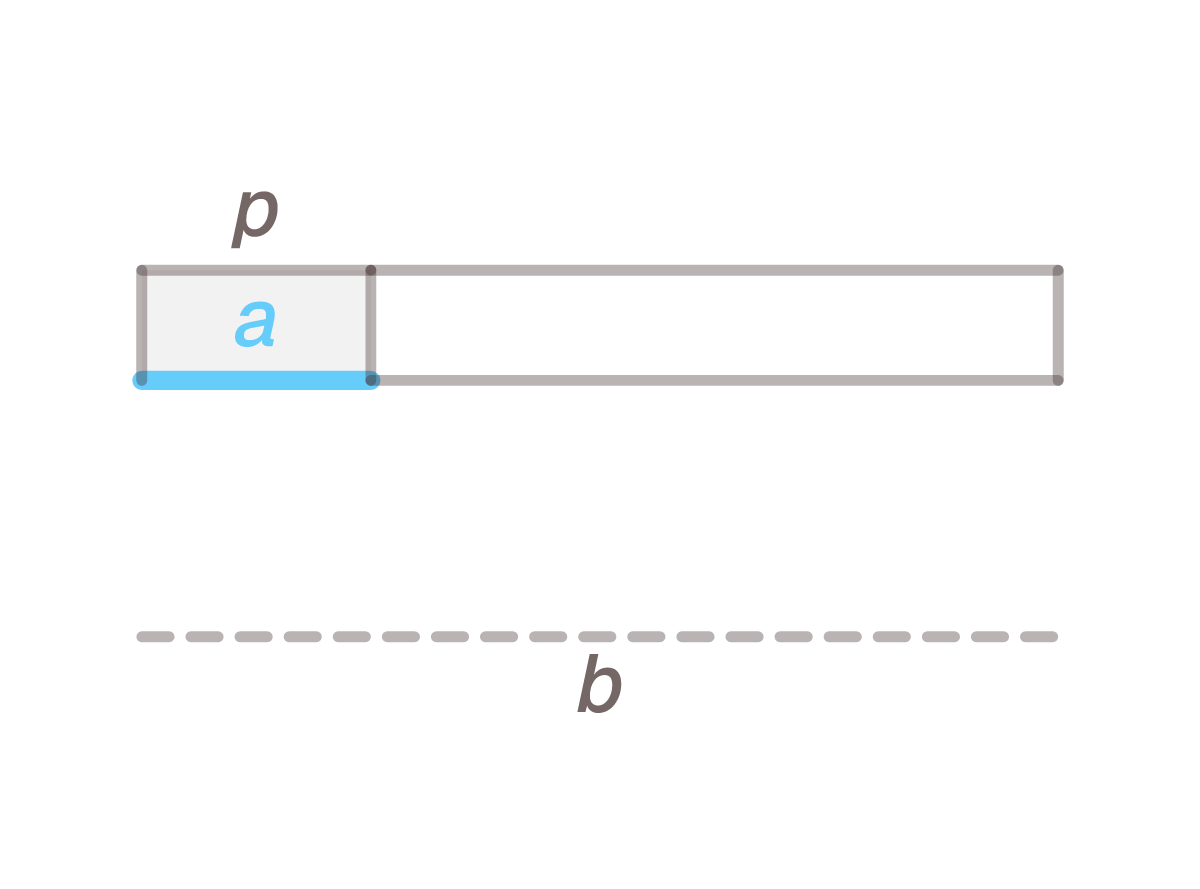
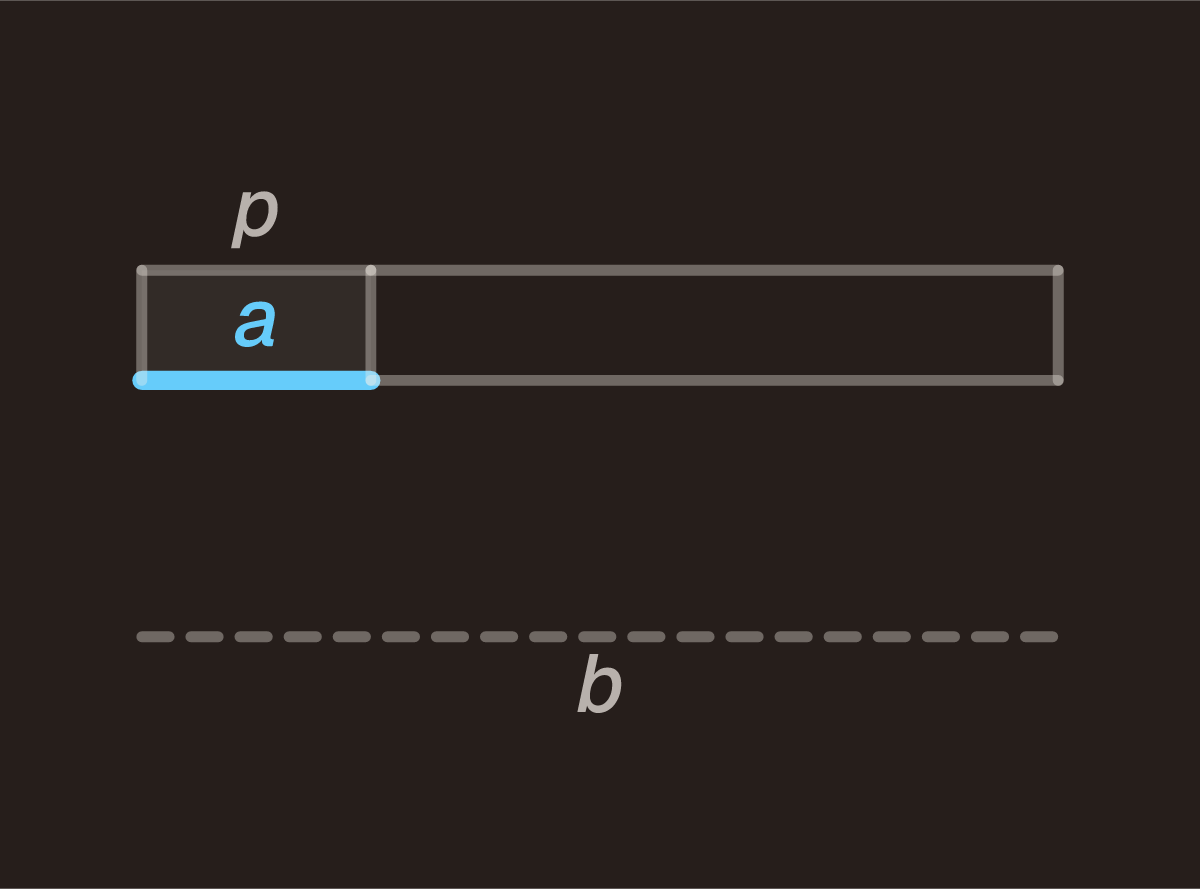
A percentage is hundredths, so a percentage of a number is that number times the percentage over a hundred.
Solve for
a=50
a equals (200 times 25) divided by 100, equals 5,000 divided by 100, equals 50
Den här sidan finns på svenska. Byt till svenska
Definition — what does that mean?
Per cent means hundredths — and all the formula does is work out how many of them you want.
In Swedish: Procent av ett tal
a
A percentage is hundredths, so a percentage of a number is that number times the percentage over a hundred.
a=50
a equals (200 times 25) divided by 100, equals 5,000 divided by 100, equals 50
You are given
The word comes from per centum, “per hundred”. So 25% is 25 hundredths, that is 25/100 = 0.25, and taking 25% of a number means taking 25 hundredths of it:
where b is the whole, p the percentage and a the part. The formula is a definition: it says what
the words “per cent of” mean, so there is nothing underneath it to prove.
Because it is only a multiplication and a division, it turns whichever way you need.
Percentages feel like three separate sums at school, but they are one relation read from three sides. Pick whichever of the three quantities you do not know, and the rest is the same formula:
| The question | What you solve for | The sum |
|---|---|---|
| How much is 25% of 800? | the part | 800 · 25 / 100 |
| 200 is what percentage of 800? | the percentage | 100 · 200 / 800 |
| 200 is 25% of what? | the whole | 100 · 200 / 25 |
The card at the top of the page does all three: change which variable is the unknown and the rearrangement and the working are rewritten to follow it. So you do not need to know which of the three questions you have — only which two numbers you were given.
The part. 25% of $800 is 800 · 25 / 100 = $200.
The percentage. 200 out of 800 is 100 · 200 / 800 = 25%.
The whole. If $200 is 25%, the full amount is 100 · 200 / 25 = $800. That is the one most easily got wrong — you cannot add 25% back to get home again.
Can the percentage be more than 100?
Yes. 150% of 800 is 1,200. It just means the part is larger than the whole, which is perfectly normal
when something has grown.
What percentage is one number of another?
Divide the part by the whole and multiply by 100: p = 100 · a / b. 45 out of 180 is 100 · 45 / 180 =
25%. What usually goes wrong is the order — the whole goes underneath, and swapping the two
gives you 400% instead of 25%.
How do I find the whole when I only know the part?
Divide the part by the percentage and multiply by 100: b = 100 · a / p. If 15% of an amount is $450,
the whole is 100 · 450 / 15 = $3,000. You cannot add 15% back onto 450 — that gives $517.50,
which is none of the numbers in the question.
How is this different from percentage change?
This formula takes a share of one number. Percentage change compares
two numbers and answers how far one is from the other.
| Solve for | Rearranged | With the numbers | Comes to |
|---|---|---|---|
| p | 100ab | 100·50200 | 25 |
| b | 100ap | 100·5025 | 200 |
| a | bp100 | 200·25100 | 50 |
Last reviewed October 6, 2026 ·How pages are reviewed
Sheets that ask this formula, with their answer keys. Open one to see the questions or print it.
Eighteen questions of three kinds: the share as a percentage, the change in percent and the price after a discount. Calculator allowed.
Copy the code into your page where the formula card should appear. It loads from lovetocalc.com, so it stays current on its own — all we ask is that the credit line comes with it.