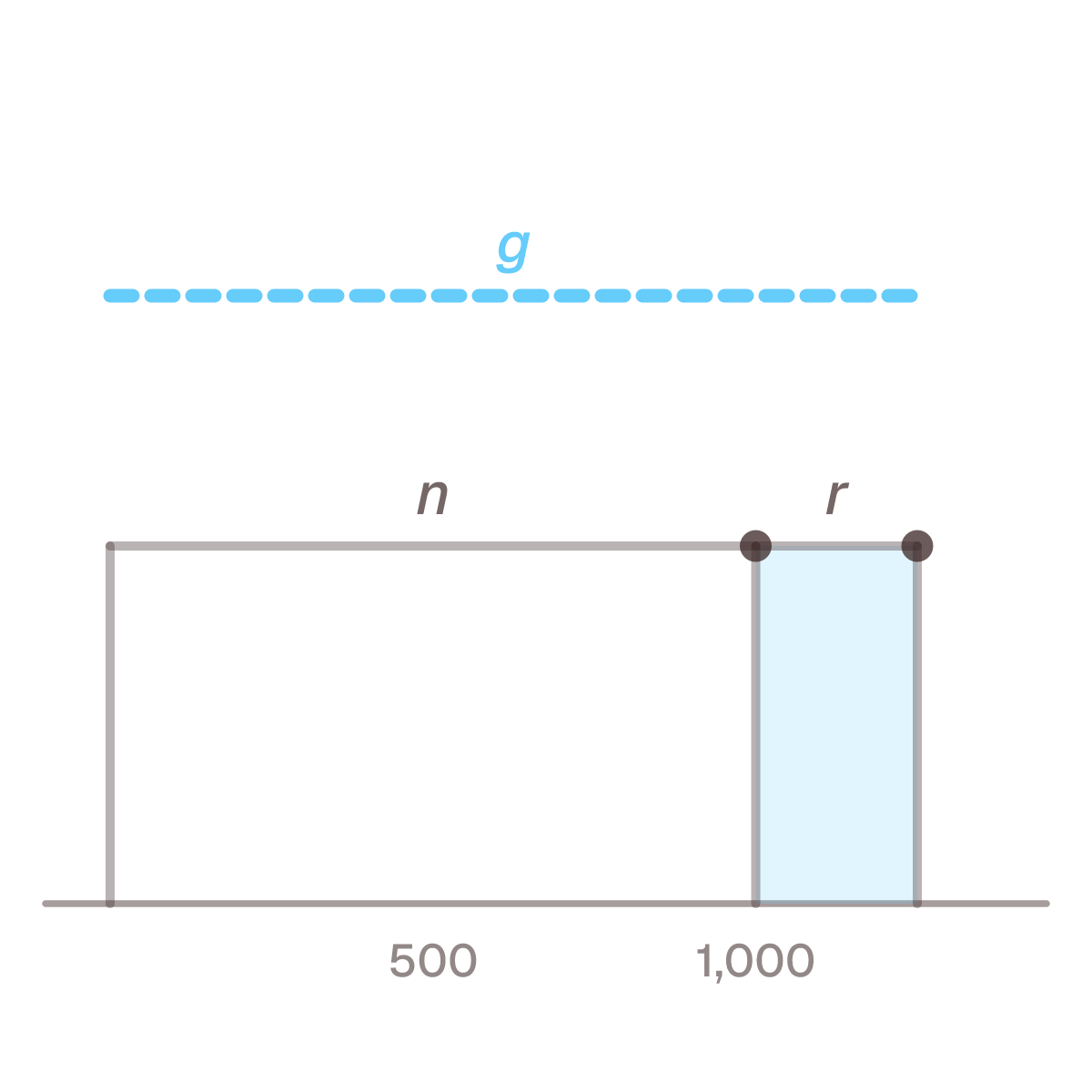
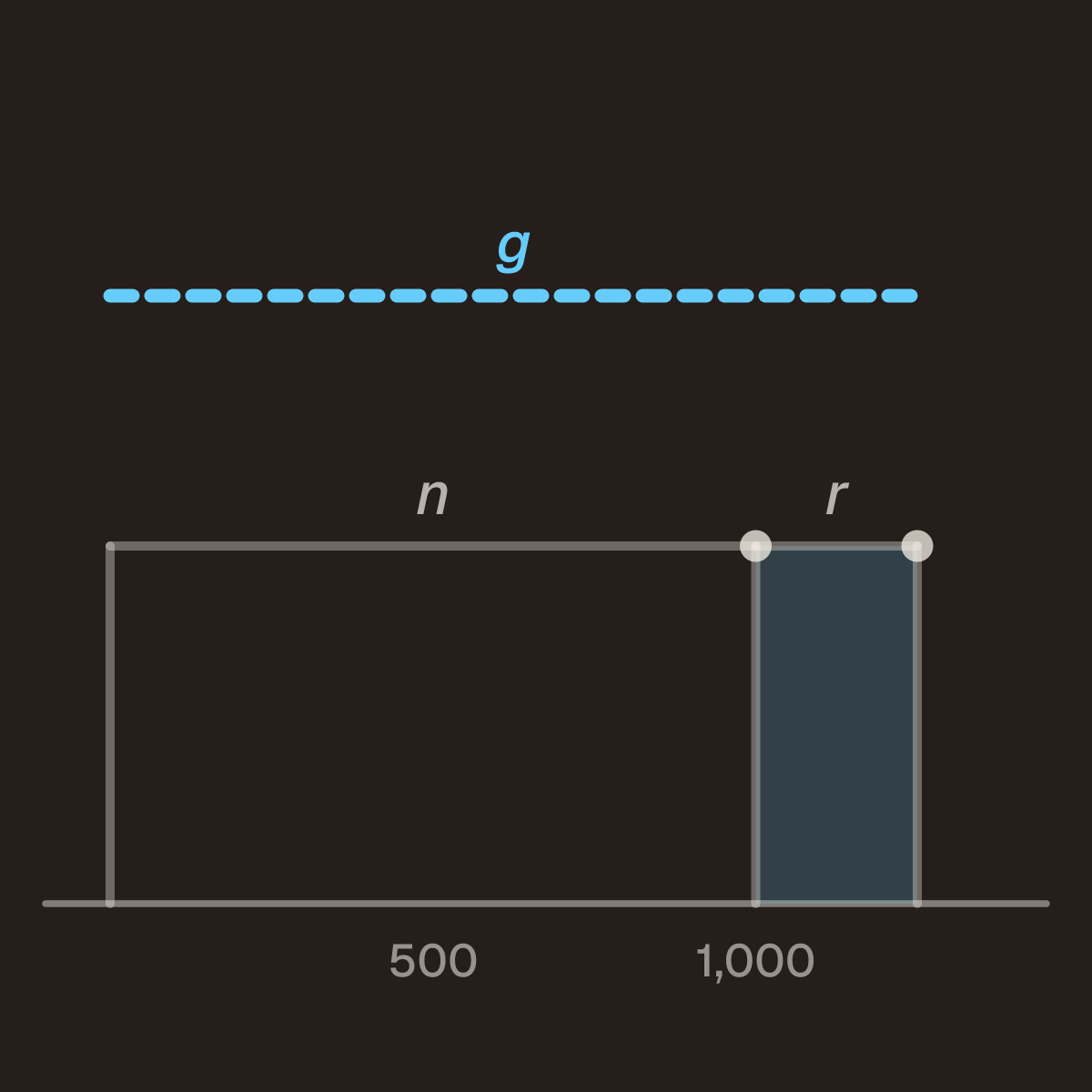
g = n · (100 + r) / 100
where n is the price before tax, r is the rate as a percentage and g is what the customer pays.
The expression (100 + r)/100 is a change factor. At a 25% rate it is
1.25, at 12% it is 1.12 and at 6% it is 1.06. Adding tax is therefore a single multiplication:
This is a definition, not a theorem — it says what “25% VAT” means. Which rate applies to what is a
matter of law instead; Sweden’s rates of 25, 12 and 6% are published by
Skatteverket.
That is why this page asks you for the rate rather than guessing it.
Worked examples
An hour of consulting. The fee is 1,200 and the rate 25%.
- g = 1,200 · 125 / 100 = 1,500
The tax is 300, which a VAT-registered business charges the client and passes on — it is not your
income.
A restaurant bill. The food comes to 800 before tax at a 12% rate.
- g = 800 · 112 / 100 = 896
A book. 350 before tax at 6%.
- g = 350 · 106 / 100 = 371
Running the sum backwards
The three numbers hang together, so any one of them follows from the other two:
- The price before tax: n = 100 · g / (100 + r)
- The rate: r = 100 · g / n − 100
An example of the last one: a price of 1,060 where you know the net was 1,000. Then
r = 100 · 1,060 / 1,000 − 100 = 106 − 100 = 6%.
If what you want instead is how much of a finished price is tax, that is a different sum — see
VAT out of a gross price. It has a less obvious answer than
people expect: at a 25% rate the tax is 20% of the price, not 25%.
Common mistakes
- Adding tax twice. Business-to-business prices are usually quoted excluding tax. Shop prices include
VAT in most VAT countries, while US sales tax is added at the till. Find out which one you are holding before you multiply.
- Subtracting as much as you added. 1,250 less 25% is 937.50, not 1,000. Going back means dividing
by 1.25, not subtracting 25%.
- Rounding the net price first. Work on the full net amount and round the total. Rounding at every step
gives you an invoice that does not add up.
- Taxing the price before the discount — or after. Take the discount off first; the tax goes on the
price the customer actually pays. The order makes no difference to the total, but it makes a difference
to what the tax line should show.
- Using 1.25 for everything. The factor follows the rate, and several rates are in use.
Frequently asked questions
Why does the formula say 100 + r?
Because the customer pays the whole net price plus the tax. The net is 100 hundredths of itself and the
tax is another r hundredths, so the total is 100 + r hundredths — the factor (100 + r)/100.
Is VAT a cost to my business?
Usually not. A registered business charges tax on sales, deducts the tax on its purchases and pays the
difference. The end customer carries it. Exactly what applies to you is decided by the tax rules, not by
this formula.
How do I do it quickly in my head?
At 25%: add a quarter. 800 → 800 + 200 = 1,000. At 12%: a tenth, plus a fifth of that tenth. At 6%:
half of the 12% addition. The sum in the other direction is harder in your head, which is why
VAT out of a gross price is a page of its own.