Why you cannot just take 25% off
A price of 1,250 including VAT at 25%. How much of that is tax?
A common answer is 312.50 — 25% of 1,250. It is wrong, and it is wrong by 62.50.
The tax was added before the price became 1,250. The seller started at 1,000, added 25% of a
thousand, and arrived at 1,250. The VAT is therefore 250. Measured against the price you actually pay,
250 out of 1,250 is exactly 20%.
That is the core of it: adding 25% and taking 25% off are not opposites, because they are percentages
of different numbers. Adding a percentage and then subtracting the same percentage does not return you to
where you started.
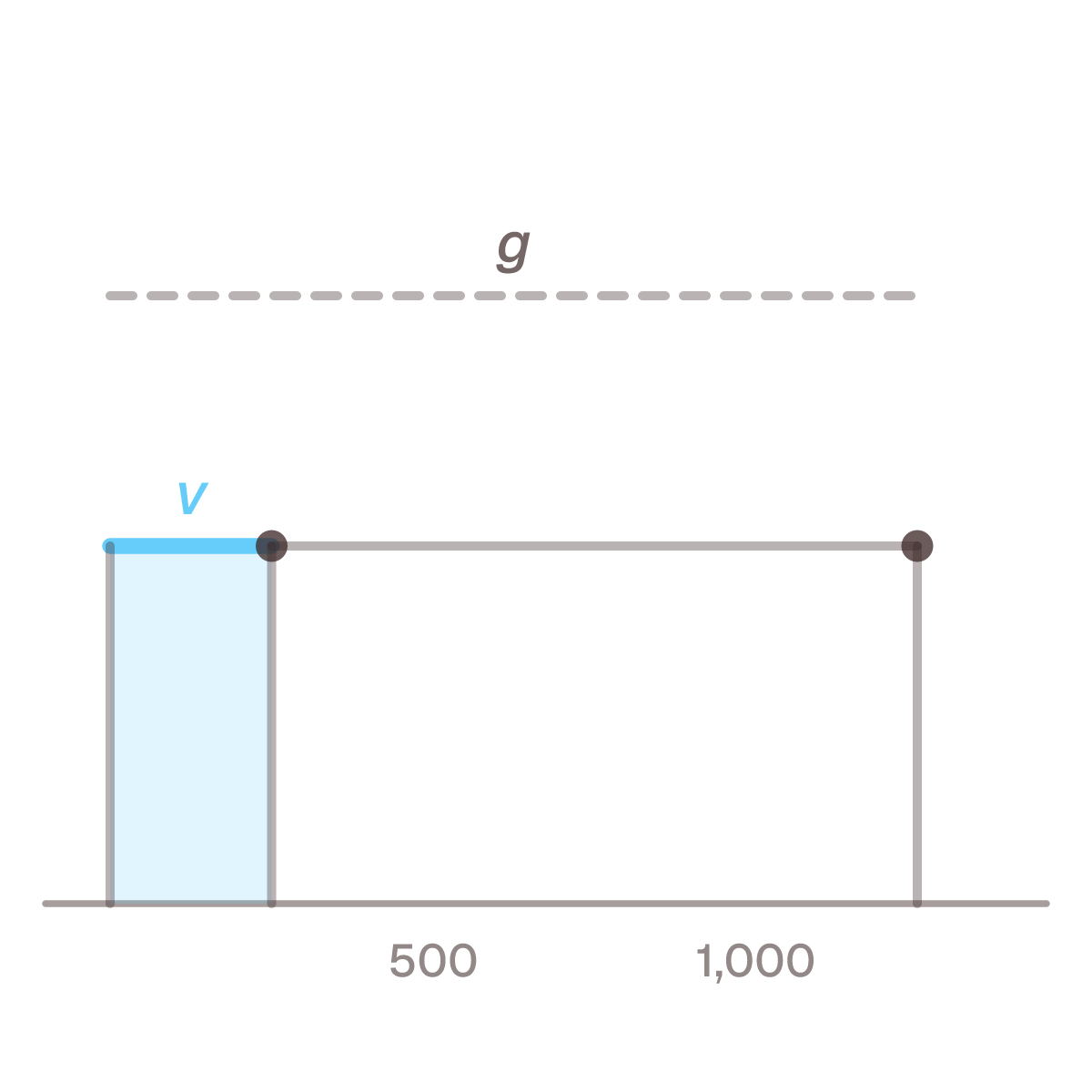
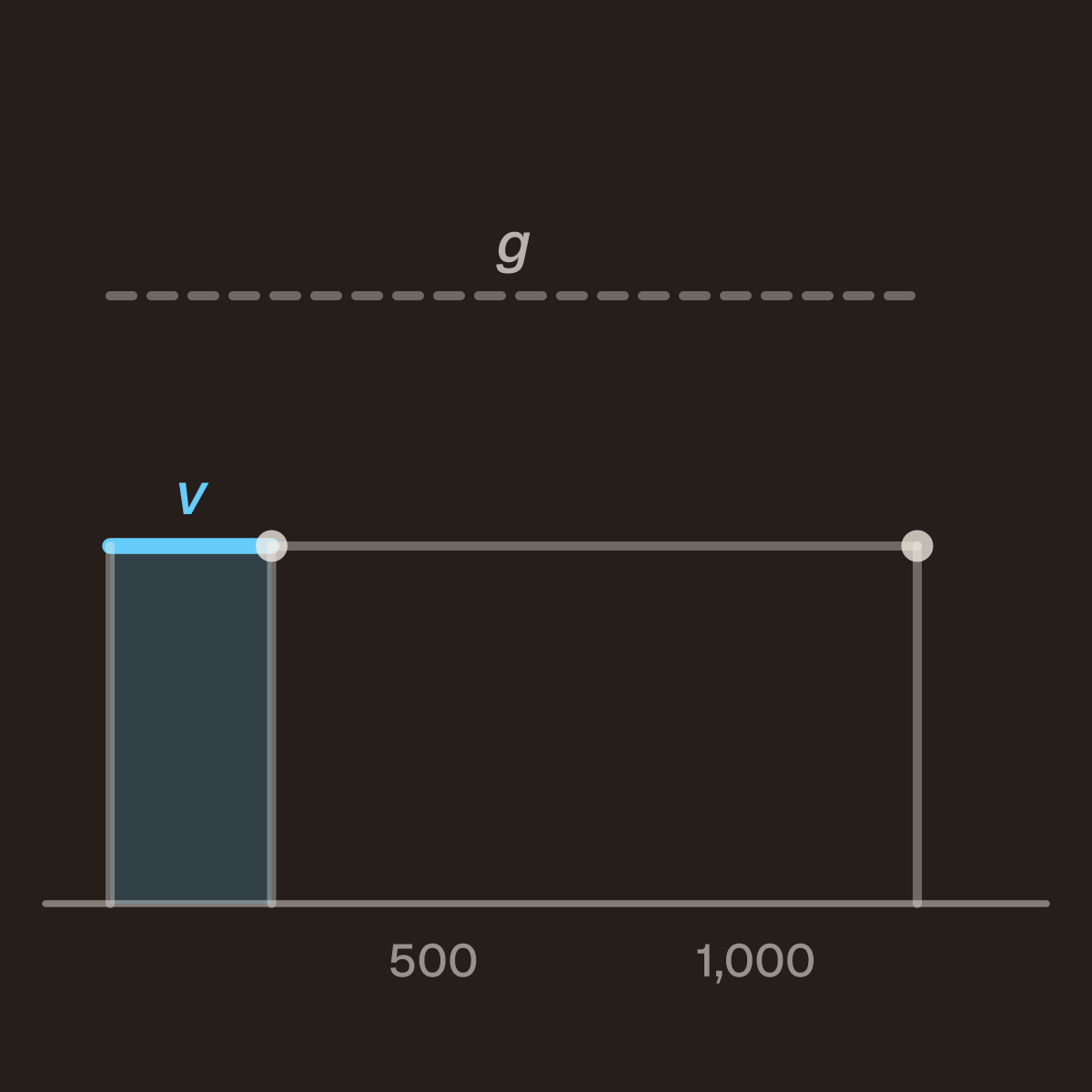
v = g · r / (100 + r)
where g is the price including tax and r is the rate as a percentage.
The denominator 100 + r is the key. The price you see is 100 + r percent of the price before tax, and
the tax is r of those same hundredths — so it is the fraction r / (100 + r) of what you pay.
| Rate |
Share of the gross price that is tax |
As a fraction |
| 25% |
20.000% |
1/5 |
| 20% |
16.667% |
1/6 |
| 12% |
10.714% |
3/28 |
| 6% |
5.660% |
3/53 |
Only the first two rows are clean fractions, which is why those two rates can be done in your head: divide
by 5, or divide by 6. Which rate applies to which goods is a separate question, set by law rather than by
arithmetic — Sweden’s rates of 25, 12 and 6% are published by
Skatteverket.
Worked examples
A restaurant bill. The bill is 560 at a 12% rate.
- v = 560 · 12 / 112 = 6,720 / 112 = 60
So the price before tax was 500. Taking 12% off 560 would have given 67.20 — 12% too much, which is
precisely the error, in percentage terms.
A bookshop. A book costs 530 at a 6% rate.
- v = 530 · 6 / 106 = 3,180 / 106 = 30
The rate, read off the receipt. The price is 1,250 and the VAT line says 250. What rate is that?
- The price before tax is 1,250 − 250 = 1,000
- r = 100 · 250 / 1,000 = 25%
Note that the rate is measured against the price before tax — against what is left once the VAT has been
taken out. That is what the formula r = 100·v / (g − v) says.
Common mistakes
- Subtracting the rate from the price. 1,250 less 25% is 937.50, which is neither the price before tax
(1,000) nor any other meaningful number.
- Confusing 20% and 25%. Both are right, about each other: the tax is 25% of the net price and 20%
of the gross price. Always say which one you are measuring against.
- Using a fifth for everything. The fifth only holds at 25%. At 12% the share is 10.714% and at 6%
it is 5.660% — no round numbers there.
- Rounding in the middle. Work out
g · r / (100 + r) in one go. Round the share to 10.7% first and the
tax is wrong in the third digit, which shows up in a ledger.
- Thinking this is a special tax rule. It is not a tax rule at all, just percentages — the same move as
working back to the original price after a discount.
Frequently asked questions
Why does a 25% rate come out as 20% of the price?
Because the denominator changes. The tax is 25 on every 100 of net price, which makes the price 125.
Measure the tax against those 125 and you get 25/125 = 1/5 = 20%. One and the same amount, two different
denominators, two different percentages — and both are correct.
How do I go the other way?
Multiply the net price by the change factor: see VAT on a net price.
Set the unknown on this page to the gross price and it does the same sum in reverse, from whatever two
numbers you have.
Does the formula work in other countries?
Yes. There is nothing national about r/(100 + r) — it is arithmetic. Put in whatever rate applies where
you are and it holds. What differs between countries is which rates exist and what they cover, not how the
sum is done.