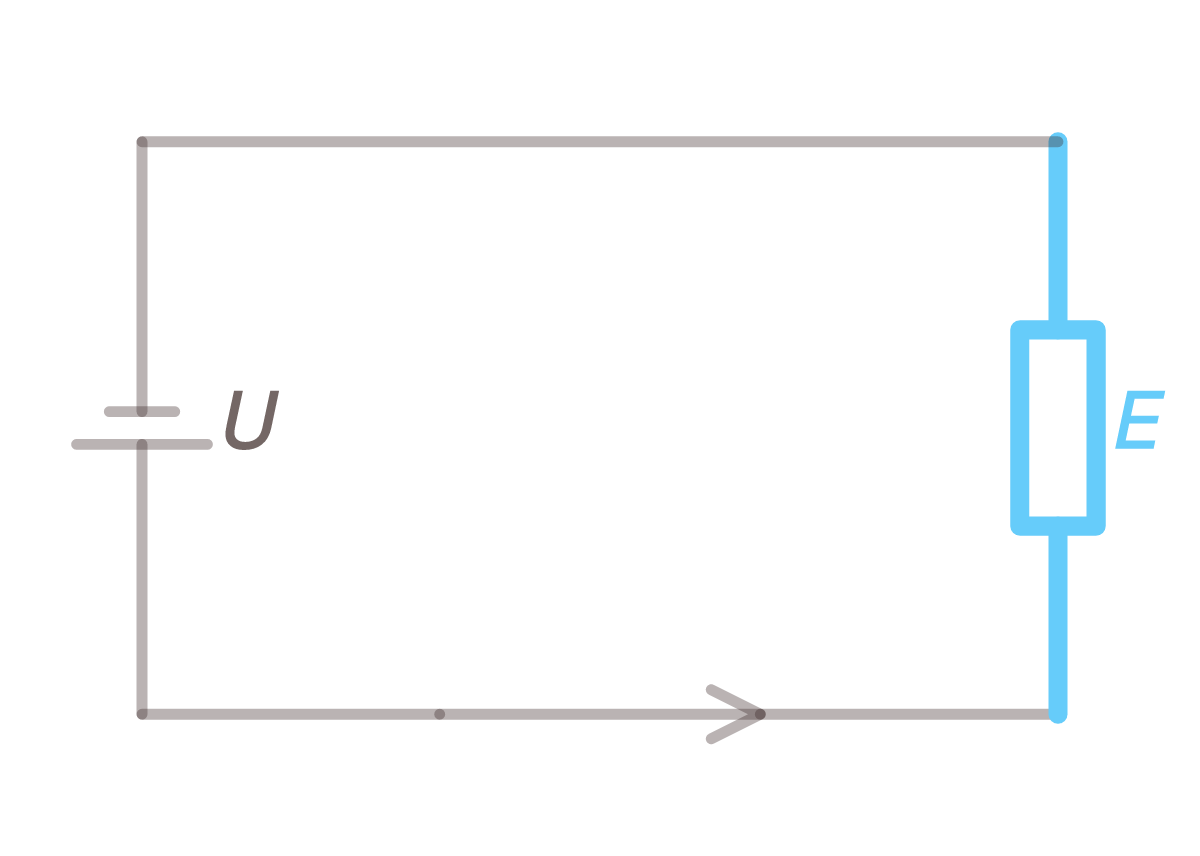
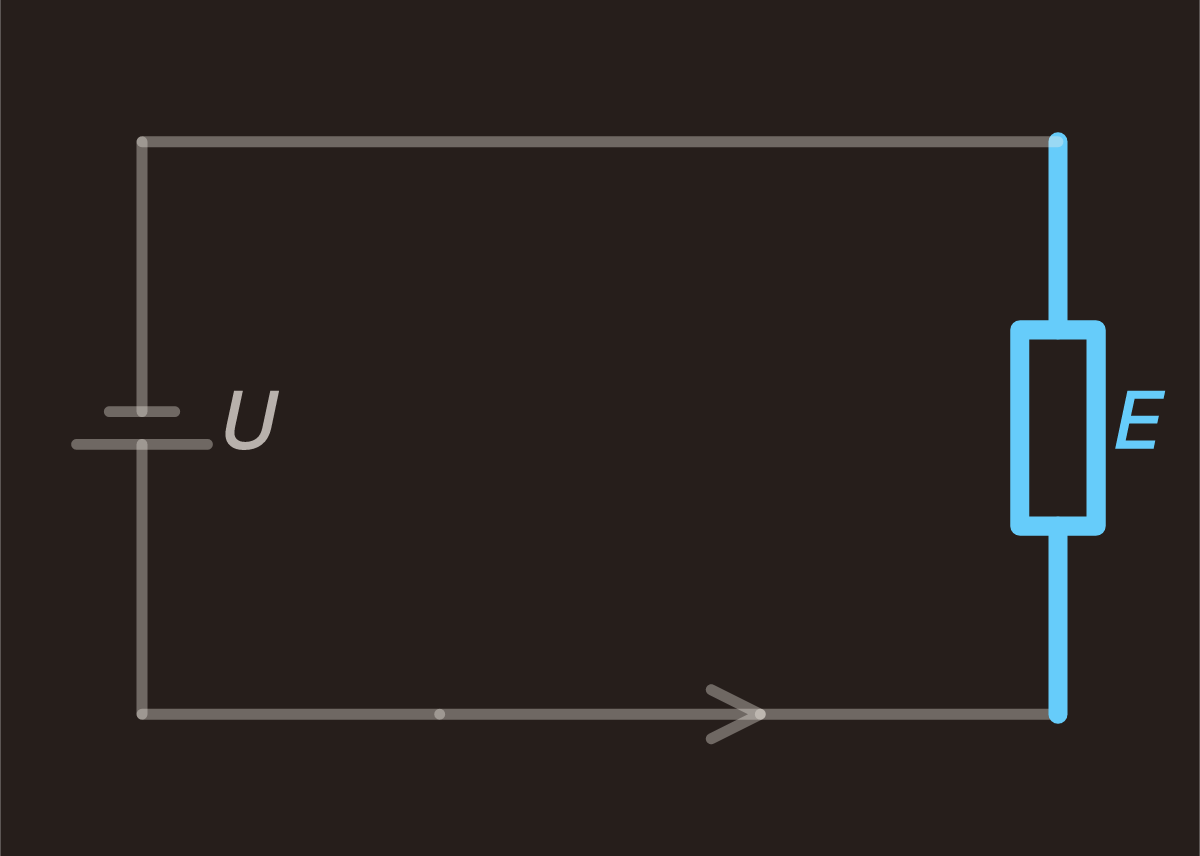
E = U² · t / R
E is the energy in joules, U the voltage across the resistor in volts, R its resistance in ohms and t the time in
seconds. It is P = U² / R multiplied by the time, and it is
E = U · I · t with the current replaced by U / R.
Holds for a resistor with a constant voltage across it. The energy ends up as heat.
A small element. A resistor of 6 Ω on 12 V for 50 s converts E = 12² · 50 / 6 = 144 · 50 / 6 = 7,200 / 6 = 1,200 J.
A kettle
A kettle element of 26.45 Ω on 230 V runs for 3 minutes, 180 s. E = 230² · 180 / 26.45 = 52,900 · 180 / 26.45 =
2,000 · 180 = 360,000 J, or 360 kJ. That is 2,000 W for 180 s, and it is 0.1 kWh.
Rearranged, t = E · R / U² gives the time a given amount of energy takes. With the energy in the kettle case, 360 kJ, the time
comes back as 180 s.
Common mistakes
- Squaring the time or leaving the square off the voltage. Only U is squared.
- Dividing by the wrong quantity. R is in the denominator, so a higher resistance gives less energy at the same voltage.
- Using minutes. The joule needs seconds.
Where next
When the current is known, see E = R · I² · t. For the kilowatt-hour version, see
energy in kWh.