What the formulas say
- sin(180° − v) = sin v
- cos(180° − v) = −cos v
- tan(180° − v) = −tan v
- sin(v − 180°) = −sin v
- cos(v − 180°) = −cos v
- tan(v − 180°) = tan v
- sin(360° − v) = −sin v
- cos(360° − v) = cos v
- tan(360° − v) = −tan v
- sin(90° − v) = cos v
- cos(90° − v) = sin v
- tan(90° − v) = 1/tan v
- sin(−v) = −sin v
- cos(−v) = cos v
- tan(−v) = −tan v
A related shift: cos v = sin(v + 90°), which in radians is cos x = sin(x + π/2).
Holds for every angle v for which both sides exist: the tangent rows need the cosine on each side to be non-zero. In radians, replace 180° by π, 360° by 2π and 90° by π/2.
Where they come from
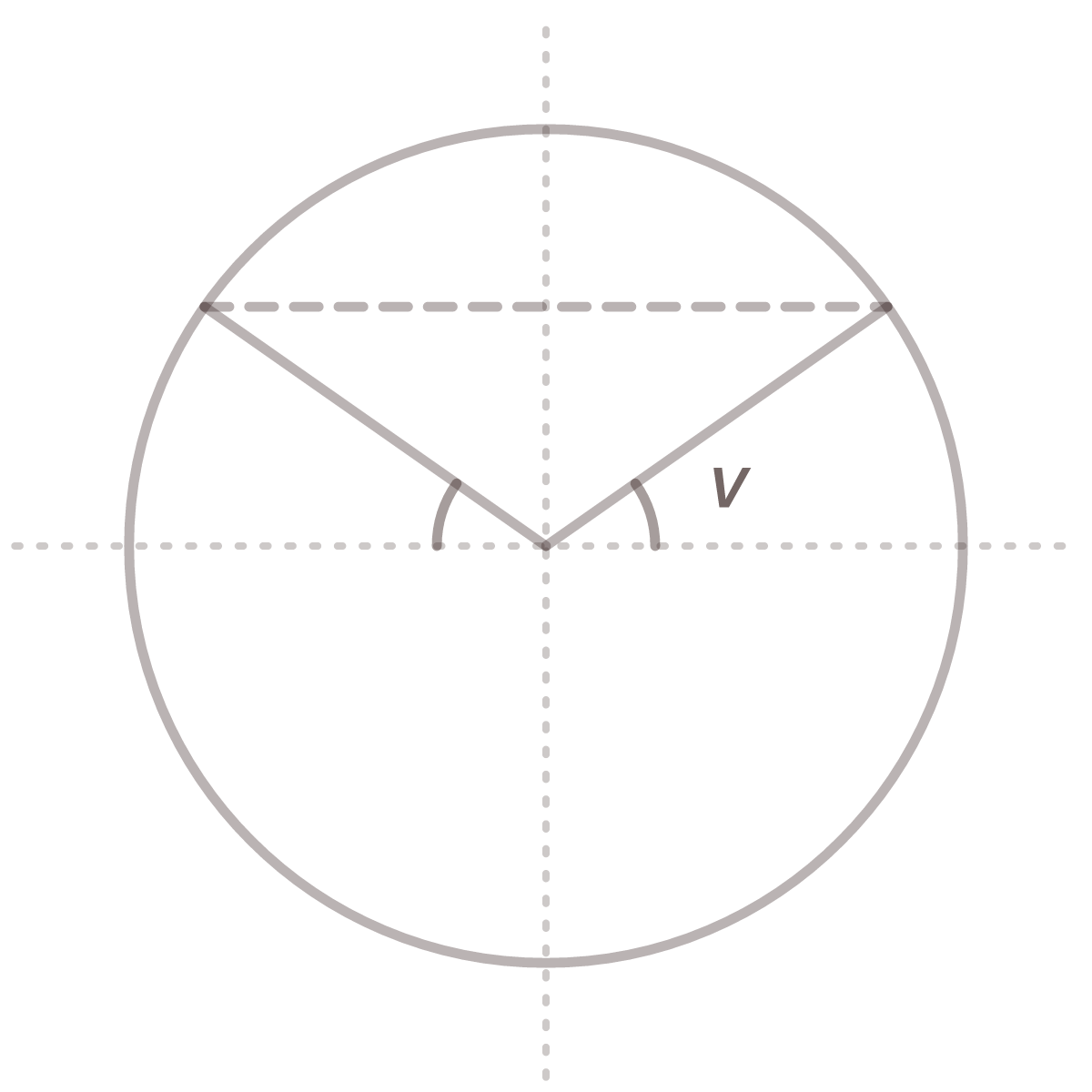
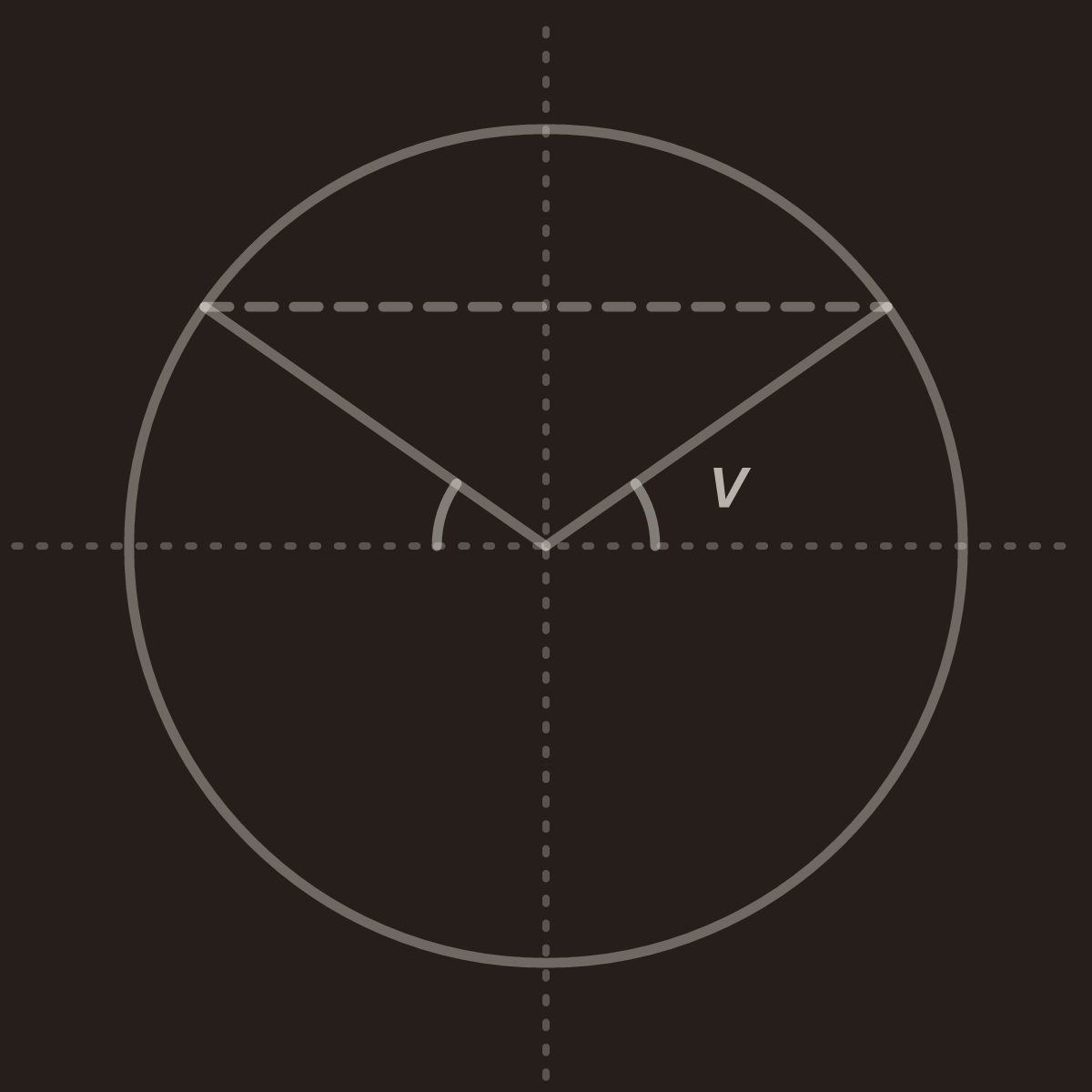
On the unit circle, cos v is the x-coordinate and sin v the y-coordinate of the point at angle v. The angle 180° − v is the mirror image in the y-axis, so the height is kept and the x-coordinate changes sign. The angle −v is the mirror image in the x-axis: the x-coordinate is kept. The angle 90° − v swaps the two coordinates.
Worked example
With v = 20°, sin 20° = 0.3420, cos 20° = 0.9397 and tan 20° = 0.3640.
- sin 160° = sin(180° − 20°) = sin 20° = 0.3420
- cos 200° = cos(20° + 180°) = −cos 20° = −0.9397
- tan 340° = tan(360° − 20°) = −tan 20° = −0.3640
- sin 70° = sin(90° − 20°) = cos 20° = 0.9397
Common mistakes
- Keeping the sign. cos(180° − v) is not cos v. In the second quadrant the cosine is negative.
- Mixing up v − 180° and 180° − v. For the sine they differ by a sign; for the tangent they differ by a sign too.
- Using 90° − v on the wrong function. sin(90° − v) is cos v, not sin v.
Common questions
Why is the tangent unchanged by v − 180°?
Adding or removing half a turn flips both the sine and the cosine, and the signs cancel in the quotient. The
periodicity page gives the same fact with n half turns.
Where are these used?
In solving trigonometric equations, where 180° − v is the second solution of sin x = a, and in finding the sine of an obtuse angle in the law of sines.