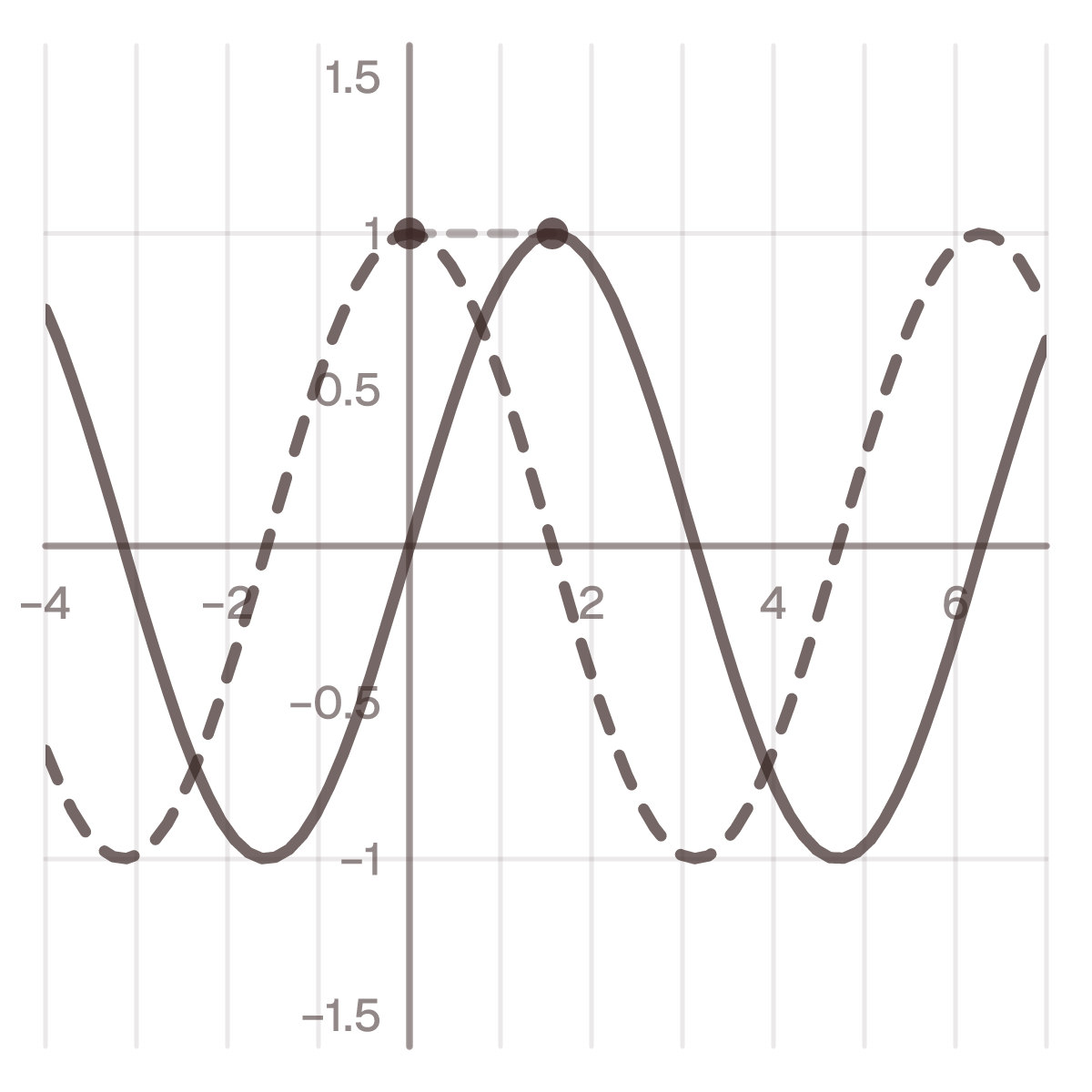
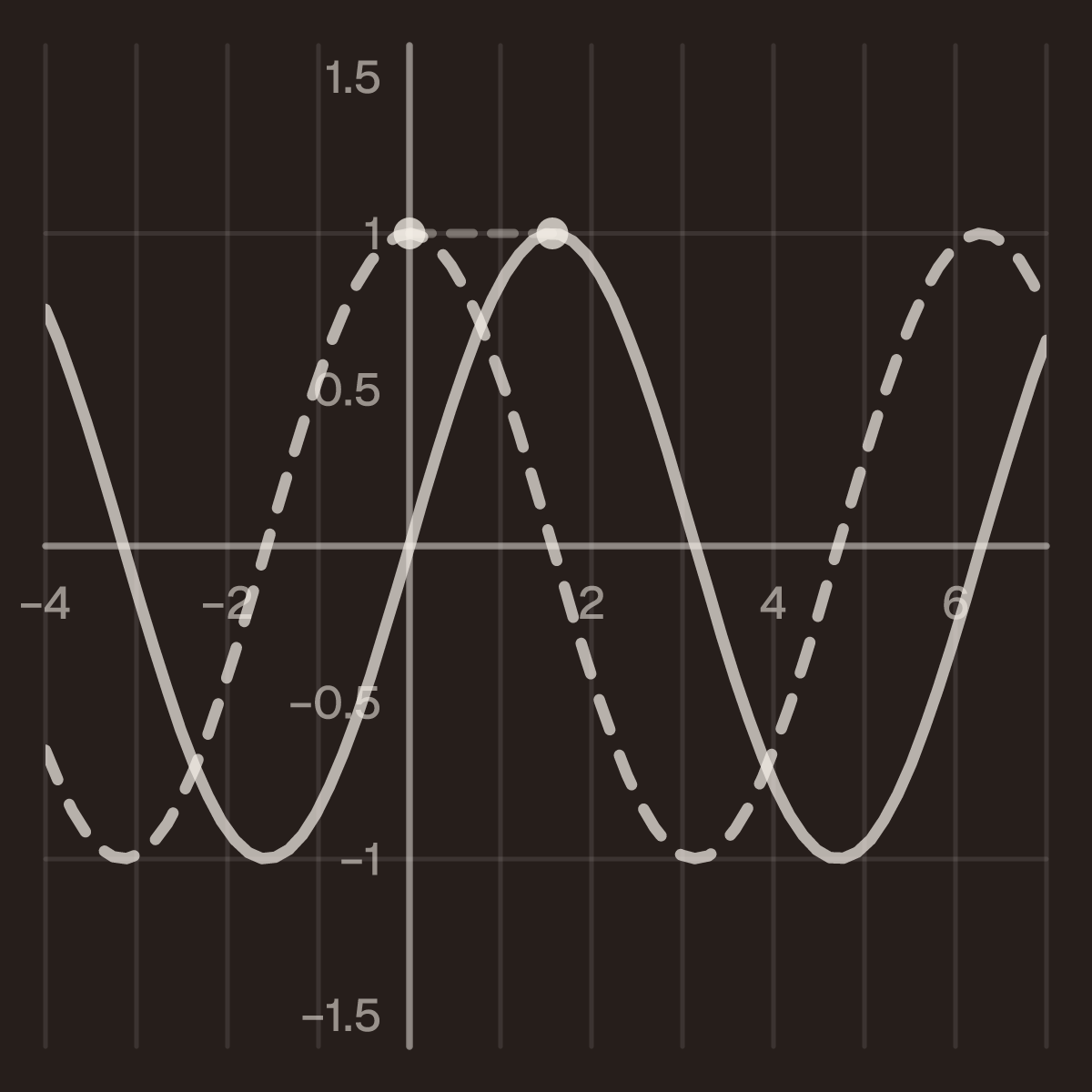
The formula
- cos v = sin(v + 90°)
In radians, cos x = sin(x + π/2). Holds for every angle v.
Why
It follows from the reduction rule sin(90° − v) = cos v with −v in place of v: sin(90° + v) = cos(−v) = cos v. On the graph, the sine curve starts at 0 and the cosine curve at 1, one quarter of a period earlier.
Worked example
With v = 20°: sin 110° = 0.9397 and cos 20° = 0.9397.
Common mistakes
- Shifting the wrong way: sin(v − 90°) is −cos v, not cos v.
Related rules are on the page trigonometric symmetry and reduction formulas.