Polar to cartesian coordinates
The relation
x
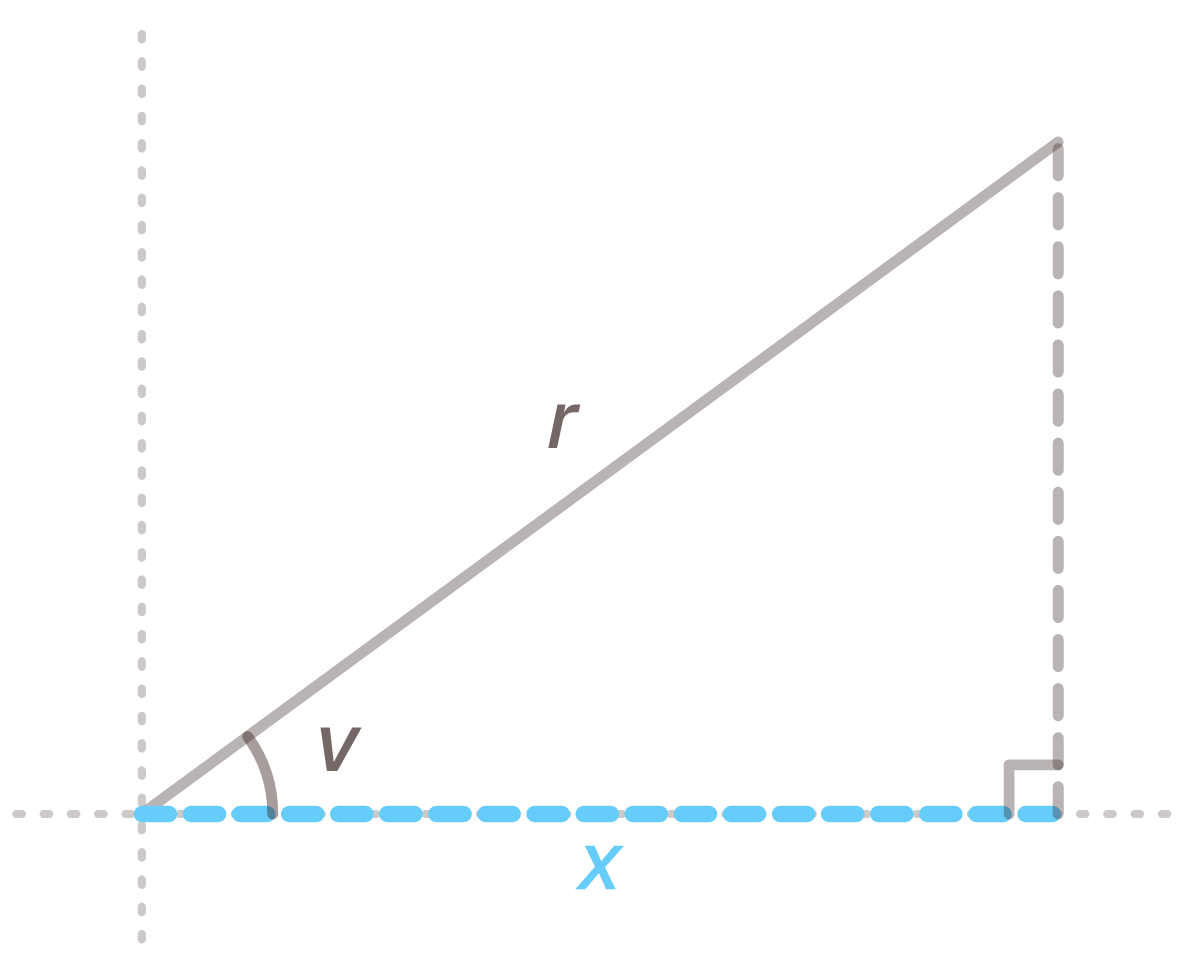
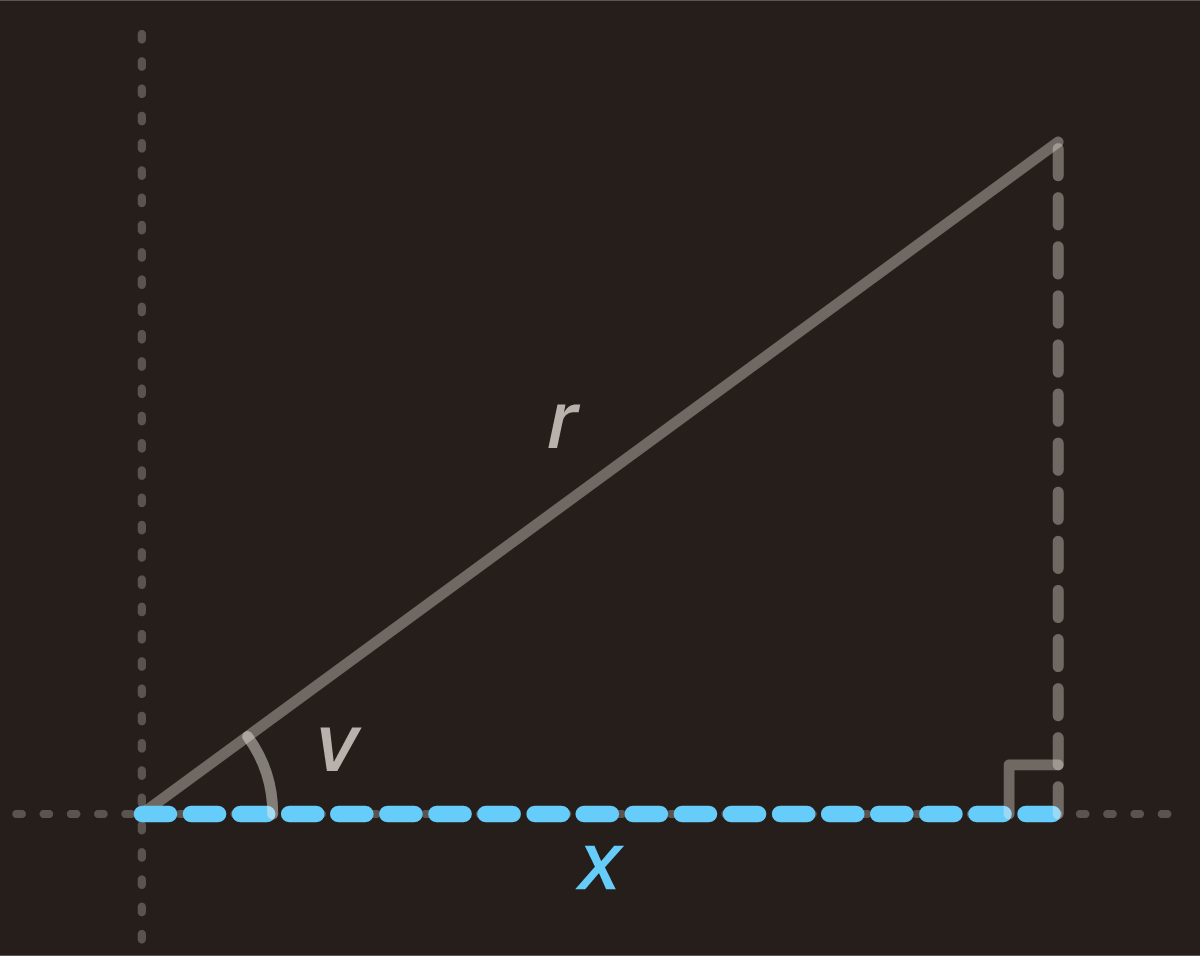
A point at distance r and angle v from the positive x-axis lies at x = r cos v and y = r sin v.
Solve for
x=5
x equals 10 times the cosine of (60 degrees), equals 10 times 0.5, equals 5
Den här sidan finns på svenska. Byt till svenska
Definition — what does that mean?
A point at distance r and angle v from the positive x-axis lies at x = r cos v and y = r sin v.
In Swedish: Polära till kartesiska koordinater
x
A point at distance r and angle v from the positive x-axis lies at x = r cos v and y = r sin v.
x=5
x equals 10 times the cosine of (60 degrees), equals 10 times 0.5, equals 5
You are given
Round to 2 decimals.
r is the distance from the origin and v the angle measured counter-clockwise from the positive x-axis. The card above computes x; y is the same with sine, and the coordinate converter gives both.
r = 10 and v = 60°: x = 10 cos 60° = 10 · 0.5 = 5 and y = 10 sin 60° = 10 · 0.866 = 8.66. At v = 150° the same r gives x = 10 · (−0.866) = −8.66 and y = 5: the point has moved into the second quadrant and x has changed sign.
On the unit circle, the point at angle v is (cos v, sin v) by definition. A point at distance r is that point scaled by r, which is the whole formula. The signs of cos and sin in each quadrant come with it: cos is negative left of the y-axis, sin below the x-axis.
The formula is the same; the calculator has to be in the mode the angle is given in. 10 cos 60 in radian mode is −9.52, not 5, and the mistake looks like a plausible coordinate.
How do I go the other way?
r = √(x² + y²) and the angle from atan2(y, x), on the
cartesian to polar page.
Is this the same as a complex number’s polar form?
Yes: r(cos v + i sin v) is the complex number x + iy with the same r and v, on the
complex number forms page.
What about three dimensions?
Cylindrical coordinates add a z; spherical ones add a second angle. The plane formula is the first
step of both.
| Solve for | Rearranged | With the numbers | Comes to |
|---|---|---|---|
| r | xcos(v) | 5cos(60°) | 10 |
| x | r cos(v) | 10 cos(60°) | 5 |
Last reviewed October 20, 2026 ·How pages are reviewed
Copy the code into your page where the formula card should appear. It loads from lovetocalc.com, so it stays current on its own — all we ask is that the credit line comes with it.