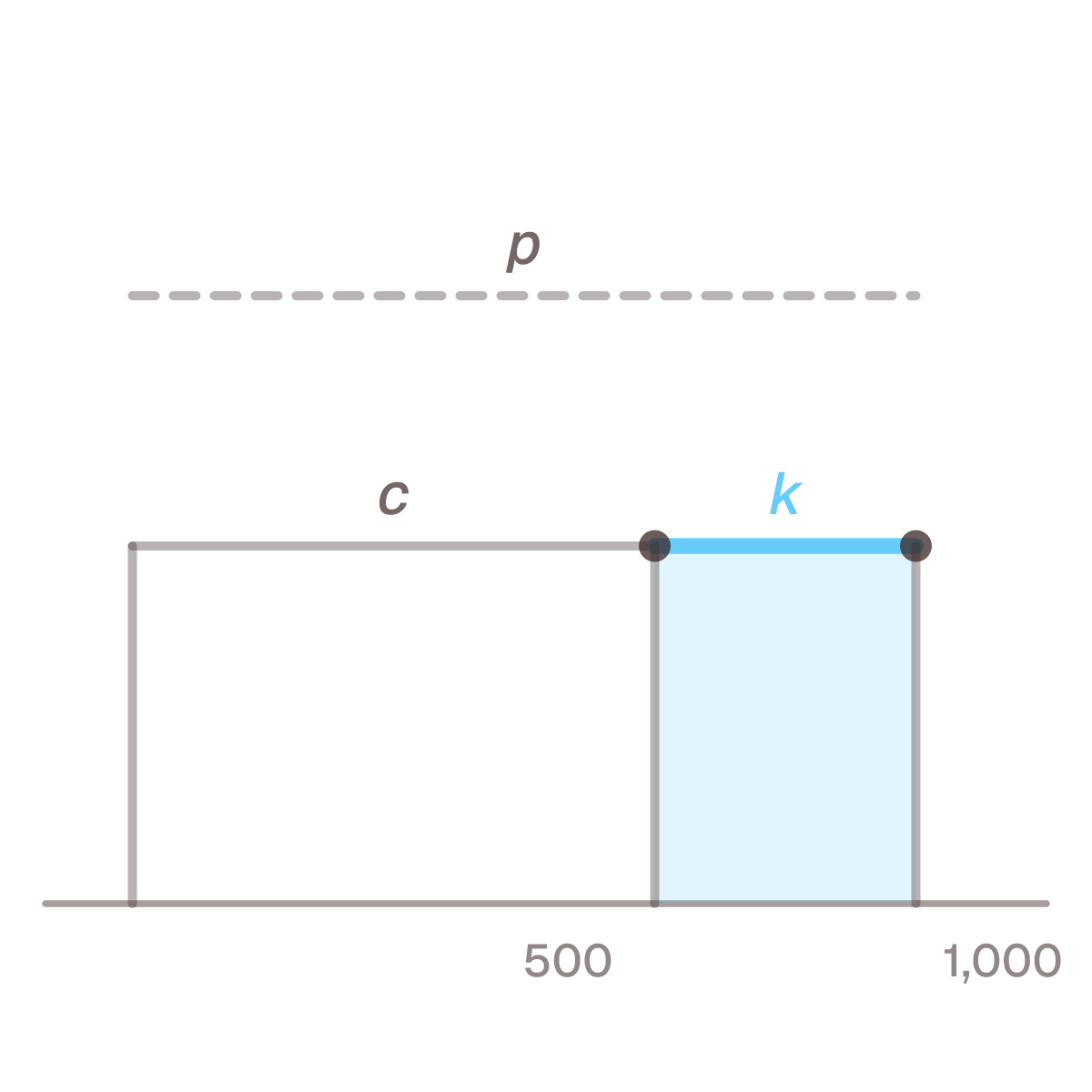
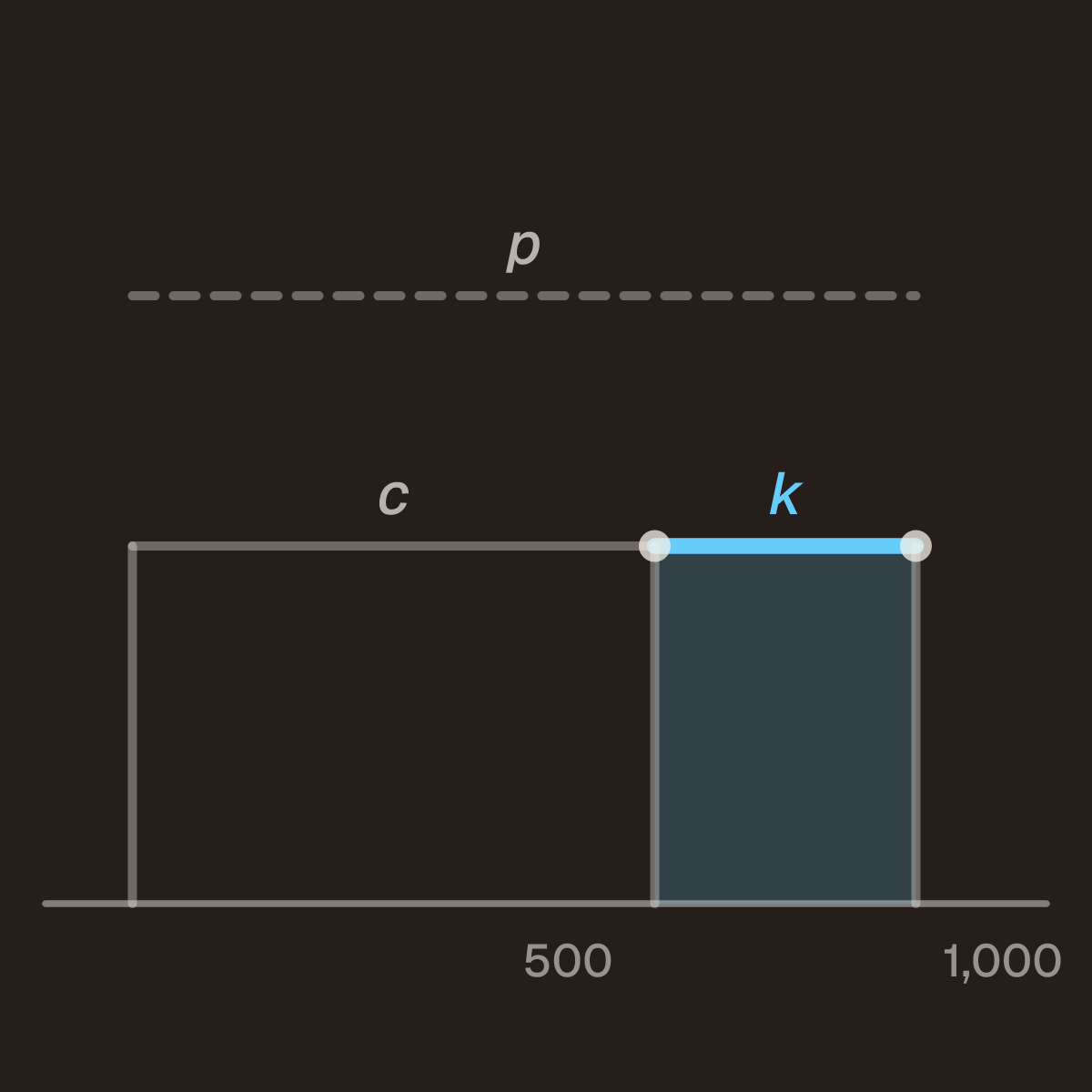
Markup is the profit written as a share of the purchase price:
- markup = 100 · (price − cost) / cost
An item bought for $600 and sold for $900 leaves $300 of profit. 300 / 600 = 0.5, so the markup is
50%.
Pricing from a markup
This is the direction the question usually comes from: you have a cost and a markup your trade works to,
and you want the price.
- price = cost + markup · cost / 100
$600 at 50% markup is 600 + 300 = $900. The card above works in both directions, and the
margin calculator shows markup and margin on the same item at once.
To go back the other way — from a price to the cost behind it — multiply the bracket out and gather the
cost terms back together:
- cost = 100 · price / (100 + markup)
$900 at 50% markup gives 100 · 900 / 150 = $600.
Markup is not margin
Same profit, different denominator. Markup divides by the cost, margin
divides by the selling price — and when there is a profit the price is the larger number, so the margin
is lower than the markup.
|
Measured against |
Same item ($600 → $900) |
| Markup |
The cost |
300 / 600 = 50% |
| Margin |
The price |
300 / 900 ≈ 33.3% |
The expensive version of the mistake is to price with a markup and then report against a margin target.
Someone who needs a 50% margin and adds 50% lands on 33% and wonders where the money went. A 50%
margin takes a 100% markup.
Markup and margin side by side
| Markup |
Margin |
| 25% |
20% |
| 50% |
33.3% |
| 100% |
50% |
| 150% |
60% |
| 300% |
75% |
Doubling the cost — a 100% markup — is what retail calls keystone pricing, and it puts exactly half the
price in the profit.
Common mistakes
- Adding the margin percentage. A 40% margin target needs a 66.7% markup, not a 40% one.
- Marking up a price that includes sales tax. The cost is almost always quoted without it, so the price
has to be too, or the two numbers are not comparable.
- Taking the discount off the markup. A discount is worked on the selling price and is its own step —
see sale price after a discount.
- Assuming markup has a ceiling. A margin can never reach 100%, but a markup has no upper limit at
all. A 900% markup is a perfectly good number — it is a 90% margin.
Common questions
What markup gives the margin I want?
Divide the margin by (100 − the margin) and multiply by 100. A 40% margin needs 100 · 40 / 60 ≈ 66.7%
markup. The conversion has its own page: markup to margin.
What is a normal markup?
It depends on the trade, and the range is wide: from a few tens of per cent to several hundred. Compare with businesses like yours rather than with a general figure.
Can markup be negative?
Yes, if you sell at a loss. At −100% the goods are given away, and below that the price would be
negative — which is why the card above needs a markup above −100% to work back to a cost.