- quantity = fixed costs / (price − variable cost)
The denominator has a name of its own: the contribution margin per unit. It is what a single sale
contributes once it has paid its own variable cost, and it is that part which has to cover everything fixed.
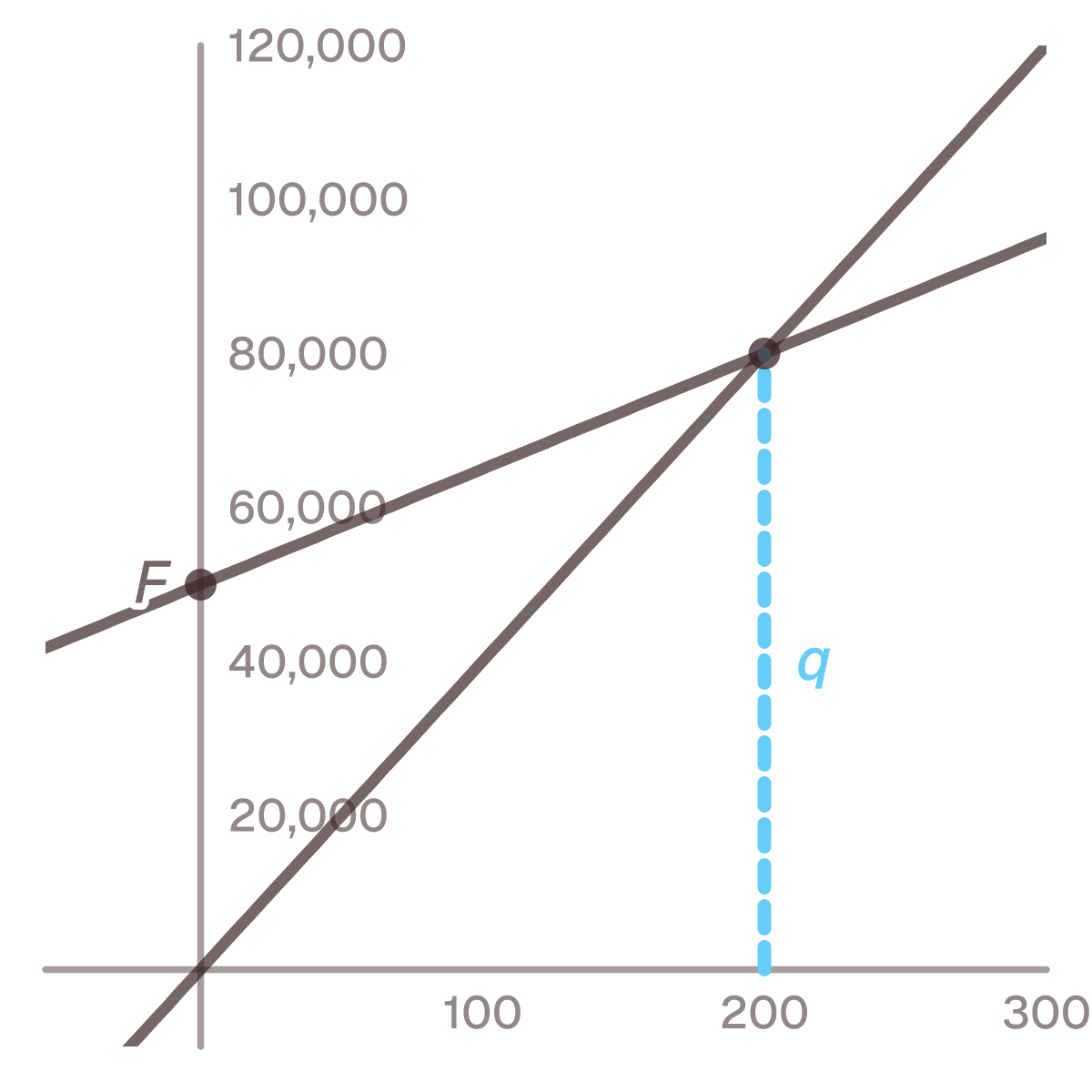
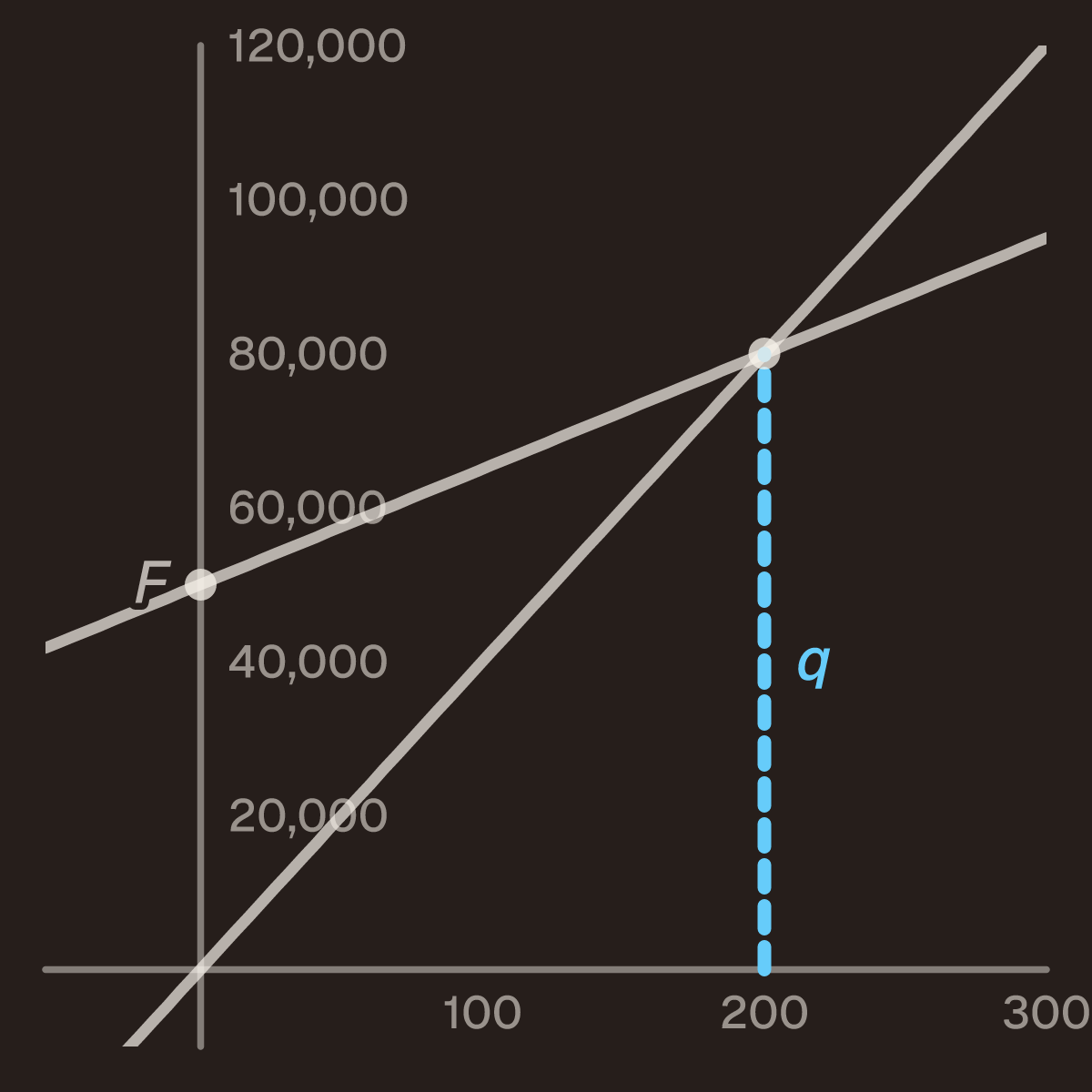
An example: 50,000 in fixed costs a month, a price of 400, a variable cost of 150 per unit.
- Contribution margin: 400 − 150 = 250 per unit
- Break-even quantity: 50,000 / 250 = 200 units
Unit 200 pays off the last of the rent. Unit 201 is the first to make a profit — 250 of it.
Fixed or variable?
The split is the hard part, and it is sometimes a judgement call.
| Fixed |
Variable |
| Rent, insurance, subscriptions |
Materials and stock |
| Salaried wages |
Shipping and packaging per order |
| Accounting, audit |
Commission per sale |
| Depreciation |
Payment processing per purchase |
The test is simple: does the cost change if you sell one more unit? If it does, it is variable. If it
does not, it is fixed — even if it is large, and even if it may change next year.
What the price does to the quantity
Break-even is more sensitive to price than people expect, because the price appears only in the denominator.
| Price |
Contribution margin |
Break-even |
| 350 |
200 |
250 units |
| 400 |
250 |
200 units |
| 450 |
300 |
167 units |
| 500 |
350 |
143 units |
A 12.5% price rise (400 → 450) cuts break-even by 17%, as long as customers buy as much at the higher
price. Every unit of money on the price goes straight into the contribution margin, exactly as every unit
saved on the variable cost does.
Common mistakes
- Dividing the fixed costs by the price. 50,000 / 400 = 125 units, which would only be right if the
goods were free. It is the contribution margin that covers the fixed costs, not the whole price.
- Putting your own salary among the variable costs. If it goes out regardless of how much you sell, it
is fixed.
- Mixing figures with and without tax. Price and variable cost have to be on the same side of it.
- Assuming the price is always above the variable cost. If it is not, there is no break-even at all —
every unit sold deepens the loss, and volume does not help.
Questions people ask
How do I find the quantity for a profit target instead?
Add the target to the fixed costs and divide as usual. For a profit of 20,000 in the example above:
(50,000 + 20,000) / 250 = 280 units.
Can I work in money rather than units?
Yes — multiply the break-even quantity by the price. 200 · 400 = 80,000 in revenue. That is the practical
form when you sell many different things and have no natural “unit”. The
break-even calculator shows both.
What do I do if I sell several different products?
Work with an average contribution margin, weighted by how sales usually split between them. The answer
holds only as long as that split does.