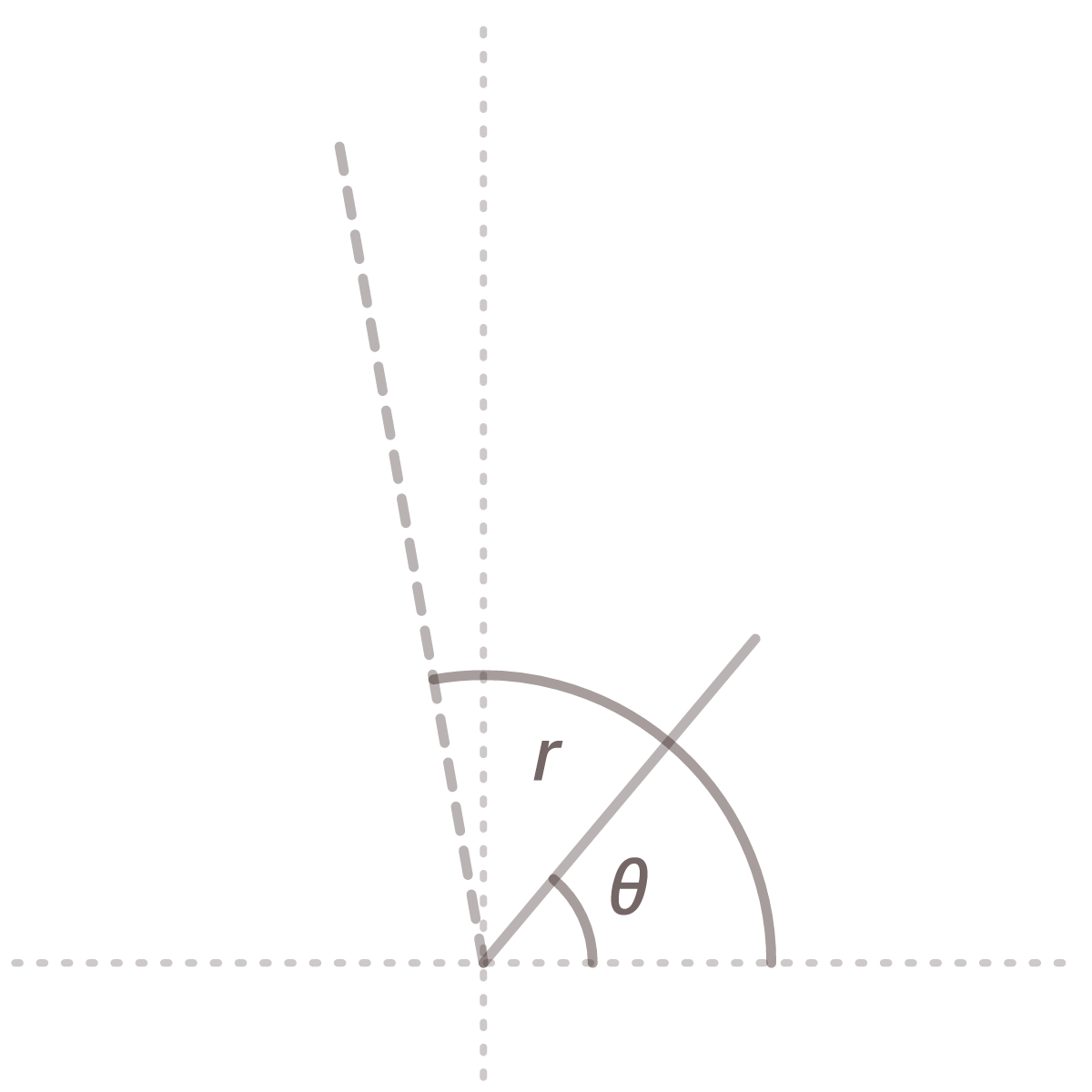
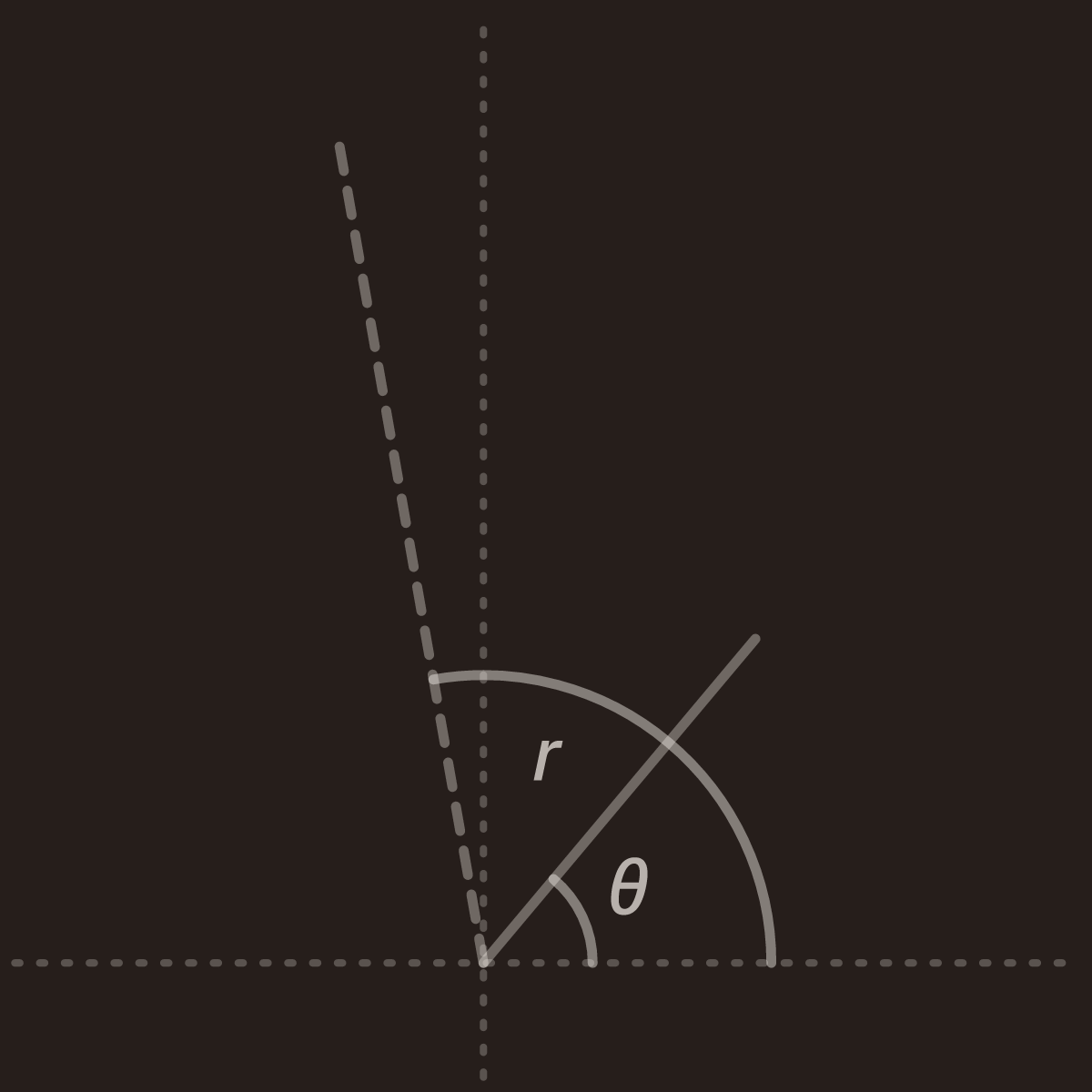
The formula
- zⁿ = (r(cos θ + i sin θ))ⁿ = rⁿ(cos nθ + i sin nθ)
Holds when n is an integer, and for negative n when z ≠ 0.
It is also called de Moivre’s theorem.
Example
(1 + i)⁸: r = √2 and θ = π/4, so
(1 + i)⁸ = (√2)⁸ (cos(8 · π/4) + i sin(8 · π/4)) = 16(cos 2π + i sin 2π) = 16
Why
It is the polar product rule applied n times: each factor multiplies the modulus by r and adds θ to the argument. A full proof is by induction on n.
A second example: an odd power
(√3 + i)⁵: r = 2 and θ = π/6, so (√3 + i)⁵ = 32(cos 5π/6 + i sin 5π/6) = 32(−√3/2 + i/2) = −16√3 + 16i. Five brackets multiplied by hand would have given the same answer after a quarter of an hour.
Where next
- The other way round, the roots of a complex number: the binomial equation.
- The rule the formula is built on: product and quotient in polar form.
Common mistakes
- Not raising the modulus: (√2)⁸ = 16, not √2.
- Raising the angle instead of multiplying it: nθ, not θⁿ.
- Not reducing the angle. 8 · π/4 = 2π is a full turn, the same direction as 0.
Common questions
Does it hold for negative n?
Yes, and for n = 0. z⁻¹ = r⁻¹(cos(−θ) + i sin(−θ)) is the inverse, and that is how 1/z is found in polar
form.
Why is it named after De Moivre?
Abraham de Moivre used the relation in the early 1700s, before Euler’s e^(iθ). In Euler’s form the
formula is (e^(iθ))ⁿ = e^(inθ).