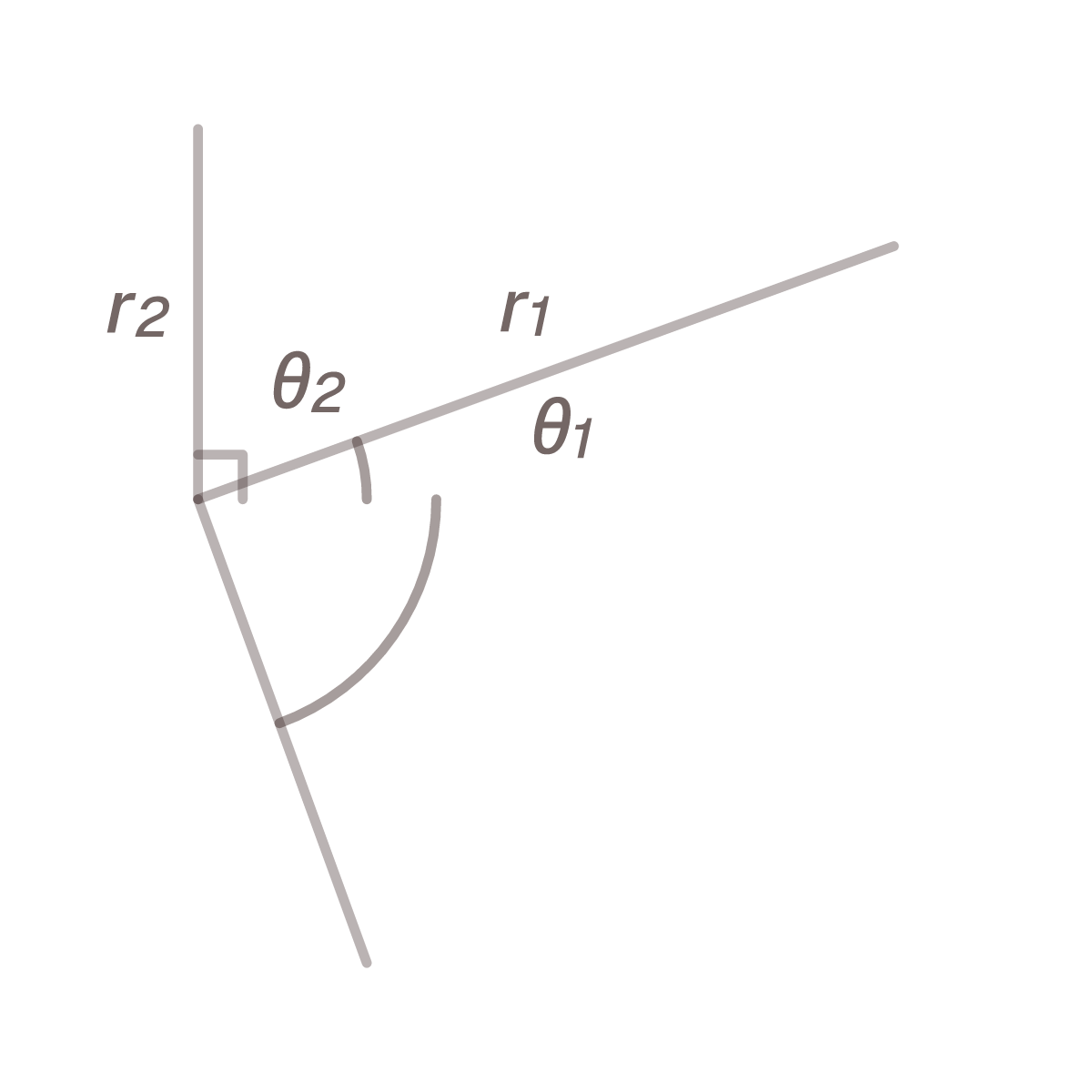
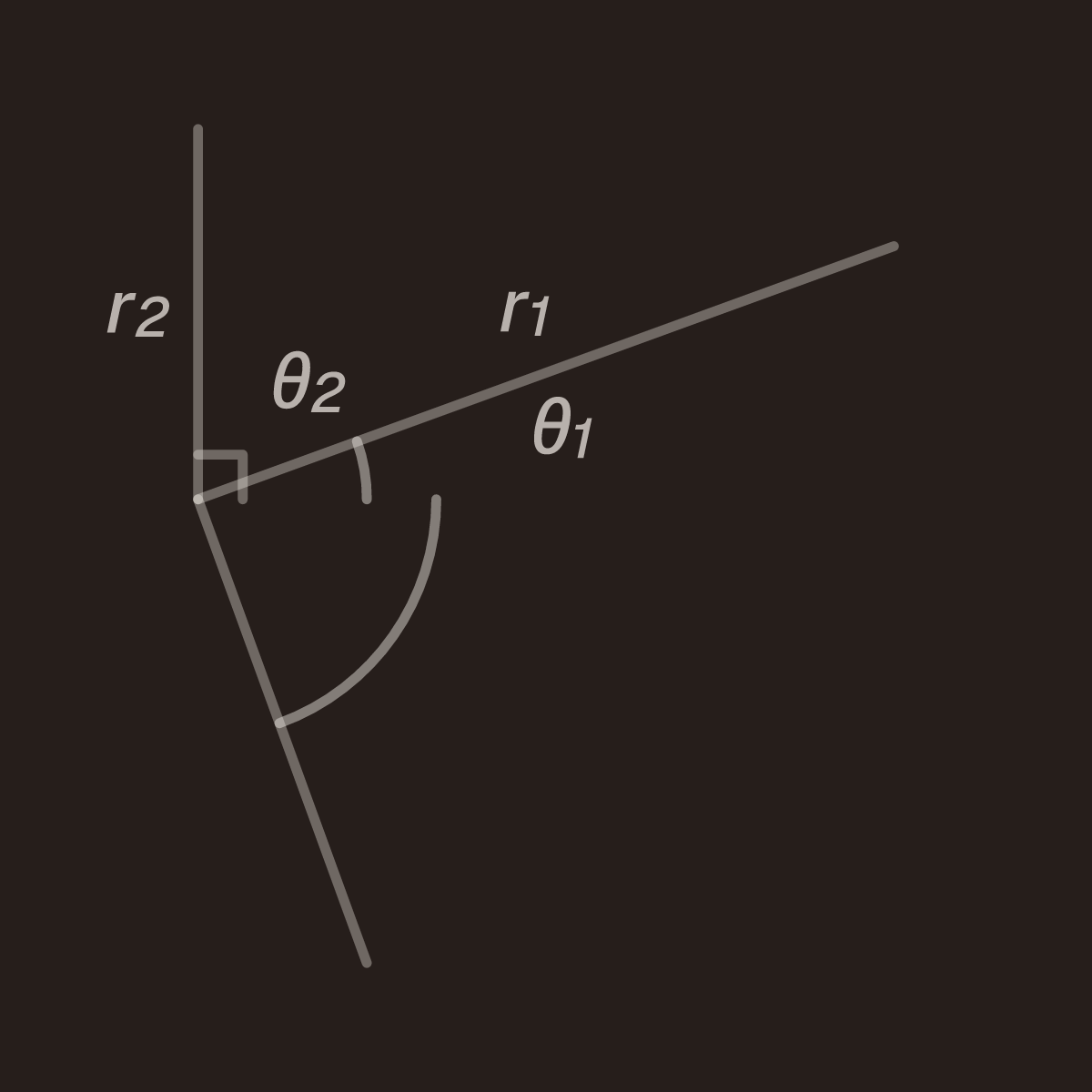
The formula
r₁e^(iθ₁) / r₂e^(iθ₂) = (r₁/r₂)e^(i(θ₁ − θ₂))
Holds when r₂ ≠ 0, that is when the divisor is not the number 0, and with the arguments in radians. It is the quotient from the polar form page in the notation of exponential form, and it looks like aᵐ / aⁿ = aᵐ⁻ⁿ.
Worked example
z₁ = 6e^(i·2π/3) and z₂ = 2e^(iπ/6):
z₁/z₂ = (6/2) · e^(i(2π/3 − π/6)) = 3e^(iπ/2) = 3(cos π/2 + i sin π/2) = 3i
Check in rectangular form: z₁ = 6(−1/2 + i√3/2) = −3 + 3√3·i and z₂ = 2(√3/2 + i/2) = √3 + i. Then z₁/z₂ = (−3 + 3√3·i)(√3 − i) / ((√3)² + 1²) = 12i / 4 = 3i.
Why
The numerator’s angle is turned back by the denominator’s angle, so the arguments subtract. The denominator e^(iθ₂) has the inverse e^(−iθ₂), and multiplying by it is the product rule with θ₁ + (−θ₂).
Common mistakes
- Subtracting the wrong way round. It is θ₁ − θ₂, the numerator’s argument minus the denominator’s.
- Subtracting the moduli. They divide.
- Dividing by r₂ = 0. A number with modulus 0 is the number 0, which cannot be a divisor.
Common questions
What if the difference of the arguments is negative?
Nothing changes in the formula. e^(−iπ/6) is a point at the angle −π/6, which is the same direction as
11π/6. The principal argument is the one between −π and π.