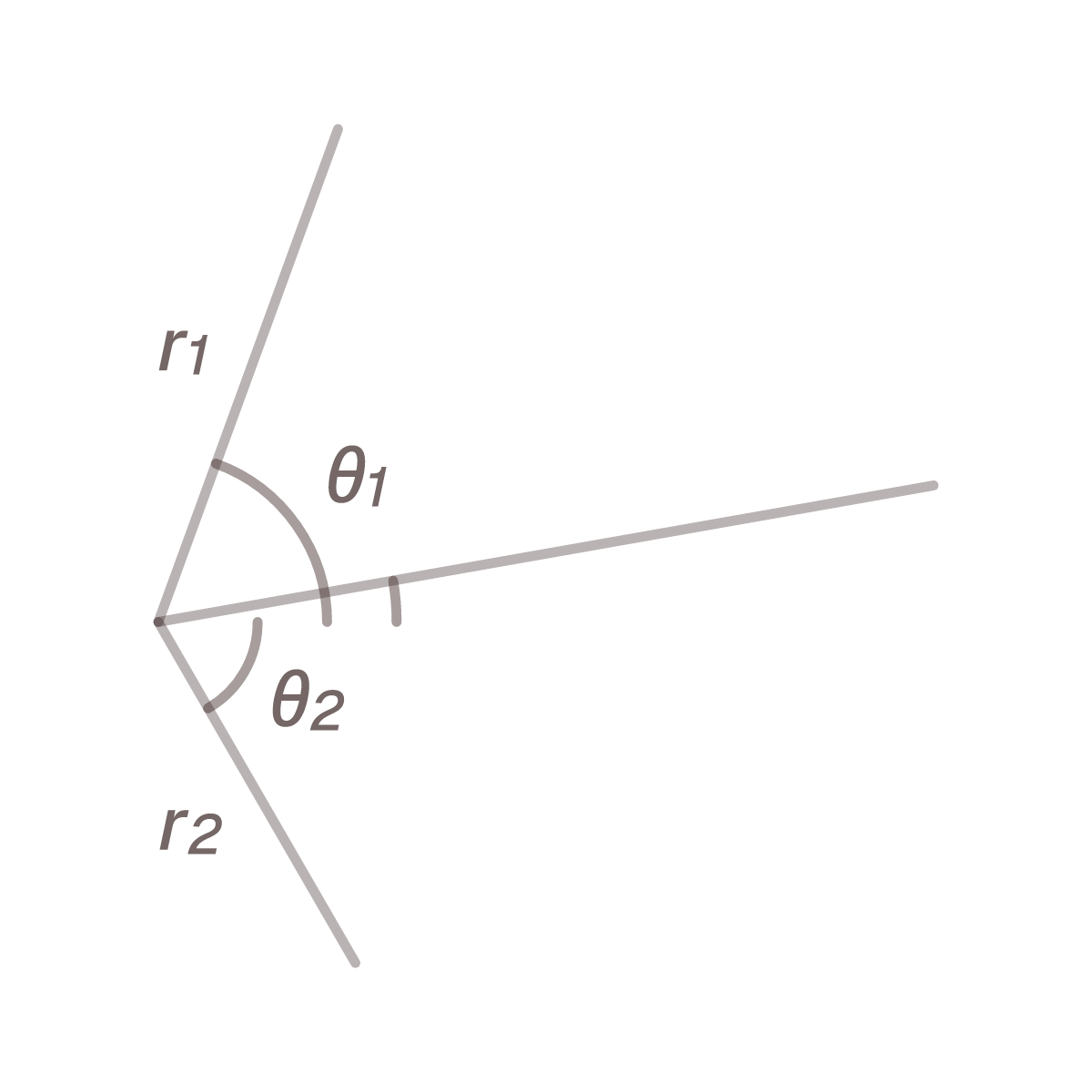
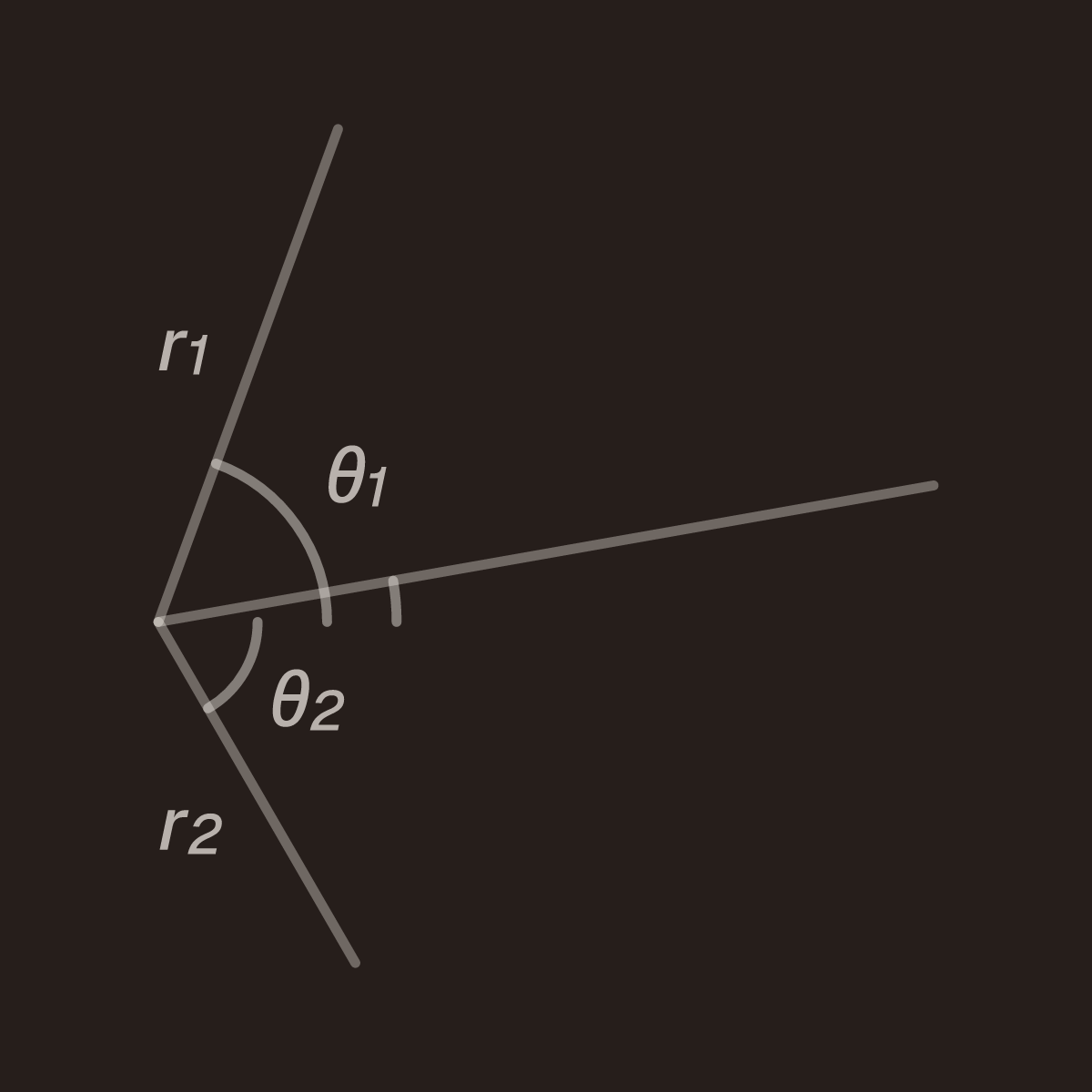
The formula
r₁e^(iθ₁) · r₂e^(iθ₂) = r₁r₂e^(i(θ₁ + θ₂))
Holds for any two complex numbers written in exponential form, with the arguments in radians. It is the same statement as the product in polar form, spelled with an exponent, and it looks like aᵐ · aⁿ = aᵐ⁺ⁿ.
Worked example
z₁ = 4e^(iπ/4) and z₂ = 2e^(iπ/4):
z₁z₂ = 4 · 2 · e^(i(π/4 + π/4)) = 8e^(iπ/2) = 8(cos π/2 + i sin π/2) = 8i
Check in rectangular form: z₁ = 4(√2/2 + i√2/2) = 2√2(1 + i) and z₂ = √2(1 + i), so z₁z₂ = 2√2 · √2 · (1 + i)² = 4 · 2i = 8i.
Why
Multiplying out cos θ₁ + i sin θ₁ by cos θ₂ + i sin θ₂ and using i² = −1 gives the real part cos θ₁ cos θ₂ − sin θ₁ sin θ₂ and the imaginary part sin θ₁ cos θ₂ + cos θ₁ sin θ₂. By the cosine and sine addition formulas these are cos(θ₁ + θ₂) and sin(θ₁ + θ₂), which is e^(i(θ₁ + θ₂)). So the exponents add.
Common mistakes
- Multiplying the exponents instead of adding them.
- Adding the moduli. The numbers in front multiply.
- Forgetting the radians. A degree value in the exponent gives a different number.
Common questions
Why does this page exist beside the polar form?
It is the same rule, but a reader who has learned the exponential form looks for it written with e. The
exponent form also makes the next step easy, since raising to the power n multiplies the exponent by n
(de Moivre’s formula).