The definition
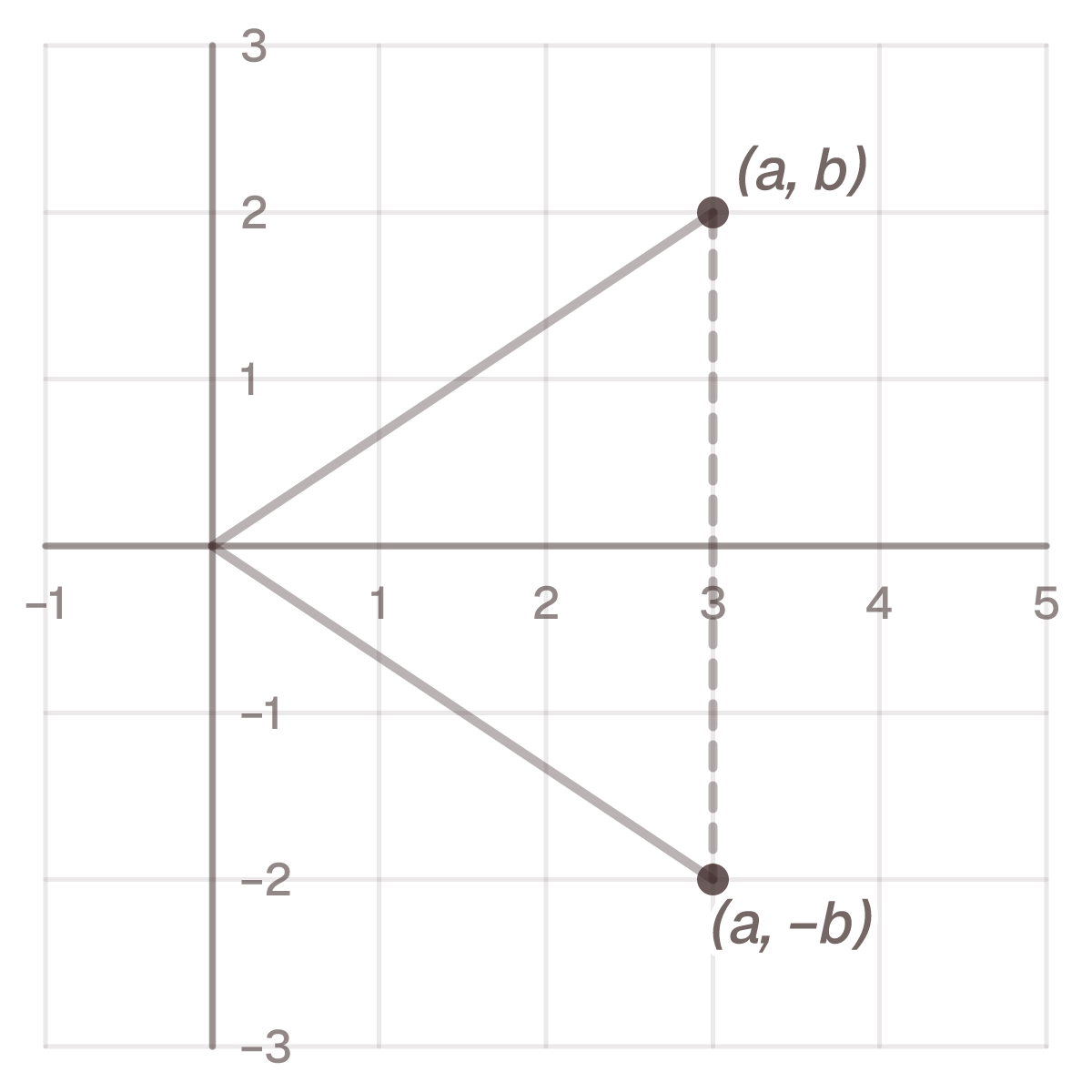
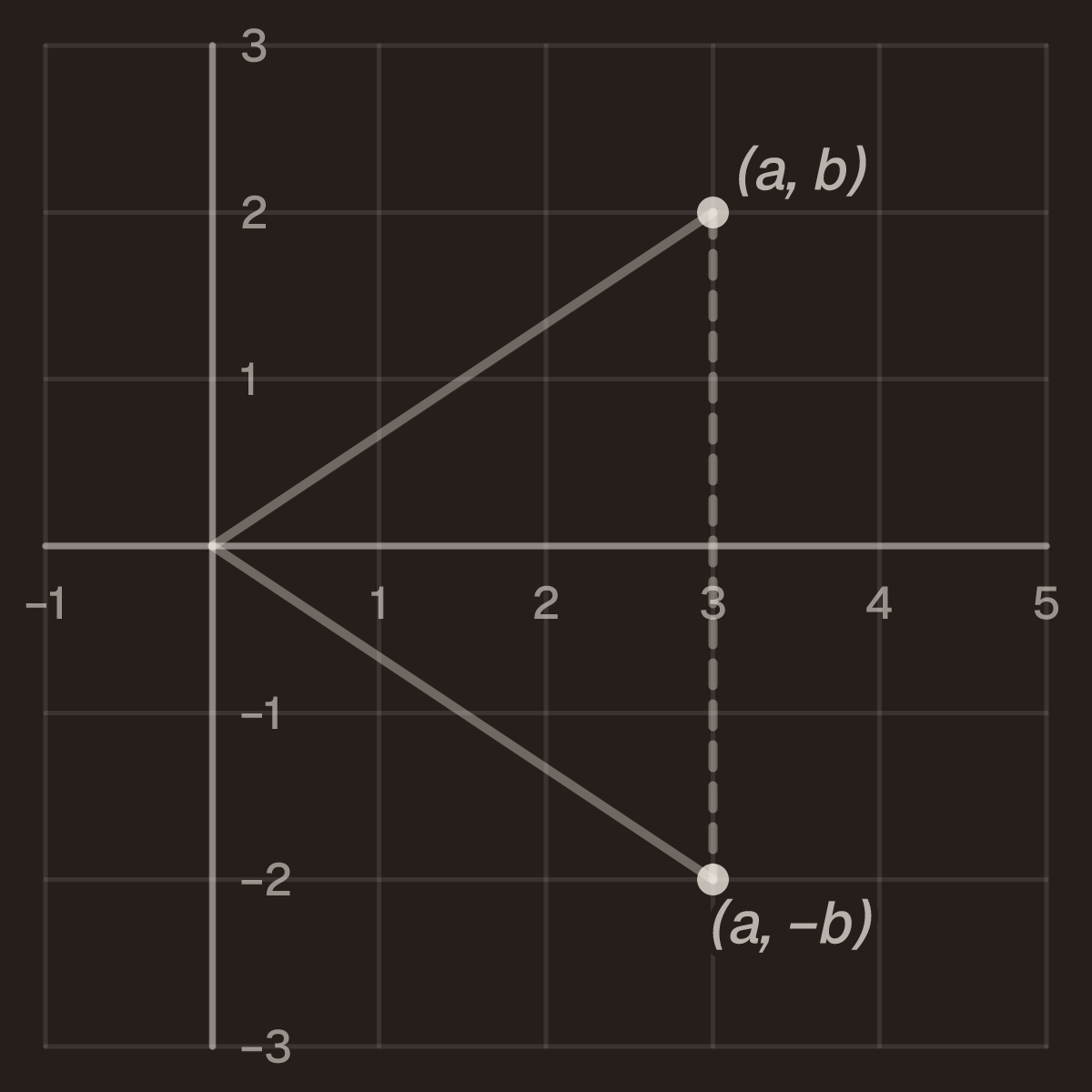
- conjugate of a + bi = a − bi
The conjugate of z is written z̄ (z with a bar). The real part stays and the imaginary part changes sign.
Examples
- The conjugate of 3 + 4i is 3 − 4i.
- The conjugate of −2 − 7i is −2 + 7i.
- The conjugate of 5 is 5, and the conjugate of 6i is −6i.
A number equals its own conjugate exactly when its imaginary part is 0, that is, when it is real.
Properties worth knowing
- The conjugate of the conjugate is the number itself.
- The sum z + z̄ is real, and the difference z − z̄ is purely imaginary.
- The product z · z̄ = a² + b² = |z|² is real (see a complex number times its conjugate).
- z and z̄ have the same modulus, and their arguments are each other’s opposite.
What it is used for
The conjugate is how a complex number in a denominator is removed: multiply top and bottom by the conjugate of the bottom (dividing complex numbers). It also shows up in the quadratic formula: when the discriminant is negative and the coefficients are real, the two roots are each other’s conjugates.
Common mistakes
- Changing the sign of both parts. That gives −a − bi, the opposite number, not the conjugate.
- Changing the sign of i inside a longer expression without conjugating every i. To conjugate a product or a sum, conjugate every i.