The rule
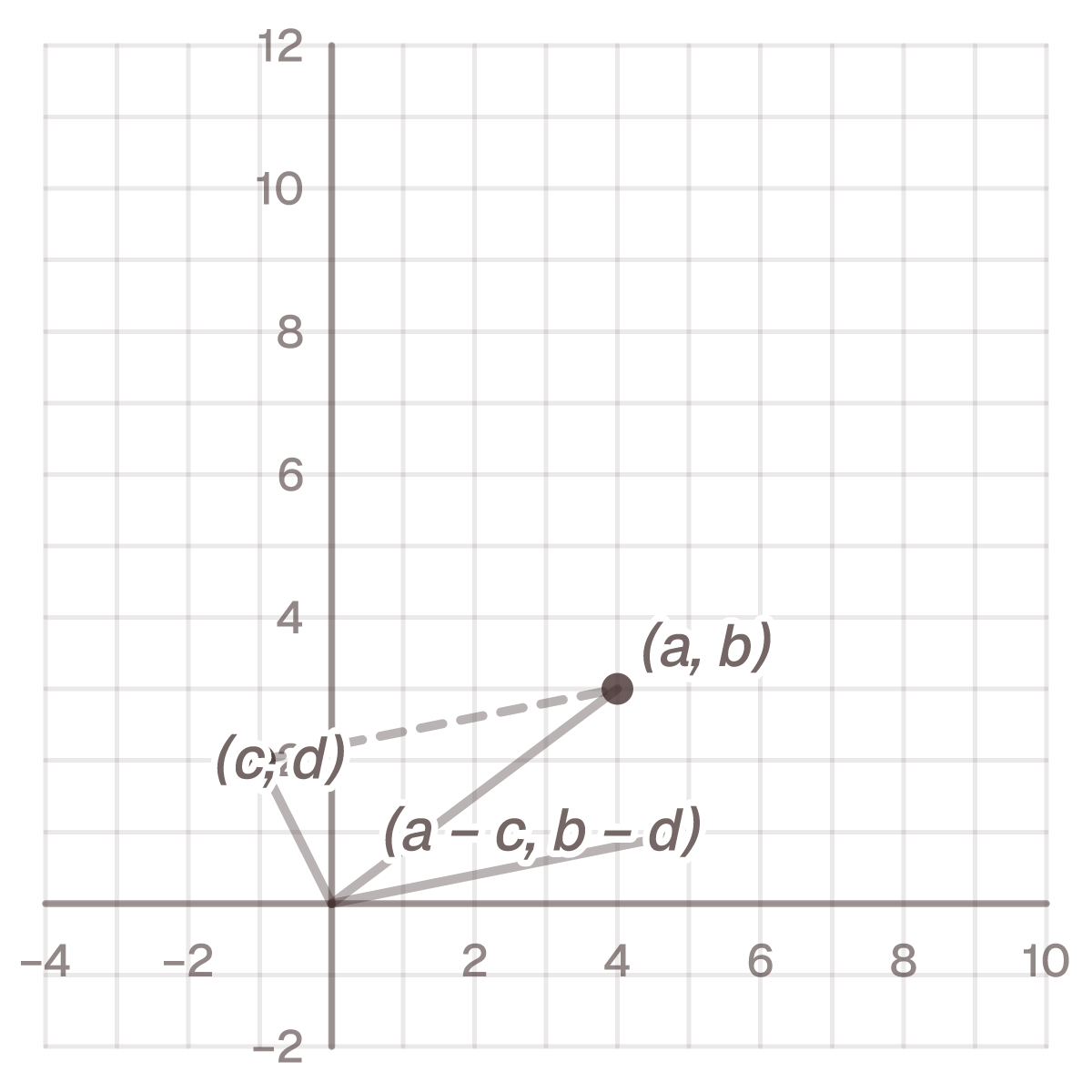
- (a + bi) − (c + di) = (a − c) + (b − d)i
The minus in front of the second bracket applies to c and to di alike: −(c + di) = −c − di. After that it is addition of the parts, as in adding complex numbers.
Examples
Two numbers. (3 + 4i) − (2 − 5i) = (3 − 2) + (4 − (−5))i = 1 + 9i. The imaginary part is 4 + 5 = 9, because subtracting −5 adds 5 (see subtracting a negative number).
Two parts that cancel. (6 + 2i) − (1 + 2i) = 5 + 0i = 5. The result is real.
From a real number. 10 − (3 − 4i) = 7 + 4i.
A check
Subtraction undoes addition. Add the second number back to the answer: (1 + 9i) + (2 − 5i) = 3 + 4i, which is the first number.
Common mistakes
- Subtracting only the first part of the bracket. 3 + 4i − (2 − 5i) is not 3 + 4i − 2 − 5i. Both parts of the bracket change sign.
- Treating −(−5) as −5. Two minus signs make a plus.
Where next
- Multiplying complex numbers and dividing them.
- The distance between two complex numbers is the modulus of their difference: modulus and argument.