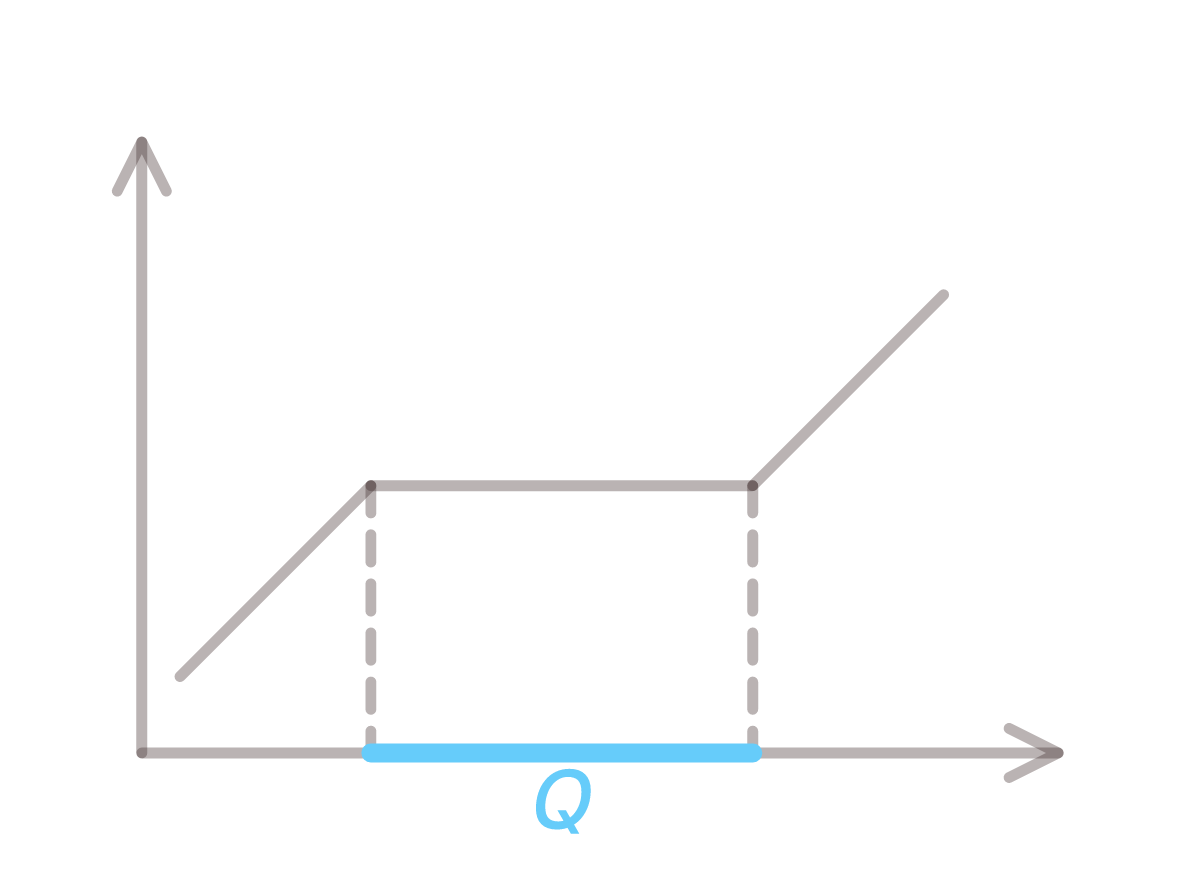
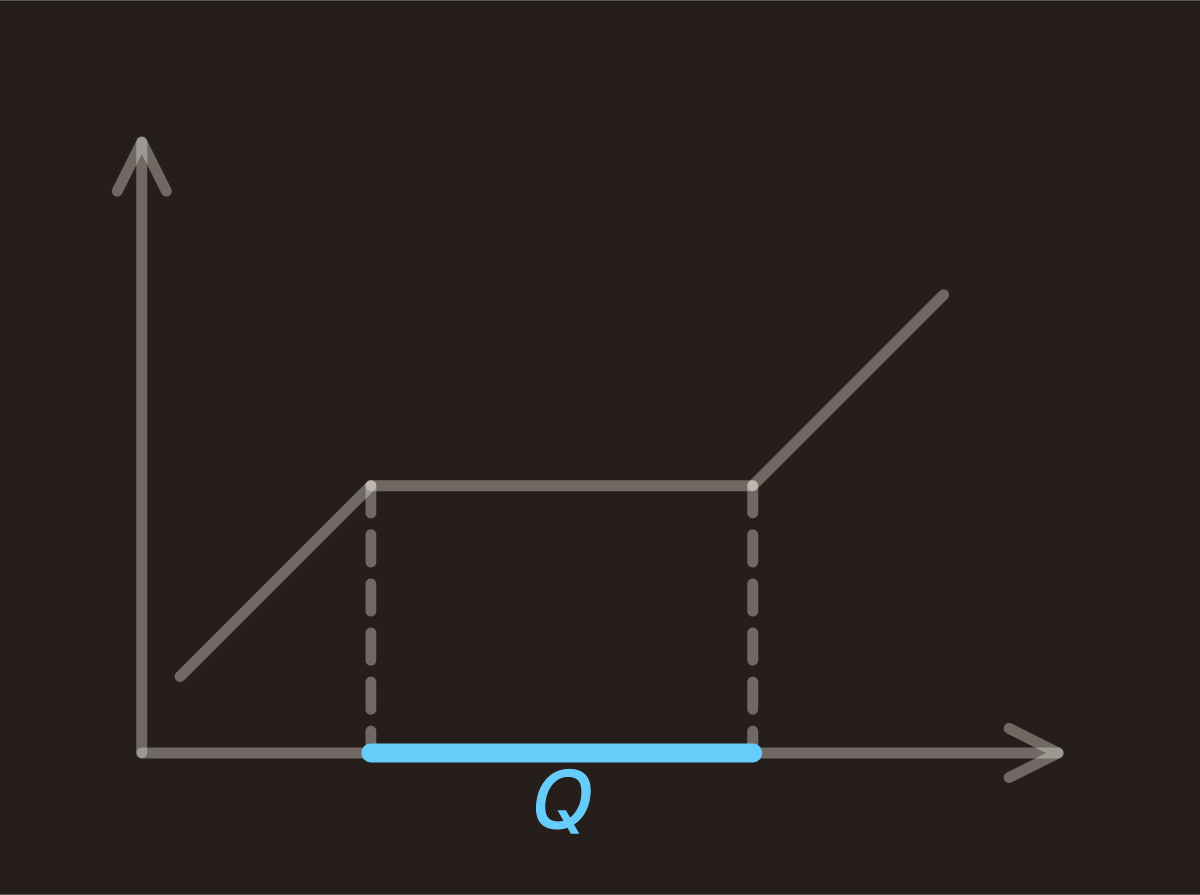
m is the mass in kilograms, L the specific latent heat of fusion or vaporisation in joules per
kilogram, and Q the energy in joules.
Holds at the temperature of the change of state. The values for water below are at normal air pressure.
Melting 2 kg of ice at 0 °C: 2 · 334,000 = 668,000 J, that is 668 kJ.
Values for water and a few others
| Substance |
Change of state |
L |
| Water |
Melting (ice → water) |
334 kJ/kg |
| Water |
Vaporisation at 100 °C |
2,260 kJ/kg |
| Ethanol |
Vaporisation |
840 kJ/kg |
| Lead |
Melting |
23 kJ/kg |
The same energy comes back the other way: water freezing gives off 334 kJ/kg, steam condensing
2,260 kJ/kg.
Why the temperature stands still
During melting the energy goes into breaking the bonds that hold the molecules in place, not into making
them move faster. So ice and water stay at 0 °C until it has all melted, and a pan boils at 100 °C at normal
air pressure however far you turn up the hob — the only thing that changes is how fast the water boils away.
Worked examples
How much more is boiling it away? Heating 1 kg of water from 0 to 100 °C costs
4,180 · 1 · 100 = 418 kJ. Boiling it away then costs
2,260 kJ — more than five times as much.
Ice cubes in a drink. 50 g of ice melting takes 0.05 · 334,000 ≈ 16.7 kJ out of the drink. That
is as much as cooling the same amount of water by 80 degrees, which is why ice cools so much better than
cold water.
The forgotten kettle. A 2,000 W kettle with half a litre of boiling water:
0.5 · 2,260,000 / 2,000 ≈ 565 s, a little over nine minutes until it is dry.
Common mistakes
- kJ and J. Tables often give kJ/kg. Multiply by 1,000 if the answer is to be in joules.
- Forgetting the warming. Ice at −10 °C has to be warmed to 0 °C before it can melt. Work out each
step separately and add them up.
- Confusing fusion and vaporisation. Vaporising costs almost seven times as much.
Frequently asked questions
Why does sweat cool you?
As sweat evaporates it takes its latent heat of vaporisation from the skin, about 2.4 MJ per litre.
During hard work or in hot weather it is the body’s main way of shedding heat.