What “simple” means
Simple interest is worked out each year on the same amount: the original principal. Interest already
earned is never added to that principal, so every year pays exactly the same.
It is a percentage of a number repeated t times, which is why the
formula is a definition rather than a theorem. Since every factor is only multiplied, it rearranges in
every direction — including for the number of years.
Worked examples
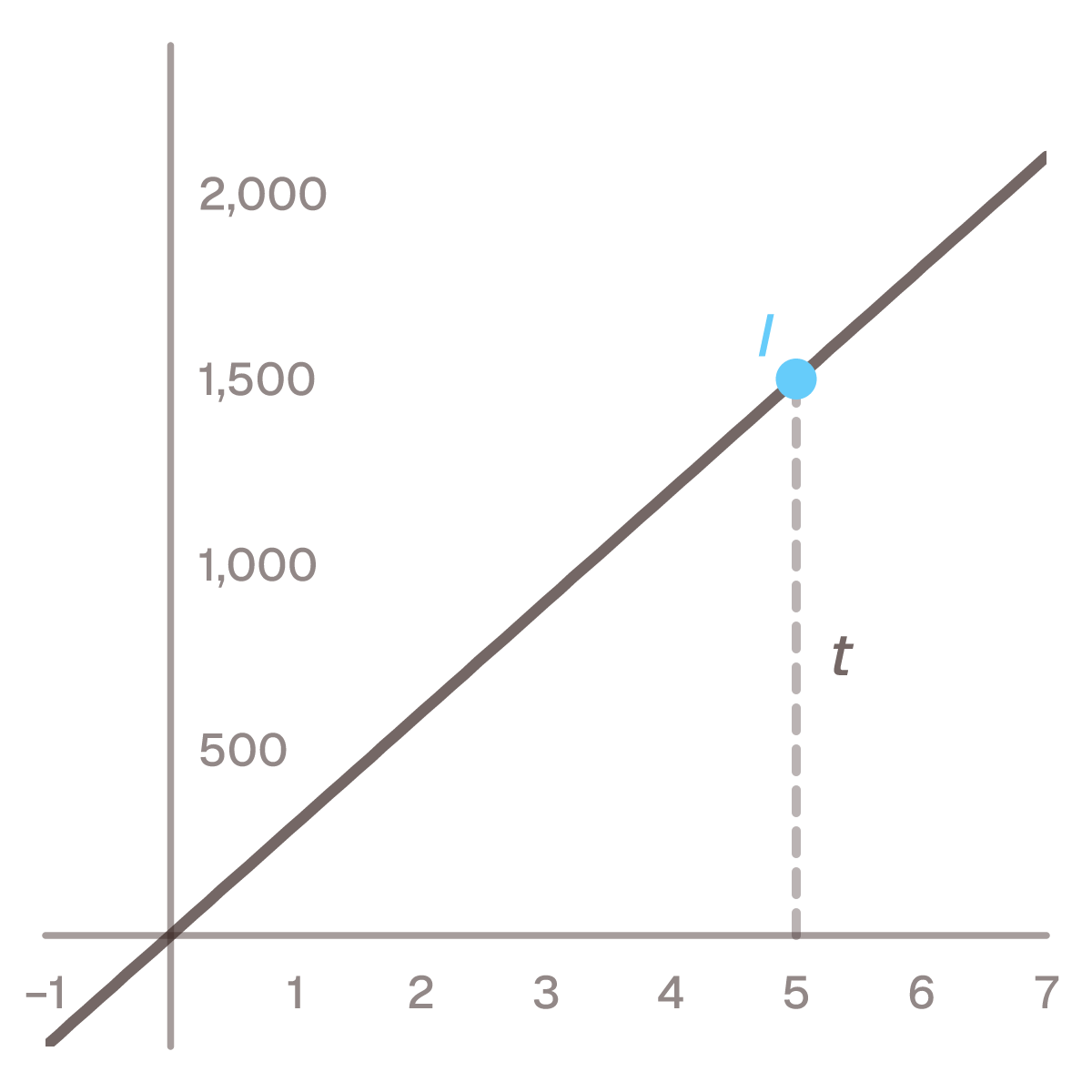
The interest. $10,000 at 3% for five years gives 10,000 · 3 · 5 / 100 = $1,500.
The rate, backwards. You earned $1,500 on $10,000 over five years. The rate is
100 · 1,500 / (10,000 · 5) = 3%.
The time. How long until $10,000 at 3% pays $1,500 in interest?
100 · 1,500 / (10,000 · 3) = 5 years.
What compounding would have given
The gap is small over a short run and large over a long one:
| Time |
Simple interest |
Compound interest |
| 5 years |
$1,500 |
≈ $1,593 |
| 20 years |
$6,000 |
≈ $8,061 |
After twenty years the difference is over $2,000 on the same stake, and it widens the longer it runs. That
is the effect the compound interest calculator exists to show.
Simple interest still governs plenty of real cases — late-payment interest and some short-term loans are
worked out this way — and it makes a quick estimate.
Common mistakes
- Using simple interest for savings. Savings accounts and funds add the interest to the balance, so
compounding is what applies there.
- Mixing years with months.
t counts years. Three months is 0.25 years, not 3.
- Dropping the hundredths. The rate is a percentage, so the division by 100 has to stay.
Questions people ask
How does this differ from an effective rate?
An effective rate folds in fees and how often interest is added, so that two loans can be compared. Simple
interest only says what a rate pays on an untouched amount.
Can the rate be zero?
Yes, and then the interest is zero. But you cannot work backwards from zero — the card above requires a
rate and a time greater than 0 before it will solve for the principal.