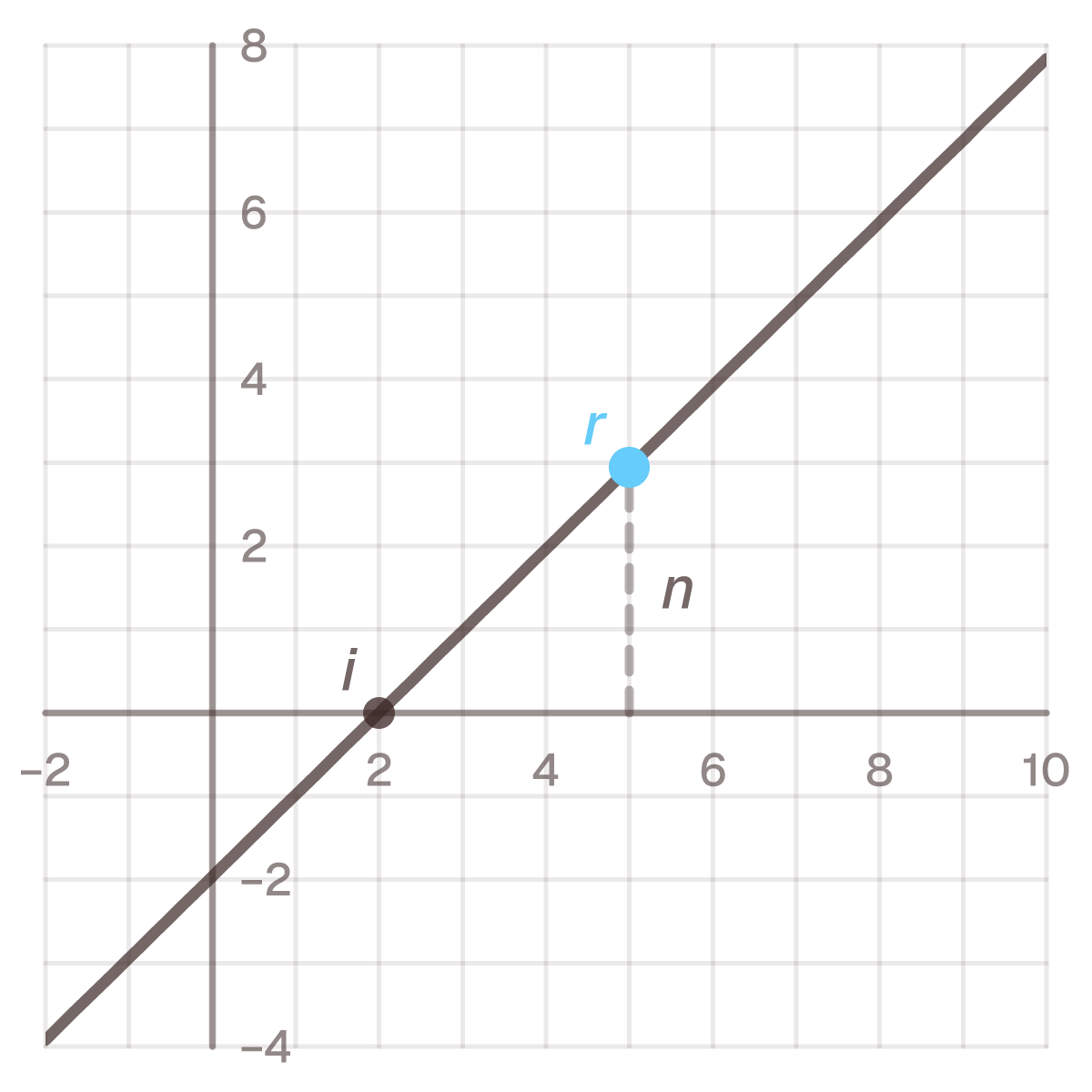
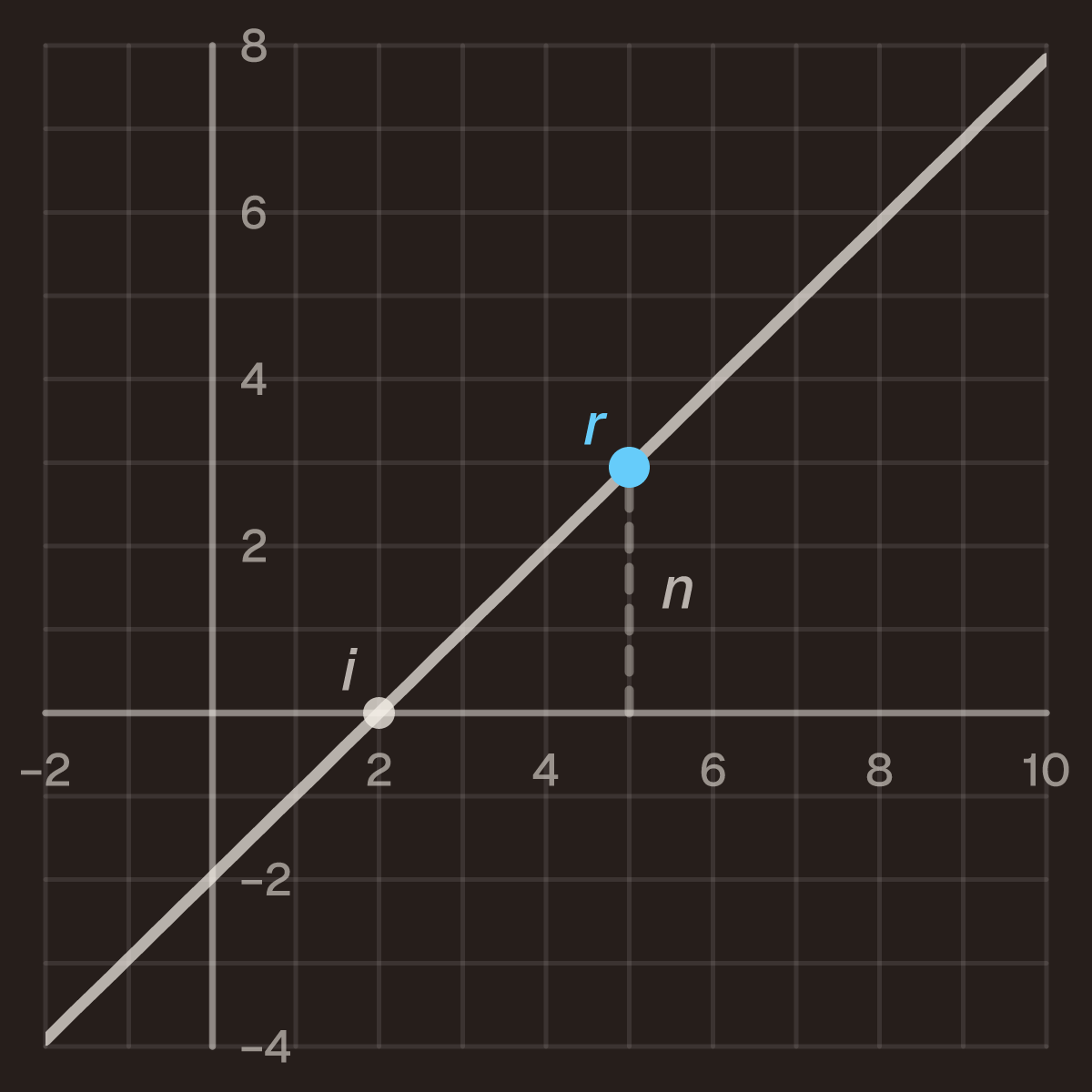
n is the nominal rate — the one on the statement — i is inflation and r is the real rate, all
three as decimals. In per cent the card works with (1 + n/100) and (1 + i/100) and multiplies the answer
by 100.
The exact form is called the Fisher equation.
The thinking behind the quotient is simple. Money grows by the factor (1 + n). Prices grow by the factor
(1 + i). What is left in purchasing power is the ratio of the two, and subtracting one turns the
factor back into a rate.
The approximation that is usually taught
The real rate is often taught as nominal rate minus inflation, and there is nothing wrong with
doing that — it is simply not exact. The approximation is
and the error grows with the numbers.
| Nominal rate |
Inflation |
Approximation |
Exact |
| 3% |
2% |
1% |
0.98% |
| 5% |
2% |
3% |
2.94% |
| 10% |
8% |
2% |
1.85% |
| 15% |
10% |
5% |
4.55% |
At small numbers the subtraction is perfectly usable in your head. At the inflation levels of 2022 it can be
several tenths of a percentage point out, and on a large sum over many years that is money.
Worked examples
The savings account that loses. 2% interest and 6% inflation gives r = 1.02/1.06 − 1 = −0.0377, or
−3.8%. The money in the account grows in number and buys less.
The fund. 8% return and 2% inflation gives 1.08/1.02 − 1 = 5.9% real return — not 6%.
The mortgage, the other way round. At 4% on the loan and 3% inflation the real cost is
1.04/1.03 − 1 = 0.97%. Inflation eats debts as surely as it eats savings.
Common mistakes
- Thinking the subtraction is the formula. It is an approximation. Fine in your head, wrong on
paper.
- Forgetting that the real rate can be negative. If inflation is higher than the rate, the saving
loses purchasing power, and only the calculation shows it.
- Mixing it up with tax. Tax comes off the nominal rate before this calculation, not after. The real
return after tax is lower still.
- Comparing a real rate with a nominal one. Either restate both or neither. A historical return that
has already been adjusted must not be adjusted twice.
Common questions
Why a quotient and not a difference?
Because the rate and the inflation are both factors, not amounts. Two growths acting at once are
multiplied together, and taking one back out means dividing. The same thing happens on
compound interest, where two years are not added
but multiplied.
Which inflation figure should I use?
The one covering the same period as the rate. For the year behind you that is the yearly change in the
consumer price index. For a calculation about the future there is no right answer — a common assumption
is the central bank’s target, and if you use it, say in your working that it is an assumption.
How do I restate an amount instead of a rate?
With the
inflation-adjusted amount. This page
takes a rate and gives a rate; that one takes an amount and gives an amount.