Raoult's law
The relation
p
A solvent's vapour pressure above a solution is its mole fraction times the vapour pressure it would have pure. A dissolved solute always lowers it.
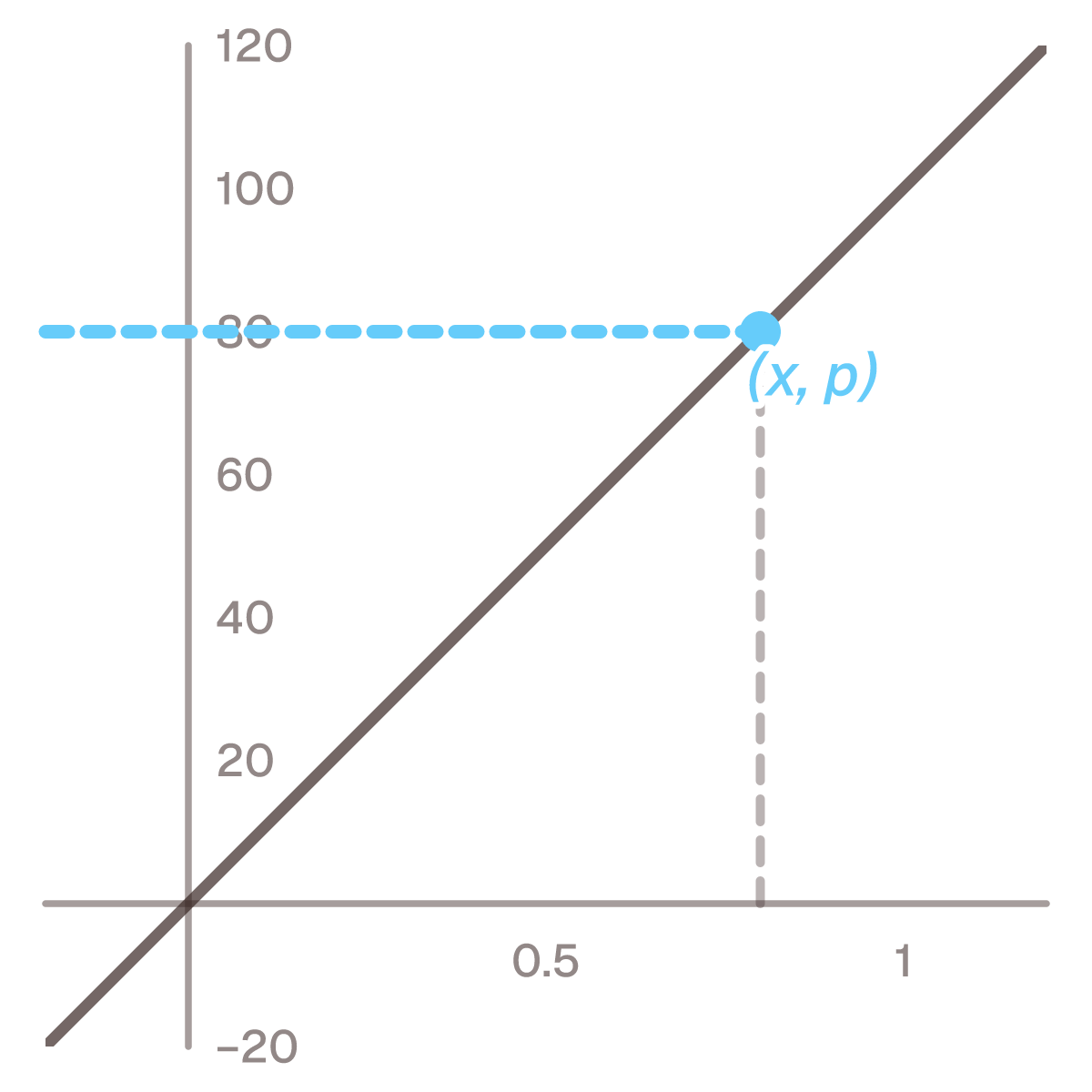
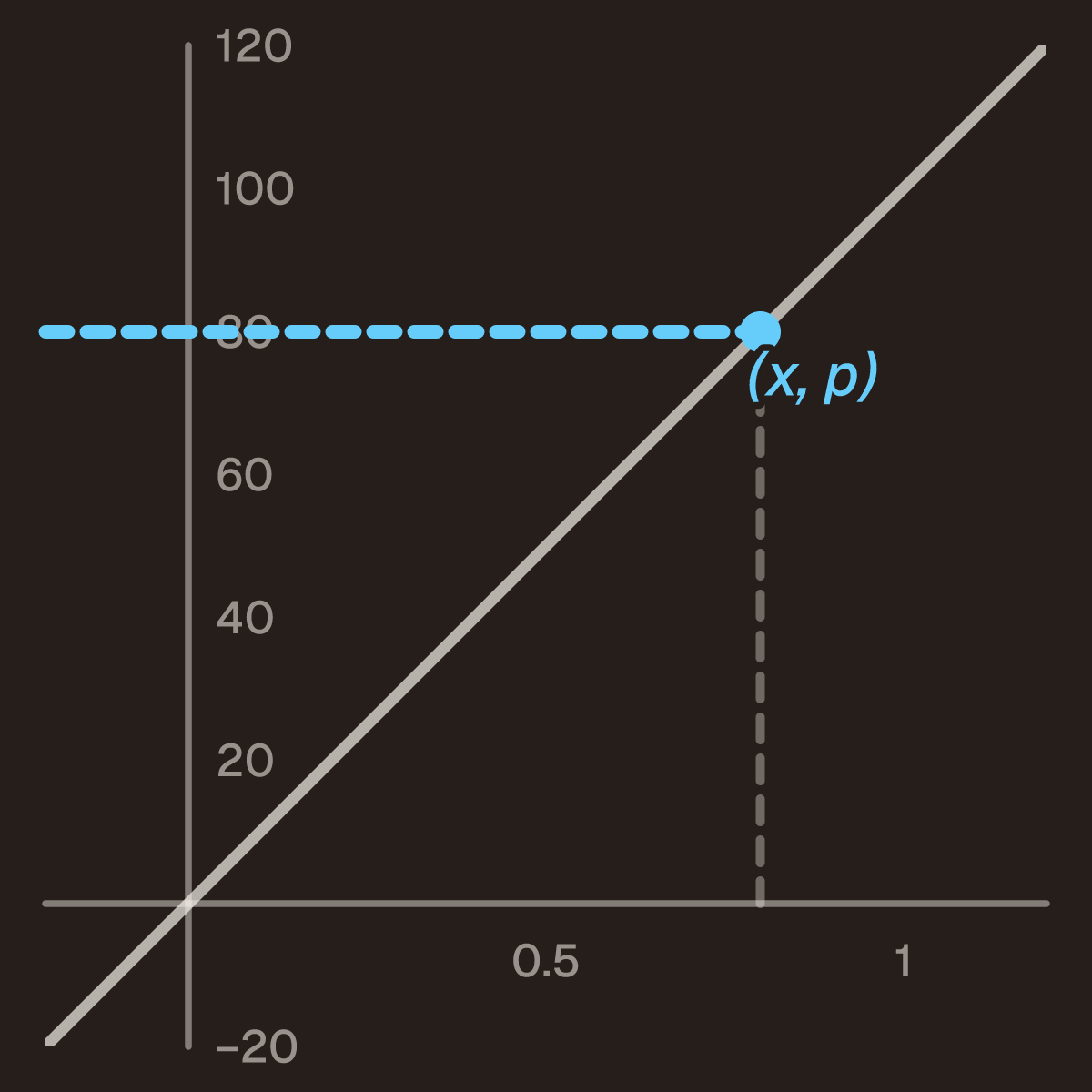
Solve for
p=80
p equals 0.8 times 100, equals 80
Den här sidan finns på svenska. Byt till svenska
Definition — what does that mean?
Dissolve something in a liquid and fewer of its molecules sit at the surface to escape. The vapour pressure falls in proportion.
In Swedish: Raoults lag
p
A solvent's vapour pressure above a solution is its mole fraction times the vapour pressure it would have pure. A dissolved solute always lowers it.
p=80
p equals 0.8 times 100, equals 80
You are given
p is the solvent’s vapour pressure above the solution, p° the vapour pressure of the pure solvent at the
same temperature and x the solvent’s mole fraction: its amount of substance divided by the total amount in
the solution.
Holds for dilute solutions and for mixtures of liquids that resemble each other.
In the pure liquid every molecule at the surface is a solvent molecule that can escape. With a solute dissolved, some of the surface is taken by something else, and fewer solvent molecules leave per second. The vapour pressure becomes the same fraction of the pure solvent’s as the solvent’s share of the molecules. A lower vapour pressure is also why a solution boils at a higher temperature and freezes at a lower one.
The defaults. A solution where 80% of the molecules are solvent, x = 0.8, and the pure solvent has p° = 100 kPa: p = 0.8 · 100 = 80 kPa.
A dilute solution. x = 0.95 and p° = 12 kPa: p = 0.95 · 12 = 11.4 kPa. Five per cent solute lowers the vapour pressure by five per cent.
The mole fraction from a measurement. p = 90 kPa above the solution and p° = 100 kPa: x = 90 / 100 = 0.9.
How does it connect to boiling point elevation?
A liquid boils when its vapour pressure reaches the air pressure. A solution with a lower vapour pressure
has to be heated further to get there. The boiling point elevation
page gives the size of the shift.
| Solve for | Rearranged | With the numbers | Comes to |
|---|---|---|---|
| x | pp° | 80100 | 0.8 |
| p° | px | 800.8 | 100 |
| p | xp° | 0.8·100 | 80 |
Last reviewed October 6, 2026 ·How pages are reviewed
Solutions and concentrationAll formulas
Copy the code into your page where the formula card should appear. It loads from lovetocalc.com, so it stays current on its own — all we ask is that the credit line comes with it.